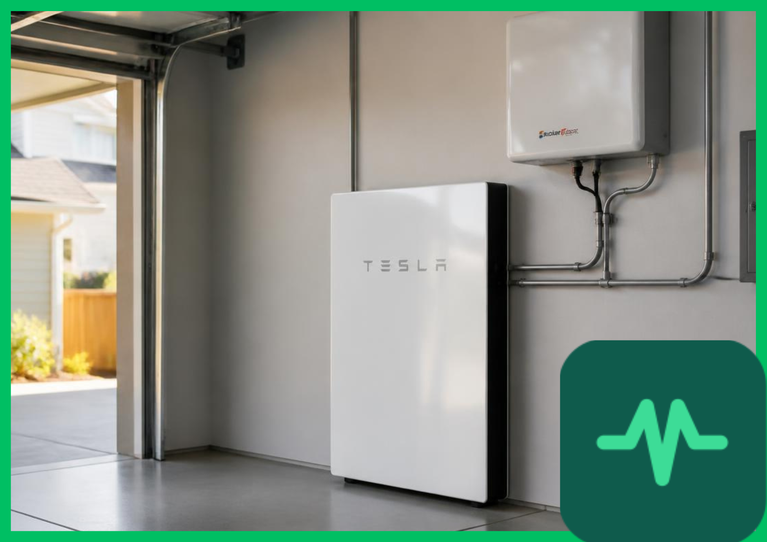
Imagine your solar panels producing electricity at midday. Your family may not need all of it right away.
Instead of letting that extra electricity go unused, or exporting it to the grid for little return, a battery can store some of it. Later, when demand rises, that stored energy can be used instead.
That is the basic idea behind home battery storage.
A residential battery is an energy storage system built to hold electricity for later use. It can be installed alongside solar panels. It can also work alongside regular grid electricity. Some systems provide backup power during outages. Others are mainly designed to help households manage when they buy and use power.
Why Is Home Battery Storage Becoming More Important?
Electricity systems are changing fast. Solar and wind power keep growing. At the same time, households are using more electricity than ever, for appliances, cooling, heating, and electric vehicles.
The IEA reports that household electricity consumption is rising, and that electrification is driving demand higher in homes. This creates a real need for flexibility. Home battery storage can provide some of that flexibility.
How Does a Home Battery Work?
The process is fairly simple:
- Electricity enters the battery.
- The battery stores that energy chemically.
- When the household needs power, the system releases it.
- An inverter converts the stored energy into a form household appliances can use.
Modern systems often include smart software too. This software monitors both production and consumption. It decides when to charge the battery. It decides when to discharge it. This turns the battery into part of a larger, smarter energy-management system.
Home Batteries and Solar Panels
Solar panels and batteries are often installed together, and the reason is straightforward: solar production and household demand don't always line up.
Solar panels typically produce their highest output during the day. Families, however, often use more electricity in the evening. A battery bridges that gap by shifting power from one period to the next.
A typical daily cycle looks like this:
- Afternoon: Solar produces excess electricity
- Evening: The battery supplies stored electricity
- Night: The household draws on grid power or any remaining battery charge
This simple shift makes solar electricity far more useful throughout the day.
Does Every Home Need a Battery?
No — and this is an important point.
Having solar panels doesn't automatically mean you need a battery. The financial case depends heavily on local conditions.
For example, if a household receives good value for exporting excess solar power to the grid, a large battery may not be necessary. But if exported electricity earns little, and grid electricity is expensive, storage becomes far more attractive.
Consumers should compare both paths before deciding.
Batteries Can Provide Backup Power
Backup power is another major reason people choose home battery storage. When the grid fails, some battery systems can keep selected household circuits running, keeping important equipment powered.
However, not every installation is designed for this. Consumers should ask two key questions before buying:
- What exactly will stay powered during an outage?
- How long can the battery sustain that power?
Battery Size Matters
Bigger is not always better.
A battery that's too small won't store enough electricity to be useful. One that's far larger than necessary drives up cost without adding real value.
The right size depends on:
- Household electricity use
- Solar generation capacity
- Desired backup duration
- Budget
A professional assessment can help determine the right capacity for your specific situation.
Battery Chemistry Matters Too
Modern battery systems use different chemistries. Lithium-ion batteries remain the most common choice. Within that category, lithium iron phosphate (LFP) has become especially important.
IRENA has highlighted the major decline in battery costs over the past decade, making these systems more accessible than before.
Still, chemistry shouldn't be the only factor in your decision. Also consider:
- Warranty terms
- Safety features
- Usable capacity
- Expected cycle life
- Installation quality
- After-sales support
Batteries Are Becoming Cheaper Over Time
Energy storage costs have fallen sharply over the past decade. IRENA reports that utility-scale battery storage costs dropped significantly between 2010 and 2024.
Residential batteries aren't identical to utility-scale systems, but this broader cost decline has still benefited the consumer market. That said, installation costs, taxes, and local market conditions can still produce very different final prices.
Home Battery Storage and Electricity Prices
Electricity tariffs can strongly influence whether a battery makes financial sense.
If electricity costs less during certain hours and more during others, a battery lets you store cheap power and use it during expensive peak hours. This strategy is sometimes called energy arbitrage.
Whether this pays off depends entirely on your local tariff structure. Not every market has meaningful price differences throughout the day, so it's worth understanding your own rates before buying.
Smart Energy Management
Modern home battery storage increasingly works within smart energy systems. Software can track electricity prices, monitor solar production, and watch household demand, then decide automatically when to charge or discharge the battery.
This kind of automation is likely to become even more valuable as homes add electric vehicles and heat pumps. The IEA has identified smart controls, storage, and flexible demand as key tools for managing rising electricity needs.
Electric Cars Could Change the Picture
Electric vehicles are, in a sense, large batteries on wheels. This opens an interesting possibility: in some markets, vehicle-to-home or vehicle-to-grid technology could let an EV supply power back to a house or even the wider grid.
Availability depends on the vehicle, the charger, and local regulations, and this technology is still developing. Consumers shouldn't assume every electric car can double as a home battery today.
What Happens When a Battery Gets Old?
Batteries don't last forever. Their ability to store energy gradually declines over time, a process known as degradation.
The speed of that decline depends on several factors:
- Temperature
- Charging patterns
- Depth of discharge
- Battery chemistry
- System design
This is exactly why warranty terms matter so much. A strong warranty offers real protection over the life of the system.
Recycling Is Becoming More Important
As more batteries get installed worldwide, recycling is becoming a bigger priority. Battery recycling can recover valuable materials and reduce the need for new raw materials.
The growth of home battery storage is creating an entire ecosystem around manufacturing, installation, maintenance, and recycling. It's worth asking installers directly how they handle batteries at the end of their useful life.
Is Home Battery Storage Worth It?
There's no universal answer here.
For some households, a battery makes strong financial sense. For others, it mainly offers peace of mind through backup power. For some, the economics simply aren't there yet.
The right answer depends on:
- Electricity prices
- Solar production
- Battery price
- Export rules
- Household electricity use
- Outage frequency
- Financing options
- Battery lifespan
Consumers should run the numbers for their own specific situation rather than relying on general advice.
EcoGreenPulse View
Home battery storage is becoming more than just a backup technology. It's becoming part of a much wider smart-energy system.
Solar panels produce electricity. Batteries store it. Smart controls manage it. Electric vehicles could soon add another layer of stored energy on top of all this. Together, these technologies are starting to change how households interact with the electricity grid itself.
Conclusion
Home battery storage can help households store electricity and use it exactly when it's most valuable. It works especially well paired with solar power, and it can provide real backup power when systems are designed for that purpose.
Still, consumers should weigh the complete financial picture before buying. Battery size, electricity tariffs, solar production, warranties, and installation quality all play a role in whether the investment pays off.
The technology keeps evolving quickly. As batteries become more common, they're likely to become a standard feature of the modern energy-efficient home.
Sources: International Energy Agency and International Renewable Energy Agency.
Comments (0)
Login to leave a comment.
No comments yet. Be the first to share your thoughts!