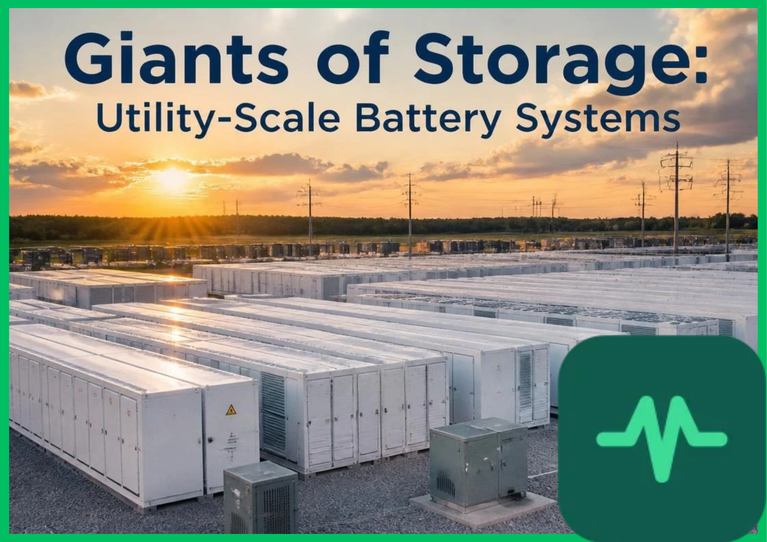
The wind blows softly across the dry earth. Overhead, a massive array of solar panels tilts toward the midday sun, drinking in golden light.
Right beside those panels sits a row of giant metal shipping containers stretching as far as the eye can see.
There are no smokestacks here. There is no roar of combustion engines, no cloud of dark smoke, and no burning smell of fossil fuels.
Inside those quiet metal containers, a silent revolution pulses with immense power.
Thousands of lithium battery cells are stacked neatly from floor to ceiling. They store gigawatt-hours of clean energy captured from the sun and the wind.
When the sun sets or the wind stops blowing, these industrial giants wake up. They discharge clean electricity back into regional power lines, keeping entire cities illuminated through the darkest nights.
For over a century, electrical grids relied on massive coal and gas power plants to provide steady electricity around the clock.
Those dirty power plants burned fossil fuels constantly, pumping greenhouse gases into our shared atmosphere.
Transitioning our global energy supply to renewable wind and solar power is an urgent imperative.
Wind and solar have one major limitation. The sun does not always shine, and the wind does not always blow.
How do you keep a modern city running when nature takes a break?
You build giants of storage.
A quiet, massive industrial engineering transformation is taking over power grids across the globe.
According to global energy reports from the International Energy Agency (IEA), resource protection frameworks from the United Nations Environment Programme (UNEP), efficiency benchmarks from ENERGY STAR, and academic grid research, utility-scale battery energy storage systems are changing our energy future.
By capturing surplus renewable power in massive battery installations, we stabilize regional electricity networks without burning a single drop of fossil fuel.
Here is how utility-scale storage works, why grid-scale BESS installations change power distribution, and how massive battery arrays secure our sustainable future.
The Mismatch Between Nature and Human Demand
To understand why utility-scale storage matters so much, you have to look at the rhythm of modern human life.
We use electricity throughout the day, but our demand peaks sharply in the late afternoon and evening hours when people return home from work, turn on lights, cook dinner, and crank up heating or air conditioning units.
Solar panels reach their peak energy generation at noon, hours before evening demand spikes.
Historically, that timing mismatch created a massive headache for grid operators.
When solar generation dropped off just as evening demand surged, utilities had to fire up polluting fossil-fuel peaker plants to bridge the gap.
Those peaker plants burned coal and gas at high costs, wasting fuel and spoiling clean air.
If we want a 100% renewable energy grid, we need a way to capture midday sunshine and save it for midnight use.
We needed energy storage built on a monumental scale.
What Is a Utility-Scale Battery Energy Storage System?
A utility-scale battery energy storage system (BESS) is a massive industrial installation consisting of hundreds of large lithium-ion or flow battery modules housed in secure climate-controlled containers, connected directly to high-voltage transmission sub-stations.
These installations do not look like ordinary batteries.
They cover acres of land, standing alongside solar farms and wind parks or sitting near urban load centers.
Each container holds thousands of individual battery cells linked to massive inverters and sophisticated thermal management systems.
When wind turbines spin furiously in the middle of a windy night and electricity demand drops low, the surplus power flows straight into the utility-scale BESS facility, charging the massive battery banks to 100% capacity.
The next evening, when the wind dies down and families turn on their home appliances, the BESS facility discharges its stored energy backward into the grid.
It acts as a giant sponge, soaking up excess renewable generation and squeezing it out precisely when communities need it most.
The Science of Grid Stabilization and Frequency Regulation
How do massive battery installations keep an entire regional power grid stable without causing blackouts or voltage surges?
It comes down to millisecond response times and frequency regulation.
Academic grid research shows that electrical grids operate on a delicate, constant frequency—typically 50 or 60 hertz.
If electricity supply exceeds demand, frequency rises dangerously. If demand exceeds supply, frequency drops, leading to cascading grid failures.
Traditional fossil-fuel power plants take hours or even days to ramp up or slow down in response to frequency shifts.
Utility-scale BESS installations react in less than a tenth of a second.
When a sudden surge in demand hits the network, utility-scale batteries discharge power instantly, injecting energy into the wires before grid frequency can wobble.
According to ENERGY STAR and international industrial efficiency evaluations, modern BESS facilities operate at round-trip efficiencies exceeding 85% to 90%, returning almost all the stored renewable energy cleanly back to the grid.
Environmental Integrity and Mineral Stewardship
The environmental benefits of massive battery installations extend far beyond balancing daily power loads.
They accelerate the complete retirement of coal and gas power plants worldwide.
According to UNEP resource circularity frameworks, deploying utility-scale storage requires strict attention to supply chain sustainability and mineral recovery.
As the industry scales up, recycling facilities reclaim lithium, cobalt, and iron phosphate from retired battery modules, ensuring that grid storage remains truly closed-loop.
According to IEA clean energy roadmaps, deploying gigawatt-hours of utility-scale storage reduces global power sector emissions drastically by smoothing out the intermittent nature of wind and solar power.
When utilities trust that giant batteries can handle evening demand spikes, they stop investing in new fossil-fuel infrastructure entirely.
Overcoming Land and Safety Realties
Building utility-scale battery installations involves complex engineering and careful site planning.
Engineers must design robust liquid cooling networks and multi-layered fire suppression systems to protect thousands of tightly packed battery cells from overheating.
Facilities are spaced carefully across secure plots of land, often co-located on old industrial brownfields or directly beside existing solar parks to minimize new land disruption.
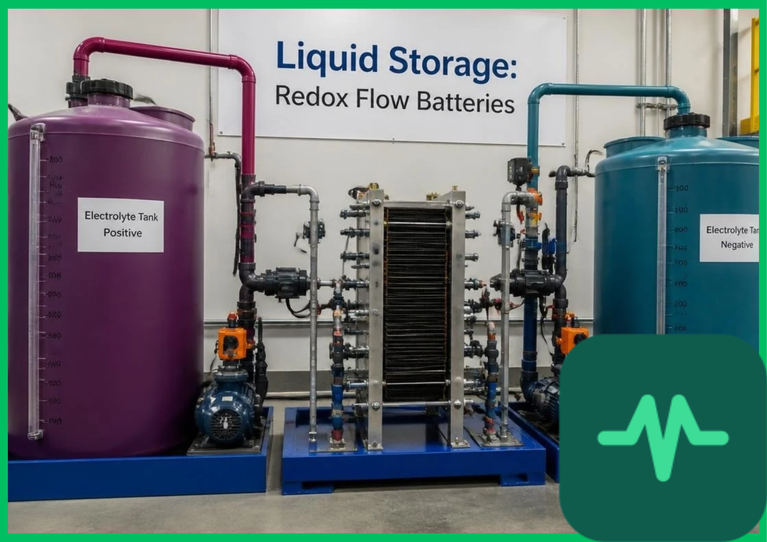
As academic research into alternative chemistries advances, engineers are also exploring non-lithium solutions—such as iron-air and sodium-sulfur flow batteries—to provide long-duration storage that can sustain a city through days of cloudy weather.
Storing Power Toward a Sustainable Future
Utility-scale battery energy storage systems prove that human engineering can overcome the intermittency of nature, building a robust and reliable clean energy grid.
We no longer have to accept that relying on the sun and wind means risking blackouts when the weather changes.
By capturing surplus renewable power in massive industrial battery arrays and discharging it smoothly on demand, we transform how civilization harnesses electricity.
We step away from burning fossil fuels, embracing a reliable, resilient, and enduring standard of power distribution.
Through brilliant electrical engineering, smart grid stabilization, and deep respect for our planetary climate, giants of storage secure a clean, bright, and sustainable future for our world.

Comments (0)
Login to leave a comment.
No comments yet. Be the first to share your thoughts!