Gusts of wind howl across your roof.
Suddenly, the lights flicker and die.
The house plunges into pitch blackness.
A quiet chill rolls through your living room.
For a tense moment, you wonder how long you will sit in the dark while utility crews struggle to repair downed power lines miles away.
Then, something remarkable happens.
A soft hum rises from the corner of the garage where your electric car is parked.
The lights pop back on instantly.
The refrigerator hums to life, and your heating system keeps running without missing a beat.
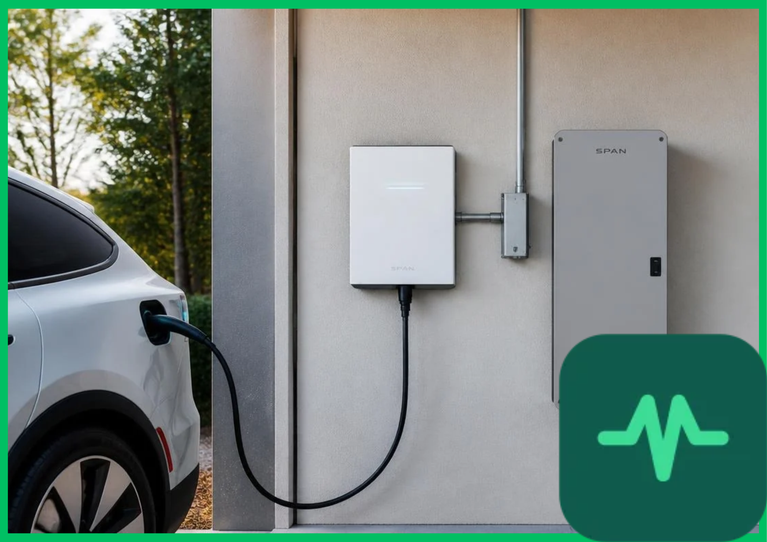
You look out at your car plugged into the wall charger.
You realize your vehicle is not just sitting there storing energy.
It is powering your entire home.
For over a century, transportation and domestic energy lived in two completely separate worlds.
You burned gasoline or electricity to move your car from place to place.
When you parked at home, your vehicle sat idle in the garage for twenty-two hours a day, doing nothing at all while drawing zero value from its massive energy storage capacity.
That old separation is wasteful and inefficient.
We cannot build a clean energy future while letting millions of large automotive batteries sit dormant in garages while neighborhood power grids struggle under peak demand.
What if your parked electric car doubled as a massive backup power generator for your home?
What if your vehicle could store surplus solar energy during the day and feed it back into your lights at night?
A quiet, brilliant energy revolution is transforming our driveways across the globe.
According to global clean energy reports from the International Energy Agency (IEA), resource protection frameworks from the United Nations Environment Programme (UNEP), efficiency benchmarks from ENERGY STAR, and academic smart grid research, bidirectional EV charging with vehicle-to-grid technology is changing our electrical landscape.
By allowing electric cars to send stored electricity back into homes and regional power grids through smart bidirectional chargers, we transform parked vehicles into mobile power stations.
Here is how bidirectional power works, why vehicle-to-grid technology changes energy economics, and how wheels to walls secure our sustainable future.
The Dormant Waste of Parked Cars
To understand why bidirectional charging matters so much, you have to look at the untapped potential sitting inside our driveways.
The average passenger vehicle sits parked and unused for roughly 95% of its entire lifespan.
An electric car typically carries a lithium-ion battery pack storing between 60 kilowatt-hours and 100 kilowatt-hours of electrical energy.
That is enough electricity to power an average modern home for three to five full days.
Historically, standard EV chargers were one-way streets.
They pumped electricity from the wall socket into the car battery, and nothing ever flowed back.
When millions of electric vehicles plug in simultaneously after work, they create a massive spike in evening electricity demand, straining local power grids and forcing utilities to burn fossil fuels.
Skeptics once argued that drawing power out of car batteries would destroy cell longevity and leave drivers stranded with empty cars.
Automotive engineers and smart grid researchers proved those skeptics wrong.
When managed by intelligent software, sharing a fraction of your car's stored energy causes zero noticeable wear while unlocking incredible value for your household and community.
What Is Bidirectional EV Charging?
Bidirectional EV charging is an advanced power electronics technology that allows electrical energy to flow in two directions—from the grid or home solar system into the electric vehicle battery, and back out from the car battery into the home or regional electrical grid when needed.
Instead of a simple one-way charging cord, the system operates through intelligent power conversion:
- Solar Absorption: During sunny midday hours when your rooftop solar panels produce surplus clean electricity, your bidirectional charger feeds that excess power straight into your parked electric car.
- Peak Shaving: When electricity prices spike during peak evening hours, your car battery discharges clean power back into your home appliances, saving you from paying expensive utility rates.
- Emergency Backup: When severe storms knock out regional power lines, your electric car steps in automatically as an emergency home generator, keeping your lights and heating running safely.
- Grid Support: When regional power grids face extreme stress during heatwaves, participating electric cars send tiny pulses of stored power back to the utility grid, stabilizing local neighborhoods and preventing blackouts.
Your car becomes an active participant in your household energy ecosystem.
The Science of Power Inversion and Smart Grid Sync
How can an electric vehicle battery communicate smoothly with your home electrical panel and regional utility wires without risking damage to your car or your appliances?
It comes down to high-frequency power inversion and smart grid synchronization protocols.
Academic smart grid research shows that bidirectional chargers use advanced silicon-carbide semiconductor switches to convert direct current from the car battery into alternating current matching your home voltage standards fifty or sixty times per second.
When connected to vehicle-to-grid systems, software algorithms monitor household electricity consumption and grid frequency second by second.
If your home suddenly switches on an electric clothes dryer or stove, the car battery instantly supplies the extra current needed to prevent circuit overloads.
Furthermore, ENERGY STAR and international appliance efficiency evaluations prove that bidirectional power transfer operates at exceptionally high conversion efficiencies exceeding 92% to 95%.
Energy flows seamlessly between wheels and walls with minimal loss.
Environmental Integrity and Community Resilience
The environmental benefits of bidirectional EV charging extend far beyond lowering household utility bills or keeping lights on during neighborhood storms.
They provide an essential mechanism to eliminate fossil-fueled peaker power plants worldwide.
According to UNEP resource governance frameworks, using parked electric vehicles to supply peak evening electricity reduces the need to burn coal or natural gas when renewable solar generation drops at sunset.
When thousands of electric cars pool their battery storage together into a virtual power plant, utility companies can balance regional wind and solar fluctuations without building expensive, polluting backup infrastructure.
According to IEA clean energy roadmaps, scaling up bidirectional charging infrastructure is an essential pillar to achieve global net-zero carbon emissions targets.
When our cars help clean our air while parked in our driveways, sustainable transport reaches its ultimate expression.
Overcoming Standardization and Interconnection Realties
Scaling bidirectional EV charging from pioneering pilot trials into universal global adoption involves navigating real-world regulatory and automotive standards hurdles.
For years, automotive manufacturers worried about battery warranty liabilities, while electrical utilities enforced strict safety codes that made connecting car batteries to home circuits legally complex.
International standards organizations, automotive engineers, and utility regulators are solving these challenges by establishing universal plug protocols, secure cybersecurity standards, and robust vehicle warranties that cover bidirectional energy sharing.
As automakers release bidirectional-ready models and certified home chargers enter the market, vehicle-to-grid technology is transitioning successfully from experimental tech demos into standard automotive equipment worldwide.
Bridging Wheels and Walls Toward a Sustainable Future
Bidirectional EV charging proves that human engineering can transform everyday transportation into a powerful tool for domestic energy resilience.
We no longer have to accept that parked cars must sit idle and useless while our homes and power grids struggle under peak demand.
By connecting our electric vehicles to our homes through smart bidirectional chargers, we turn cars into mobile power stations that light our rooms, store our solar energy, and stabilize our communities.
We step away from energy vulnerability, embracing a smart, integrated, and enduring standard of modern living.
Through brilliant power electronics, rigorous academic research, and a deep respect for our shared environment, wheels to walls secure a clean, resilient, and sustainable future for every household on Earth.

Comments (0)
Login to leave a comment.
No comments yet. Be the first to share your thoughts!