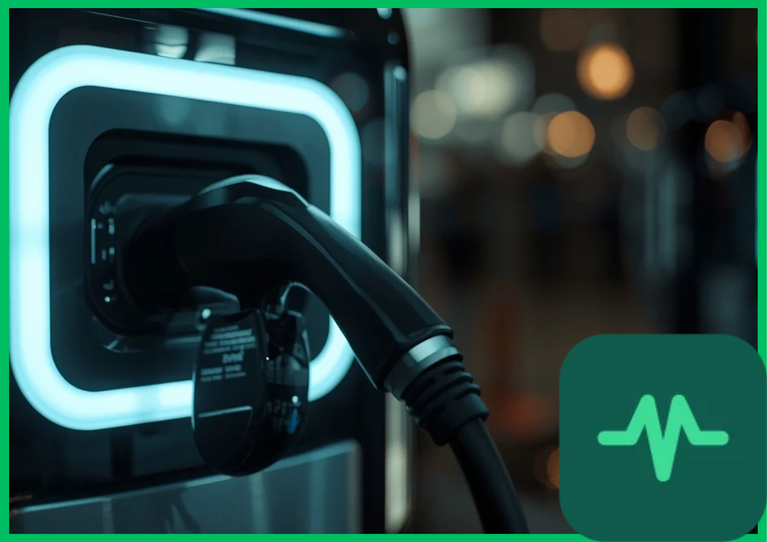
You look down at your electric car sitting patiently in the driveway.
You run your hand along the fender and wonder about the complex heart beating quietly inside the vehicle's floorboard.
You think about the battery pack powering the wheels.
A quiet worry crosses your mind.
How long will that expensive battery actually last?
Will it fade away after a few years, leaving you with a dying car and a massive replacement bill?
For years, skeptics pointed to smartphones and laptops to fuel those exact fears.
We watched our phone batteries degrade after two years, losing their charge halfway through the afternoon until they barely held power for an hour.
People assumed electric cars would suffer the exact same fate on a much larger, more expensive scale.
That fear kept many drivers anchored to gasoline engines, afraid to make the switch to clean electric mobility.
We cannot build a sustainable transportation future if drivers believe their electric cars have a short, predetermined expiration date.
What if modern electric vehicle batteries did not fade away like cheap phone batteries?
What if intelligent thermal management allowed a car battery to age gracefully over hundreds of thousands of miles?
A quiet, brilliant engineering revolution is protecting our vehicles across the globe.
According to global transport reports from the International Energy Agency (IEA), resource governance frameworks from the United Nations Environment Programme (UNEP), efficiency benchmarks from ENERGY STAR, and academic battery research, EV battery degradation myths vs reality studies are changing how we view long-term automotive ownership.
By utilizing advanced liquid cooling, smart voltage buffers, and second-life recycling frameworks, modern electric vehicle batteries outlast the cars themselves.
Here is how battery longevity works, why real-world degradation data shatters old myths, and how aging gracefully secures our sustainable future.
The Smartphone Myth That Terrified Drivers
To understand why electric vehicle battery longevity is so misunderstood, you have to look at why people compare cars to pocket electronics.
Your smartphone is a tiny, cramped device.
It lacks physical room for heavy cooling fans or liquid pumps.
When you play a high-end mobile game or charge your phone rapidly in direct sunlight, internal temperatures soar.
That heat cooks the lithium-ion chemistry inside, causing rapid capacity loss after just a couple of years.
Early critics applied that smartphone experience directly to electric cars, claiming that driving an EV on hot summer days or plugging into fast chargers would destroy the battery pack in no time.
Automotive engineers and electrochemists knew better.
An electric car is not an oversized smartphone.
It is a sophisticated, thermally engineered machine designed to protect its energy cells from harsh temperatures and abusive voltage swings every single second it operates.
What Is EV Battery Degradation?
EV battery degradation is the natural, gradual loss of maximum energy storage capacity that occurs over years of chemical cycling, temperature exposure, and daily driving use.
Unlike sudden hardware failures, degradation happens slowly and predictably.
As a battery ages, microscopic changes inside the electrode structure reduce the number of lithium ions that can successfully move back and forth.
If your car battery originally delivered 400 kilometers or 250 miles of driving range on a full charge, real-world data shows it might drop to 360 kilometers or 225 miles after a decade of regular use.
The car still drives smoothly.
It still accelerates instantly.
It simply holds slightly less total energy than it did on day one.
The myth that batteries suddenly die after a few years is entirely false.
Modern packs degrade by mere percentage points over hundreds of thousands of miles.
The Science of Thermal Management and Chemical Health
How do automotive engineers stop battery cells from degrading rapidly under harsh driving conditions and fast-charging sessions?
It comes down to precision liquid cooling and internal voltage buffers.
Academic battery research shows that temperature is the single greatest enemy of lithium-ion chemistry.
If a battery gets too hot or too cold, chemical reactions break down prematurely.
To solve this, every modern electric vehicle wraps its battery cells in intricate networks of aluminum channels filled with circulating coolant fluid.
Whether you drive across a scorching desert or through a freezing winter snowstorm, automated thermal pumps keep the battery cells sitting comfortably in their ideal temperature sweet spot—usually between 20°C and 35°C or 68°F and 95°F.
Furthermore, manufacturers build hidden safety buffers into the software management system.
When your dashboard says your battery is charged to 100%, the internal chemistry is actually only at 90% capacity.
When the gauge reads zero, a safe reserve remains untouched.
By preventing cells from ever charging to absolute maximum voltage or draining to absolute zero, the software stops physical stress before it starts.
According to ENERGY STAR and international vehicle efficiency evaluations, well-managed thermal systems ensure that modern EV battery packs retain over 80% to 90% of their original capacity after ten to fifteen years of continuous daily driving.
The car outlives its original owner while maintaining exceptional daily performance.
Environmental Integrity and Second-Life Power
The environmental benefits of exceptional EV battery longevity extend far beyond saving individual drivers money on maintenance or repair costs.
They provide the foundation for a truly circular clean energy economy.
According to UNEP resource governance frameworks, because modern EV batteries last for decades inside vehicles, the demand for virgin mining raw materials drops dramatically.
When an electric car finally reaches the end of its road life after twenty years of service, its battery pack does not belong in a landfill.
Instead, those healthy packs enter second-life programs, where they get unbolted from cars and reinstalled in residential basements or commercial microgrids to store surplus solar and wind energy for decades more.
Once those cells finally exhaust their storage capacity, advanced recycling plants recover up to 95% of the lithium, cobalt, nickel, and copper to manufacture brand new batteries.
According to IEA clean transport roadmaps, scaling up long-lasting battery technology and closed-loop recycling is an essential pillar to achieve global net-zero emissions targets.
When every single atom of battery material gets reused infinitely, our clean energy transition becomes truly sustainable.
Overcoming Consumer Education and Warranty Realties
Scaling consumer trust in electric vehicle battery longevity from early adopters into the mass-market mainstream involves navigating real-world communication hurdles.
For years, used car buyers worried about purchasing a second-hand electric vehicle because they lacked a simple way to check internal battery health.
Automotive regulators, battery scientists, and manufacturers are solving this challenge by establishing standardized state-of-health dashboard diagnostics, transparent battery health certificates, and robust eight-year or 160,000-kilometer (100,000-mile) minimum battery warranties as universal industry standard practice.
As used car markets adopt reliable battery testing tools and real-world data proves long-term durability, consumer anxiety surrounding EV battery health is fading away entirely.
Aging Gracefully Toward a Sustainable Future
Electric vehicle battery longevity proves that human engineering can design complex energy systems that age with grace and resilience.
We no longer have to accept that powering our personal transport requires disposable, short-lived energy storage.
By combining precision liquid cooling, intelligent software buffers, and circular second-life recycling, we ensure that modern EV batteries outlast the vehicles they power.
We step away from planned obsolescence, embracing a durable, reliable, and enduring standard of clean mobility.
Through brilliant electrochemistry, rigorous academic research, and a deep respect for our planetary resources, aging gracefully secures a clean, dependable, and sustainable future for every driver on Earth.


Comments (0)
Login to leave a comment.
No comments yet. Be the first to share your thoughts!