You think about the miles it carries you through city streets and open highways.
Every battery has a finite lifespan. After ten or fifteen years of faithful service, an electric vehicle battery eventually loses some of its original capacity.
Its driving range shrinks. The car needs charging more often.
Eventually, the vehicle reaches the end of its road.
What happens to that heavy battery pack when the car is retired?
For years, people feared that millions of dead electric vehicle batteries would end up buried in massive landfills, creating a toxic electronic waste crisis.
That thought breaks the heart of anyone who cares about building a truly sustainable green economy.
We cannot clean our transportation sector by creating a brand-new pollution disaster underground.
Fortunately, a brilliant transition is unfolding.
When a lithium-ion battery pack is too worn out to power a high-speed vehicle on the highway, it still retains 70% to 80% of its original energy storage capacity.
That remaining capacity is more than enough for a powerful new mission.
According to global energy reports from the International Energy Agency (IEA), resource circularity frameworks from the United Nations Environment Programme (UNEP), energy efficiency standards from ENERGY STAR, and academic battery research, second-life EV battery energy storage is transforming waste into a vital resource.
By repurposing retired car batteries into stationary energy storage systems, we extend resource lifespans and stabilize renewable power grids.
Here is how second-life battery systems work, why retired car packs make exceptional stationary storage, and how circular manufacturing secures our sustainable future.
The Fear of the Battery Graveyard
To understand why second-life energy storage matters so much, you have to look at the scale of the electric vehicle transition.
Millions of electric cars roll off manufacturing assembly lines every year.
Inside each car sits a complex, heavy battery pack packed with lithium, nickel, cobalt, and manganese.
Extracting those raw minerals from the earth requires heavy mining operations that disrupt local ecosystems and consume massive amounts of water.
When early critics looked at the EV boom, they pointed to a scary question: What happens when all those batteries die?
They pictured dystopian graveyards filled with leaking chemical waste and dead battery modules.
That fear threatened to undermine public trust in clean technology.
Engineers and environmental scientists refused to accept that dead-end scenario.
They realized that a battery's retirement from an automobile is not the end of its functional life. It is simply the beginning of chapter two.
What Is a Second-Life EV Battery Storage System?
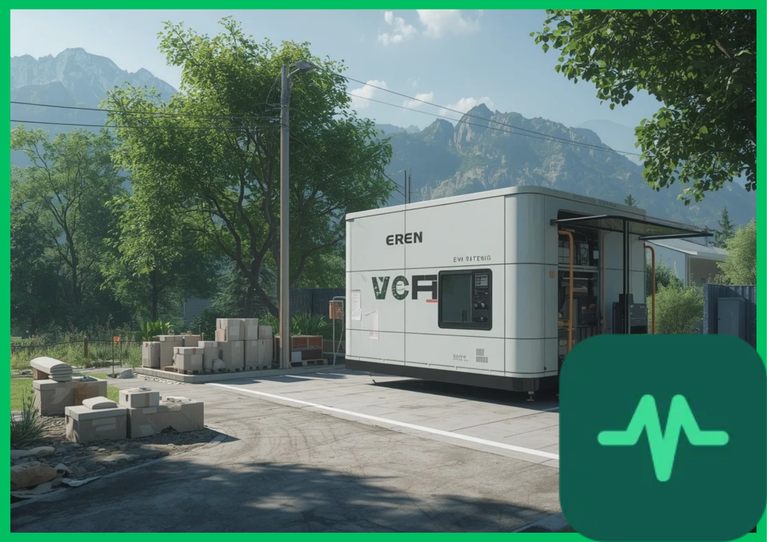
A second-life EV battery energy storage system is a stationary power unit built using retired electric vehicle battery packs that have been removed from cars, tested for structural health, reconfigured, and installed in homes, commercial buildings, or utility substations.
Instead of shredding the battery immediately for raw metal recycling, technicians give the pack a new job.
Stationary energy storage does not require the explosive acceleration or high-power surges demanded by a speeding car on a highway.
A stationary battery sits quietly in a basement, a commercial utility shed, or an outdoor container array.
It absorbs electricity gently from rooftop solar panels or wind turbines during the day, and discharges that power slowly overnight when energy demand spikes.
In that calm environment, a retired EV battery pack operates under very low stress.
It can run reliably for another ten to fifteen years before its chemical cells finally degrade to the point where metal recycling becomes necessary.
The Science of Battery Aging and Residual Capacity
Why does a battery that is too weak for a car still work wonderfully for a home?
The answer lies in the physics of chemical wear.
When you drive an electric vehicle, you demand sudden, massive bursts of electrical current.
Accelerating up a steep mountain pass or pulling away fast from a stoplight forces thousands of amperes through the battery cells in seconds.
As a battery ages, its internal resistance climbs, and it can no longer deliver those intense power spikes without dropping voltage.
That voltage drop triggers the car's computer to report a reduced driving range.
When that same battery is wired into a stationary home storage system, the operational rules change completely.
A home solar storage unit charges and discharges slowly over hours.
Academic battery research shows that operating under those gentle, low-C-rate conditions puts minimal stress on aging lithium-ion cells.
The battery stabilizes, handles daily solar storage cycles with ease, and provides reliable backup power without breaking a sweat.
Bridging the Gap Between Transportation and Renewable Grids
The environmental and economic benefits of second-life batteries extend far beyond individual homes.
They play a critical role in balancing regional power grids.
As cities build more wind and solar farms, grid operators face the daily challenge of intermittency—storing surplus daytime energy for nighttime use.
Building brand-new stationary battery storage containers requires significant capital and raw material extraction.
According to UNEP resource circularity frameworks, repurposing retired automotive batteries delays raw mining demands, keeping valuable minerals in active economic circulation for decades longer.
According to IEA energy transition assessments, second-life storage units provide low-cost energy storage for developing microgrids, remote island communities, and commercial businesses seeking backup power protection.
ENERGY STAR efficiency evaluations highlight that these stationary systems maintain high round-trip energy efficiency, ensuring minimal power loss during charging and discharging cycles.
Closing the Loop on Industrial Manufacturing
Repurposing EV batteries represents a profound philosophical shift in how humanity treats manufactured goods.
We are moving away from a linear throwaway culture, embracing a circular economy where every material finds a second, third, and fourth purpose.
When a second-life battery finally reaches the absolute end of its stationary storage journey years down the road, it is sent to a recycling facility where advanced hydrometallurgical processes recover up to 95% of its lithium, cobalt, and nickel to build brand-new cells.
By stringing together automotive use, stationary grid storage, and ultimate chemical recycling, we build a truly closed-loop industrial cycle.
Powering a Circular Future
Second-life EV battery energy storage proves that clean technology can solve its own challenges through brilliant engineering and resource stewardship.
We no longer have to fear that retired electric cars will leave behind a legacy of toxic waste.
By testing worn battery packs, giving them a quiet second career storing solar power in homes and utility arrays, and recycling their minerals at the very end, we reshape our industrial footprint.
We step away from waste and extraction, embracing a smart, circular, and sustainable standard of living.
Through innovative recycling science, thoughtful engineering, and deep respect for our planetary ecosystem, second-life batteries power our world toward a clean, enduring future.

Comments (0)
Login to leave a comment.
No comments yet. Be the first to share your thoughts!