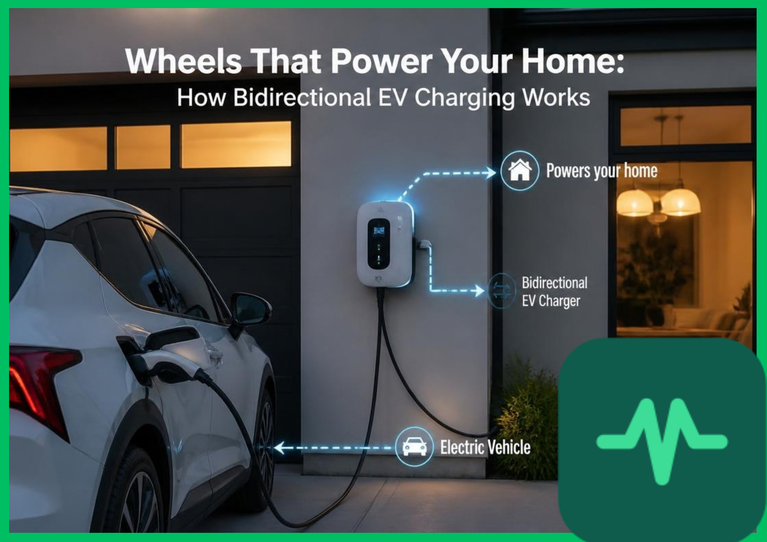
For most people, that action is a one-way street: electricity flows from the house grid into the car battery overnight.
What if that flow could reverse?
What if your car battery did not just drive you to work, but also kept your lights on, your refrigerator running, and your home heated during a severe winter blackout?
Electric vehicles sit parked roughly 95% of the time, carrying massive battery packs that store anywhere from 60 to 130 kilowatt-hours of electrical energy.
That is enough power to run an average household for days.
Bidirectional charging technology turns your electric car into a mobile power plant.
Here is how vehicle-to-grid power flow works and why it is transforming home energy resilience.
The One-Way Street of Legacy Charging
To understand bidirectional charging, you have to look at standard EV chargers.
Traditional home chargers are unidirectional. They pull alternating current electricity from your home's electrical panel, convert it into direct current electricity using an onboard charger, and store it in the car's battery pack.
Power flows in only one direction: into the car.
During a grid blackout, a standard EV sits in your garage full of electrical energy, completely unable to share a single watt of that power with your dark house.
Engineers realized this was a massive missed opportunity.
An electric vehicle is essentially a giant battery on wheels. Why not let it talk back to the house?
How Bidirectional Power Flow Works
Bidirectional charging adds a two-way communication and power exchange capability to your vehicle and home setup.
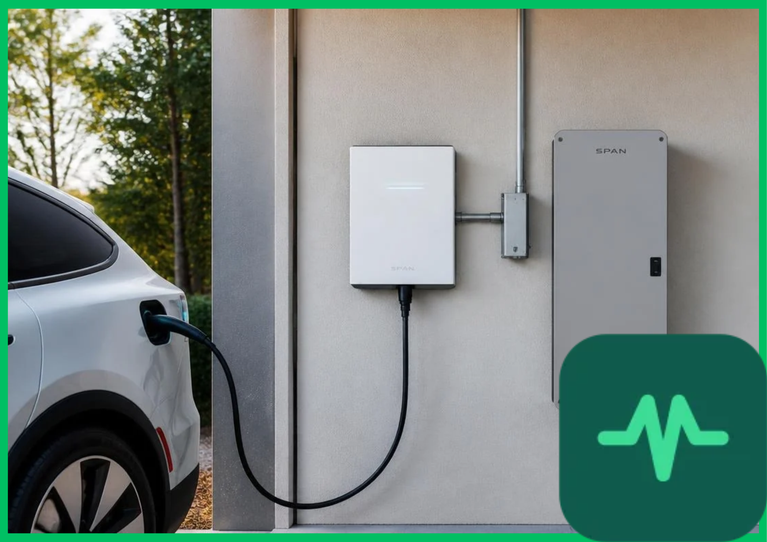
The system relies on a specialized bidirectional home charger equipped with advanced smart-inverter technology.
When a blackout strikes or when household electricity demand peaks, the bidirectional charger reverses the electrical flow.
Direct current electricity leaves the car's battery pack, passes through the bidirectional inverter, converts into standard alternating current electricity, and flows directly into your home's breaker panel.
Your refrigerator stays cold, your medical equipment keeps running, and your home emergency lights shine brightly—all powered by the car parked in your garage.
Beyond Blackouts: Vehicle-to-Home and Vehicle-to-Grid
Bidirectional charging extends far beyond emergency backup protection.
It opens the door to two major operational modes: vehicle-to-home and vehicle-to-grid.
Vehicle-to-Home (V2H): Many regional utilities charge high peak-rate prices for electricity during evening hours. With V2H systems, you can power your home using the cheap solar energy stored in your EV battery during those expensive evening peak hours, saving hundreds of dollars a year on utility bills.
Vehicle-to-Grid (V2G): When thousands of parked electric cars connect to bidirectional chargers across a city, they form a massive virtual power plant. During sudden heatwaves when regional power grids struggle to meet peak demand, utility operators can draw tiny, safe amounts of surplus energy back from parked EV fleets to stabilize the local grid, rewarding car owners financially.
Overcoming Hurdles to Universal Adoption
Like any major technological shift, bidirectional charging faces standardization and regulatory hurdles.
Automakers must update vehicle software and hardware architectures to support two-way power flow without voiding battery warranties.
Electrical codes and utility standards must adapt to ensure safe power export without endangering line repair crews during grid outages.
Major automakers are actively building bidirectional capabilities into their newest vehicle lineups, paving the way for widespread global adoption.
Reimagining the Car as Energy Infrastructure
An electric car is no longer just a vehicle that takes you from point A to point B.
It is a mobile energy storage asset that bridges personal transportation and home electrical infrastructure.
By turning your wheels into a power source, bidirectional charging ensures that you are never truly powerless, building a resilient energy future from your own garage.

Comments (0)
Login to leave a comment.
No comments yet. Be the first to share your thoughts!