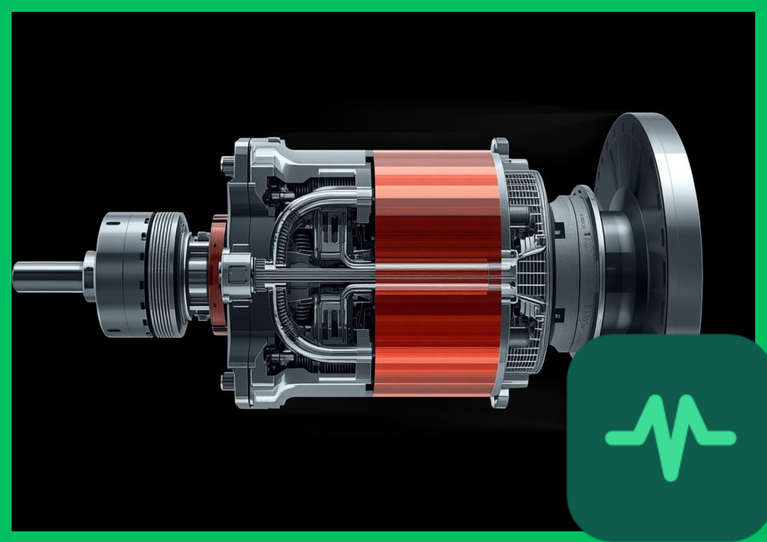
To most drivers, an electric motor is a simple black box of magic that turns electricity into motion.
Underneath the aluminum housing, however, engineers debate a fascinating technological choice.
Not all electric vehicle motors are built the same way.
Automakers choose between two primary motor designs to drive their electric cars: permanent magnet motors and induction motors.
Each design relies on distinct electromagnetic physics, offering unique trade-offs in efficiency, torque delivery, and cost.
Here is what is happening inside the EV powertrain.
The Basics of Electromagnetic Propulsion
Before comparing motor types, let review how an electric motor works.
Every electric motor consists of two primary parts: a stationary outer ring called the stator, and a spinning inner core called the rotor.
When electrical current flows through the stator windings, it creates a rotating magnetic field.
That magnetic field interacts with the rotor, pulling or pushing it along, turning electrical energy into mechanical rotation.
How the rotor creates its own magnetic field is where permanent magnet motors and induction motors part ways.
Permanent Magnet Motors: Maximum Efficiency and Power
Permanent magnet motors are the heavyweights of efficiency in the electric vehicle world.
As their name implies, these motors use powerful permanent magnets embedded directly inside the spinning rotor.
These magnets are often crafted from rare-earth metals like neodymium, creating a strong, constant magnetic field without needing any external electrical power.
When the stator energizes, it locks onto those permanent magnetic fields instantly, spinning the rotor with incredible responsiveness.
The advantage? Permanent magnet motors deliver exceptional power density and high energy efficiency. They squeeze every possible drop of range out of a battery pack, making them the go-to choice for maximizing vehicle range.
Their drawback lies in those rare-earth materials, which face supply chain volatility and high mining costs.
Induction Motors: Simplicity and Drag-Free Coasting
Induction motors take a completely different engineering approach.
Invented over a century ago by Nikola Tesla, an induction motor uses zero permanent magnets in its rotor.
Instead, the rotor consists of a simple steel cylinder wrapped in copper bars.
When electricity surges through the stator, it induces a magnetic field inside the rotor through electromagnetic induction—hence the name.
Because there are no permanent magnets fighting against magnetic drag when the motor is unpowered, induction motors coast with absolute freedom.
When you lift your foot off the accelerator and coast down a highway, an induction motor generates zero electromagnetic drag, making it exceptionally smooth.
They are also cheaper to build and avoid rare-earth mineral supply constraints entirely.
However, they consume slightly more energy during heavy acceleration compared to permanent magnet designs.
The Modern EV Strategy: Dual-Motor All-Wheel Drive
Modern electric vehicle engineers do not always choose just one motor type.
Many high-performance all-wheel-drive electric cars use a clever hybrid powertrain strategy: they pair a high-efficiency permanent magnet motor on the rear axle for daily driving range, and an induction motor on the front axle.
When cruising on the highway, the car relies exclusively on the ultra-efficient permanent magnet motor.
When you punch the accelerator or drive through slippery snow, the induction motor on the front axle instantly kicks in to deliver maximum traction and raw performance.
Choosing Power Wisely
The choice between permanent magnet and induction motors highlights the delicate balance of EV engineering.
Every electromagnetic design decision impacts driving range, manufacturing cost, and raw acceleration.
Understanding what powers your electric car reveals the brilliant physics driving our global transition to sustainable transportation.

Comments (0)
Login to leave a comment.
No comments yet. Be the first to share your thoughts!