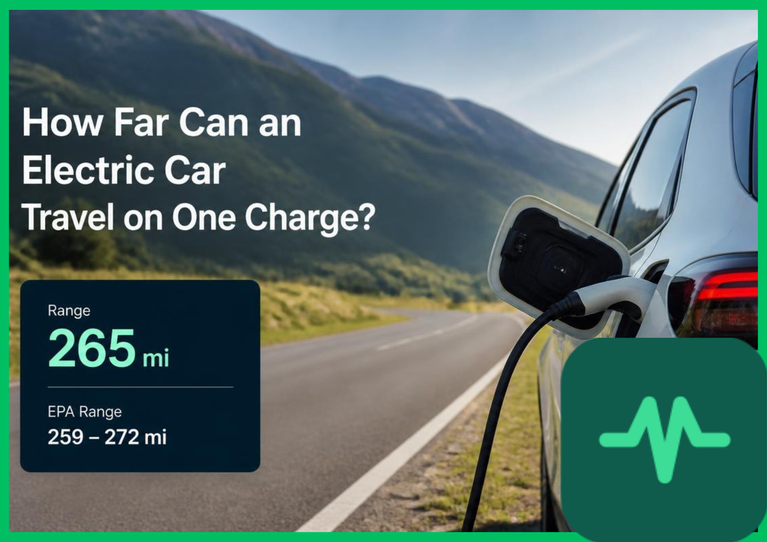
Electric car range refers to how far a vehicle can travel using the energy stored in its battery. It's one of the most important specs for any EV buyer to understand.
A vehicle with a longer range can travel farther before needing a recharge. But the advertised range isn't always what a driver actually experiences day to day. Real-world conditions can change how much electricity an electric car actually uses.
Why Range Matters
Petrol drivers often think about how far they can go before refueling. EV drivers face the same basic question, just with a different rhythm.
Charging works differently than refueling. Many EV owners charge at home. This means the car often starts the day with plenty of energy for normal driving.
Range becomes more important on long trips, though. A driver covering several hundred kilometers may need to plan charging stops along the way.
Battery Size Affects Range
Battery capacity gets measured in kilowatt-hours, or kWh. A larger battery stores more electricity. All else being equal, that lets the car travel farther.
But battery size isn't the only factor at play. Two vehicles with identical battery capacity can still have very different ranges. That difference comes down to efficiency.
Vehicle Efficiency Matters
Picture two electric cars with the same battery. One uses more electricity per kilometer. The other uses less. The more efficient vehicle simply goes farther on the same charge.
Efficiency depends on several things:
- Vehicle weight
- Aerodynamics
- Motor efficiency
- Tires
- Driving speed
- Weather
- Road conditions
- Heating and cooling
Because of this, it's worth comparing both battery capacity and energy consumption, not just one or the other.
Highway Driving Can Reduce Range
Driving at high speed increases energy consumption. Air resistance grows sharply as speed increases, so a vehicle often uses more electricity on a fast highway drive than during slower city driving.
This can meaningfully reduce electric car range. Think about how you normally drive before assuming a number. An EV that performs beautifully in city traffic may show a noticeably different range on a long highway trip.
Cold Weather Can Affect Range
Temperature plays a real role too. Cold weather increases electricity consumption. The vehicle needs energy to heat the cabin. Battery performance itself can also dip in low temperatures.
The result is often a lower real-world range in winter. This doesn't mean EVs can't handle cold climates. They can. It simply means drivers should understand how temperature shifts performance before relying on a single range number.
Hot Weather Can Also Matter
Very hot conditions increase energy use too. Air conditioning draws real power. Battery thermal management systems consume energy as well.
Drivers in hot climates may notice a gap between lab figures and everyday range. This isn't unique to any one vehicle. It's simply part of understanding how electric vehicles actually work in the real world.
Air Conditioning Affects Range
Drivers often underestimate how much climate control affects range. Heating and cooling both draw electricity, and that power comes straight from the battery.
The exact impact depends on the system, the outside temperature, and driving conditions. For drivers in very hot or very cold climates, climate control deserves a real place in range planning.
Driving Style Matters
Aggressive acceleration increases electricity use. Frequent high-speed driving reduces efficiency too. Smooth, steady driving helps cut unnecessary energy consumption.
Regenerative braking can recover some energy as the car slows down. It's worth noting, though: regenerative braking doesn't create free electricity. It simply recovers energy that would otherwise be lost during deceleration.
Regenerative Braking
Regenerative braking is one of the standout features in many EVs. As the driver slows down, the electric motor can send some energy back into the battery instead of wasting it as heat.
This improves overall efficiency, especially in stop-and-go traffic. It's exactly why some EVs perform so well in busy urban environments.
Traffic Can Change the Picture
City driving means frequent stops and starts, which increases energy use on its own. Regenerative braking helps recover some of that loss, though.
Highway driving involves fewer stops. But higher speeds bring greater aerodynamic losses instead.
There's no universal rule saying city driving always beats highway driving, or vice versa. The result depends on the specific vehicle and the actual conditions.
Tires and Vehicle Load Matter
Extra weight takes more energy to move. Carrying heavy cargo or equipment can noticeably affect range.
Tire pressure matters too. Incorrect pressure increases rolling resistance, which quietly drains the battery faster than expected. Simple, regular maintenance, following the manufacturer's recommendations, helps keep efficiency where it should be.
Advertised Range vs Real-World Range
Manufacturers test vehicles using standardized procedures. These tests are genuinely useful for comparing different vehicles side by side.
They can't reproduce every real-world situation, though. Drivers travel at different speeds. They drive different roads. They live in different climates. They use heating and air conditioning differently.
Because of all this, actual electric car range can differ from the official figure. Treat the official number as a useful comparison point, not a guarantee.
Battery Degradation
Battery performance changes over time. Batteries gradually lose some usable capacity, a process called degradation.
The rate varies depending on battery chemistry, usage patterns, temperature, and charging habits. Modern EV batteries are built to last for many years. Still, it's worth checking the manufacturer's battery warranty directly. A strong warranty offers real added confidence.
Charging Infrastructure Reduces Range Anxiety
Range is becoming easier to manage as charging networks expand. Drivers don't need to run the battery nearly empty before finding a charger.
Instead, drivers can plan stops in advance. Many vehicles and navigation systems now help locate charging stations automatically. This is making long-distance EV travel increasingly practical, especially in markets with strong charging infrastructure.
How Much Range Does a Consumer Really Need?
This question deserves real thought. More range isn't always necessary.
Suppose someone drives 40 kilometers a day. A vehicle with a massive battery may offer far more range than that driver will ever use. Another driver might regularly travel long distances instead. That person will genuinely value a long-range vehicle much more.
Match the vehicle to your actual lifestyle, not to the biggest number on the spec sheet.
What Consumers Should Ask
Before buying an EV, ask:
- What is the official range?
- What is the battery capacity?
- How efficient is the vehicle?
- How does it perform in my climate?
- How much range can I expect on highways?
- How long does charging take?
- Where can I charge?
These questions paint a far more useful picture than the headline range number alone.
EcoGreenPulse View
Electric car range matters, but it shouldn't be viewed in isolation. A vehicle's efficiency, battery size, climate, speed, and charging network all shape the real driving experience together.
For many consumers, the best EV isn't necessarily the one with the longest advertised range. It's the one that actually fits their daily driving needs.
Conclusion
Electric car range depends on far more than battery size alone. Weather, speed, driving style, vehicle weight, and road conditions all play a role.
The official range offers a useful comparison point. Real-world performance can still look quite different, though. Think about how you actually drive before choosing an electric vehicle.
For many drivers, charging at home and using an EV mainly for normal daily journeys makes range concerns far less significant than they might first appear.
Source: International Energy Agency, Global EV Outlook 2026.
Comments (0)
Login to leave a comment.
No comments yet. Be the first to share your thoughts!