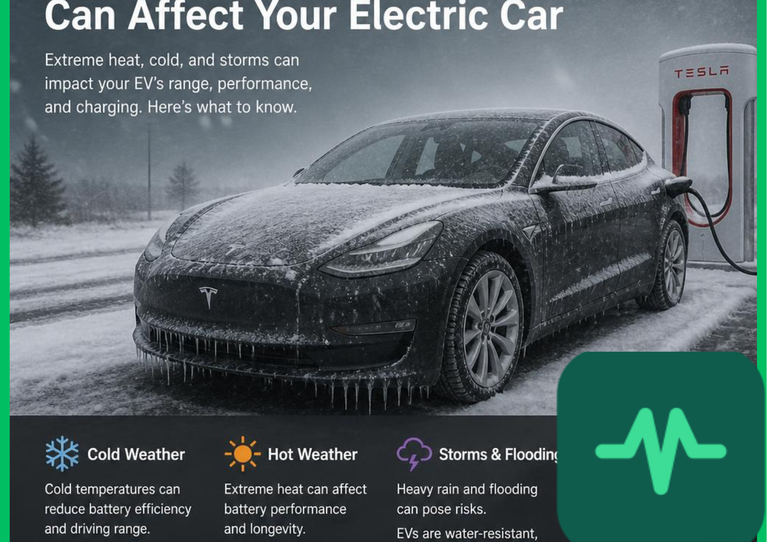
Electric vehicles are built for everyday driving. Weather, though, can affect any vehicle on the road, electric or not.
For electric cars specifically, temperature has a noticeable effect on battery performance and range. This matters especially in very hot or very cold climates. Understanding these effects helps EV owners plan better. It also cuts down on unnecessary worry.
Cold Weather Can Reduce Range
Cold temperatures affect an electric car's battery directly. They also increase the energy needed to heat the cabin comfortably.
As a result, an EV often uses more electricity in cold weather than it would on a mild day. The actual impact varies by vehicle and by exact conditions. Modern EVs use thermal-management systems specifically to help control battery temperature and limit this effect.
Heating Uses Energy
A petrol vehicle can use waste heat from its engine to warm the cabin, essentially getting heating "for free" as a byproduct. An electric vehicle doesn't have that same combustion engine to lean on.
Heating, as a result, requires additional electrical energy pulled straight from the battery. This can noticeably reduce driving range in cold conditions. Some electric vehicles use heat pumps instead of simple resistive heaters, which improves heating efficiency considerably.
Battery Preconditioning
Many modern EVs offer a feature called battery preconditioning. This warms or cools the battery ahead of time, preparing it for charging or driving.
It helps the battery operate within its ideal temperature range from the start, rather than working against extreme conditions. Check your specific vehicle's instructions to understand exactly how this feature works and when to use it.
Extreme Heat Can Also Matter
Very high temperatures place real stress on batteries too, not just cold ones. Modern EVs include systems specifically designed to manage this heat.
These systems use active cooling methods to keep the battery within a safe operating range. Extreme heat can still affect efficiency and charging behavior, though, even with these protections in place.
Charging in Hot Weather
Charging systems sometimes reduce power output when temperatures climb very high. This is a deliberate protective measure, not a malfunction.
The exact behavior depends on the specific vehicle and charger involved. Don't assume charging speed will stay identical in every condition. A 100-degree afternoon might genuinely charge slower than a mild spring morning.
Heavy Rain
Electric vehicles include real electrical safety systems built for wet conditions. Normal rain doesn't make an EV unsafe to drive or charge.
Flooding is a completely different story, though. Never assume a road covered by deep floodwater is safe simply because your vehicle happens to be electric. The same basic safety rule applies to petrol vehicles too. If a road is flooded, avoid it entirely unless authorities have confirmed it's genuinely safe to cross.
What About Car Washing?
Normal vehicle washing is a totally routine part of car care, even for EVs. Electric cars are designed to handle normal exposure to water without issue.
Still, follow the manufacturer's instructions for charging equipment and connectors specifically. If any charging equipment appears damaged, don't use it until it's been properly inspected by a professional.
Extreme Weather and Charging Infrastructure
Weather can affect charging stations themselves, not just the car. Severe storms can damage power infrastructure directly. Flooding can make roads or entire charging locations inaccessible for days.
Long-distance EV drivers should think through alternative charging options whenever severe weather is forecast along their route. A little planning here can make a genuinely major difference to how a trip actually goes.
Weather Forecasts Matter More for Long Trips
A short trip around town usually doesn't need much planning. A long journey is a different story entirely. Before traveling, consider:
- Weather conditions along your route
- Available charging points
- Expected range in current conditions
- Alternative routes if needed
- Traffic conditions
This kind of planning becomes especially valuable during severe weather, when things can change quickly and options narrow fast.
Battery Temperature Management
Modern EVs increasingly rely on sophisticated battery-management systems working quietly in the background. These systems monitor temperature continuously. They adjust charging and power delivery automatically in response.
The goal throughout is protecting the battery while still maintaining strong vehicle performance. This technology is exactly why modern EVs can operate reliably across such a wide range of climates worldwide.
Does Extreme Weather Damage EV Batteries?
Occasional exposure to hot or cold weather doesn't automatically cause permanent battery damage. That's genuinely reassuring news for most drivers.
Repeated, sustained extreme conditions can affect battery performance and long-term aging, though. This is exactly why manufacturers build in thermal-management systems and specific operating limits. Follow your vehicle's own recommendations rather than assuming every EV behaves identically.
Hot Climate EV Ownership
Living somewhere hot? Parking in shade can genuinely help reduce cabin heat buildup before you even start driving. Using scheduled charging and your vehicle's built-in thermal-management features, according to the manufacturer's guidance, helps too.
Don't rely on random internet myths you've picked up secondhand, though. Vehicle-specific instructions from your actual manufacturer are far more reliable than generic advice floating around online.
Cold Climate EV Ownership
In cold climates, keeping the vehicle plugged in while preconditioning, when your vehicle supports it, can genuinely help. This lets some of that energy come from the grid directly, rather than draining entirely from the battery itself.
The exact procedure still depends on your specific vehicle, so check your owner's manual before assuming a universal approach works.
EcoGreenPulse View
The idea of driving an electric car in extreme weather can sound worrying at first glance. EVs are built to operate reliably across many different environments, though.
The real issue isn't whether EVs can handle weather. It's understanding how that weather affects your range, your charging, and your overall comfort, so nothing catches you by surprise.
Conclusion
Extreme weather affects every form of transportation, not just electric vehicles. For EV owners specifically, temperature has a particularly noticeable effect on battery performance and range.
The good news is that modern electric vehicles include real systems designed to manage these conditions automatically. Good planning helps too. Check the weather ahead of time. Know your vehicle's realistic range in current conditions. Plan your charging stops. And follow the manufacturer's guidance rather than guessing.
Sources: International Energy Agency resources on electric vehicles and battery technology.


Comments (0)
Login to leave a comment.
No comments yet. Be the first to share your thoughts!