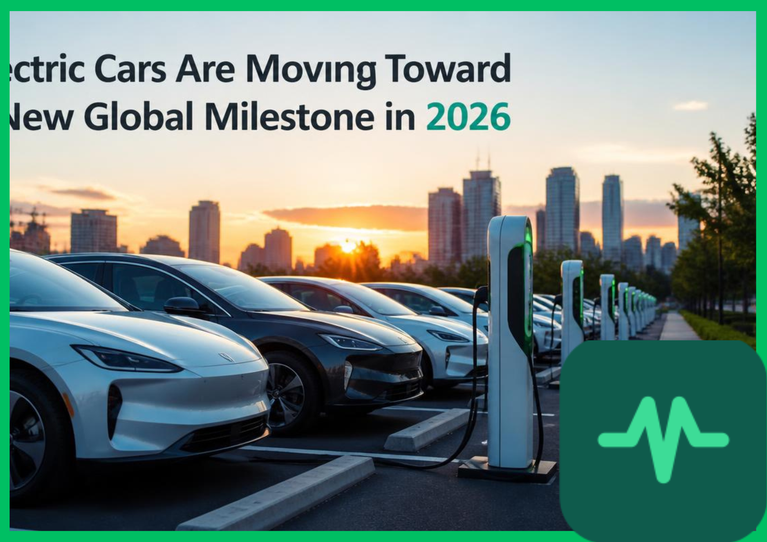
This growth is not limited to a few markets anymore. Electric car sales are gaining ground across several major regions. Adoption still varies a lot by country, though.
China Remains the Largest Market
China continues to lead global electric car sales by a wide margin. The IEA expects electric cars to approach 60% of total car sales in China during 2026. Europe is growing fast too. Electric vehicles there are projected to reach about one-third of new car sales.
This shift changes the whole automotive landscape. Electric car sales are no longer just an environmental story. EVs now compete directly with gas cars on price. They compete on performance too. They compete on technology and running costs.
Battery Technology Is Becoming Even More Important
Rising electric car sales are driving huge demand for batteries. EV battery deployment reached about 1.2 terawatt-hours in 2025. That is almost 30% higher than 2024. It is more than seven times the level seen in 2020.
Electric vehicles made up over 70% of global battery deployment in 2025. So the future of electric car sales depends heavily on battery supply. It depends on mineral sourcing. It depends on charging infrastructure and recycling too.
Manufacturing Is Becoming a Strategic Issue
Where EVs get built matters a lot. China made about 70% of electric cars in 2025. It made more than 80% of battery cells too. This concentration has real consequences for global electric car sales going forward.
Countries hoping to grow their own EV industries need more than assembly lines. They need battery production. They need critical minerals. They need skilled workers and charging networks too.
What About Africa?
Africa sits at a different stage of this shift. The continent holds real potential for electric car sales, especially in two- and three-wheelers. Public transport matters here too. Still, adoption depends on affordability. It depends on reliable electricity and charging access.
This means Africa's path may look different from Europe or North America. Electric motorcycles could matter more here. So could battery-swapping systems and electric buses.
The Battery Question
Fast growth raises real questions too. What about battery materials? What about manufacturing emissions and recycling? Electric car sales cannot be judged by tailpipe emissions alone.
A full picture must include charging electricity. It must include manufacturing and battery production. It must include materials and eventual recycling. EV growth is really part of a much bigger technology story.
EcoGreenPulse View
The 2026 outlook shows electric car sales moving past the early-adopter stage. The next phase will be more complex, though.
Competition will increasingly center on battery cost. It will center on charging speed and reliability. Software and manufacturing efficiency will matter too, alongside range and performance.
For buyers, choosing an EV is becoming a normal value decision. It is less of a purely environmental choice now. For governments and businesses, the challenge is bigger still. They must build the charging, electricity, and recycling systems needed to support much higher electric car sales ahead.
Source: International Energy Agency, Global EV Outlook 2026.
Comments (0)
Login to leave a comment.
No comments yet. Be the first to share your thoughts!