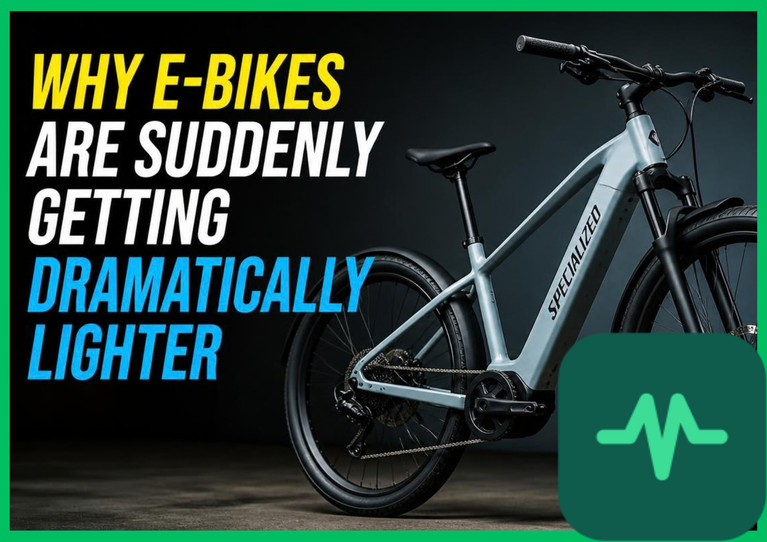
That's genuinely changing, and the shift is happening faster than many people realize.
Why weight has always mattered for e-bikes
A heavier e-bike is genuinely harder to carry up stairs, lift onto a bike rack, or maneuver when the motor isn't actively assisting you. For many riders, this weight became one of the more frustrating, honest tradeoffs of e-bike ownership.
Manufacturers have long understood this frustration, but reducing weight while maintaining performance and battery range required genuine engineering advances that took time to develop and refine.
What's actually driving this shift now
Newer materials, particularly advanced carbon fiber construction, have become more accessible and more affordable to incorporate into e-bike manufacturing than in previous years. This material offers a genuinely impressive strength-to-weight ratio compared to traditional materials used in earlier e-bike designs.
Battery technology has also genuinely improved, packing more energy capacity into smaller, lighter battery packs than was realistically possible in earlier generations of e-bikes.
Motor design has become more compact and efficient too, delivering comparable or improved performance from genuinely smaller, lighter components than older motor designs required.
The honest scale of this improvement
Recent showcases of new e-bike models have highlighted genuinely dramatic weight reductions compared to typical e-bikes from just a few years ago, some approaching weights that would have seemed genuinely unrealistic for a motor-and-battery-equipped bicycle in the recent past.
This isn't a marginal, incremental improvement. It represents a genuinely significant shift in what's realistically achievable in e-bike design and engineering.
Why lighter weight matters beyond simple convenience
A lighter e-bike handles more naturally, particularly when riding without motor assistance, like when the battery runs low or when navigating tight, technical situations where precise handling matters.
Lighter e-bikes are also considerably easier to transport, whether that means carrying them up an apartment stairwell, lifting them onto a car rack, or bringing them aboard public transportation for a combined commute.
For riders who found earlier, heavier e-bikes genuinely intimidating or impractical for their specific living situation, this weight reduction genuinely opens up e-bikes as a realistic option they hadn't previously considered.
The honest tradeoffs still worth understanding
Advanced lightweight materials and components generally cost more than heavier, more traditional alternatives. This means the lightest available e-bikes typically carry a genuinely higher price tag compared to bulkier, more affordable options.
There can also be honest tradeoffs in specific use cases. Extremely lightweight designs may prioritize weight reduction over maximum battery range or motor power, meaning riders should honestly consider their specific priorities rather than assuming lighter automatically means better in every single respect.
Who benefits most from this trend
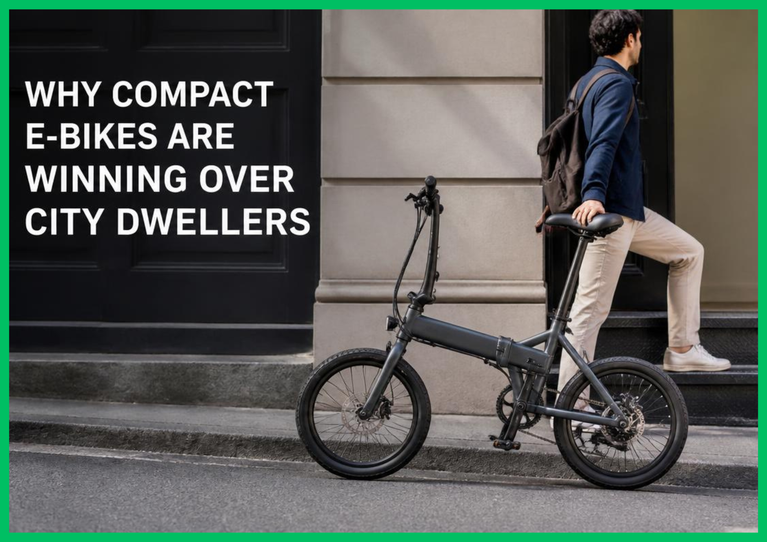
Urban commuters navigating stairs, elevators, and tight storage situations benefit enormously from reduced weight, since these daily friction points matter far more in city living than they might for someone with a garage and driveway.
Riders combining e-bikes with public transportation also benefit significantly, since carrying a bike onto a train or bus becomes considerably more practical when it doesn't require genuine physical effort just to lift and maneuver it.
Anyone who found the weight of earlier e-bike generations genuinely off-putting has good reason to reconsider, given how meaningfully the landscape has shifted in recent years.
What to actually look for if weight matters to you
Check the actual specified weight of any e-bike you're considering, rather than assuming all e-bikes weigh roughly the same amount, since the range across current models has become genuinely significant.
Consider your realistic priorities honestly. If maximum range matters more to you than minimum weight, a slightly heavier bike with a larger battery might genuinely serve you better than the absolute lightest available option.
Test ride different weight options if possible, since how a bike's weight actually feels in practice can differ from how it appears on a simple spec sheet comparison.
Why this trend will likely continue
As lightweight materials and components continue becoming more accessible and more affordable to manufacture at scale, this weight reduction trend will likely continue extending beyond just premium, high-end models into more moderately priced options as well.
This mirrors patterns seen in other technology categories, where innovations initially available only in premium products gradually become standard across a broader range of price points over time.
The honest bottom line
E-bikes are genuinely, dramatically getting lighter, driven by real advances in materials, battery technology, and motor design. This shift addresses one of the most persistent, honest frustrations riders have had with e-bikes since they first became popular.
If weight has ever held you back from considering an e-bike, it's genuinely worth taking another look at what's currently available. The category has changed meaningfully, and continues evolving quickly in this direction.

Comments (0)
Login to leave a comment.
No comments yet. Be the first to share your thoughts!