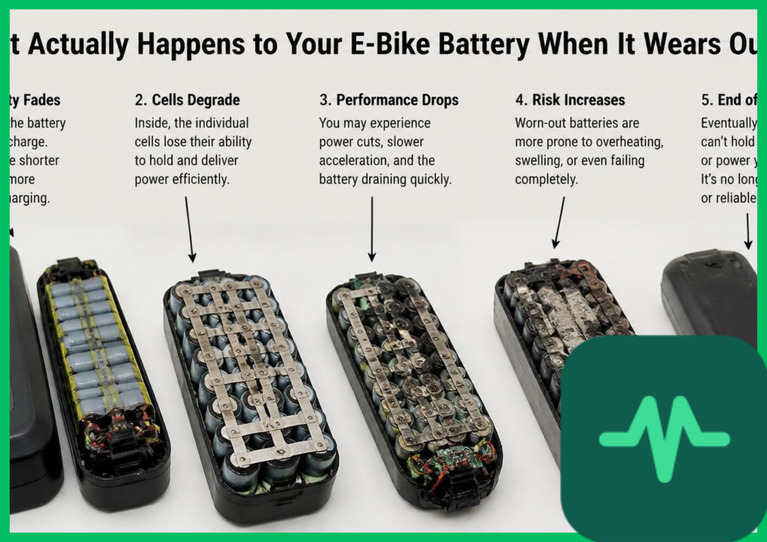
So what actually happens next? This is a genuinely practical question more riders should ask before it becomes urgent.
Why e-bike batteries eventually wear out
Like all rechargeable batteries, e-bike batteries gradually lose capacity through repeated charge and discharge cycles over time. This is completely normal, expected behavior, not a sign of a defective product.
Most riders notice this gradually, a slightly shorter range here, a bit less power there, accumulating slowly over years of regular use until it eventually becomes genuinely noticeable in daily riding.
Why you shouldn't just throw it in regular trash
E-bike batteries contain materials that require proper handling, both for genuine environmental reasons and for basic safety. Improperly disposed batteries can pose real fire risks if damaged or crushed during regular waste handling, and they contain materials that shouldn't simply enter general landfill waste streams.
This isn't meant to alarm you unnecessarily. It's simply an honest, practical reason why proper disposal genuinely matters more than it might initially seem.
The responsible disposal options actually available
Many bicycle shops and e-bike retailers accept old batteries for proper recycling, even if you didn't originally purchase your e-bike from that specific location. This is often the most convenient, accessible option for most riders.
Battery recycling programs, similar to those available for other rechargeable battery types, increasingly accept e-bike batteries specifically, given their growing prevalence as e-bike ownership continues expanding globally.
Some manufacturers have also established their own take-back programs specifically for their battery products, providing a direct, straightforward path for proper recycling.
What actually happens during proper recycling
Once collected, batteries go through a specialized recycling process designed to recover valuable materials contained within them. This process has genuinely improved over recent years, recovering an increasingly meaningful portion of these materials for reuse in manufacturing new batteries.
This creates a more genuinely sustainable cycle, rather than requiring entirely new raw materials to be extracted every single time a new battery gets manufactured.
Signs your battery is genuinely nearing the end
Noticeably reduced range compared to when the battery was new is the most common, obvious sign. If you're regularly getting considerably less distance per charge than you used to, despite similar riding conditions, this typically indicates genuine capacity loss.
Longer charging times, or a battery that seems to charge fully but then depletes unusually quickly during actual riding, can also indicate declining battery health worth addressing.
Physical signs like swelling, unusual heat during charging, or visible damage should be taken seriously and addressed immediately, both for performance reasons and genuine safety concerns.
How to actually extend your current battery's life
Avoid consistently charging to completely full capacity if your specific battery and charger allow for adjustable charging limits, since this can help reduce long-term wear compared to always charging to maximum capacity.
Store your e-bike and battery in moderate temperatures when possible, avoiding extreme heat or cold for extended periods, since temperature extremes can accelerate battery degradation over time.
Avoid letting the battery sit completely depleted for extended periods, particularly during storage, since this can cause more significant, sometimes permanent capacity loss compared to storing it with a partial charge.
What to do when replacement time genuinely arrives
Research genuine replacement options specifically compatible with your e-bike model before purchasing, since compatibility varies considerably between manufacturers and models.
Consider whether your current e-bike still meets your needs well enough overall to justify a replacement battery investment, versus whether it might make more sense to consider a newer e-bike entirely, depending on the age and overall condition of the rest of the bike.
Why thinking about this now genuinely matters
Many riders don't consider battery disposal until they're already holding a depleted battery with no clear plan for what to do with it. Understanding your genuine options in advance makes this eventual transition considerably smoother and more responsible when the time actually comes.
This is particularly relevant given how rapidly e-bike ownership has grown globally in recent years. As more batteries reach the end of their useful life collectively, responsible handling becomes increasingly important at a broader, genuinely meaningful scale.
The honest bottom line
Every e-bike battery eventually wears out, and that's genuinely normal, expected behavior, not a flaw specific to your particular bike or battery. What matters is handling that eventual transition responsibly, through proper recycling channels rather than regular trash disposal.
Taking a few simple, sensible steps to extend your current battery's life, combined with knowing your genuine recycling options in advance, means you're prepared for this eventual, inevitable moment, rather than being caught off guard when your battery's performance finally starts noticeably declining.


Comments (0)
Login to leave a comment.
No comments yet. Be the first to share your thoughts!