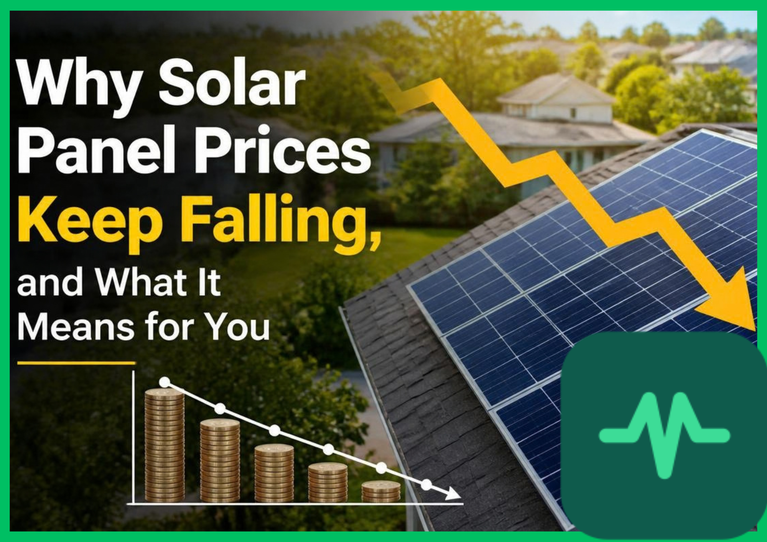
Solar panel prices have continued falling, and understanding why helps you decide whether now is genuinely the right moment to reconsider.
The honest scale of the price decline
Industry pricing data continues to show solar cell and panel costs trending downward, with recent reports noting multiple consecutive weeks of falling prices for common solar cell technology as manufacturing costs ease and market dynamics shift.
This isn't a brief, temporary dip. It reflects a longer-running trend that's continued for years, even as the technology itself has genuinely improved in efficiency and reliability over that same period.
Why this keeps happening
Manufacturing scale plays a genuinely major role. As solar panel production has expanded globally, manufacturers have achieved efficiencies that naturally reduce the cost per panel produced, similar to how many other manufactured technologies become cheaper as production volume increases.
Increased competition among manufacturers also plays a genuine role, with multiple companies competing for market share, which naturally puts downward pressure on pricing across the entire industry.
Technological improvements matter too. Manufacturing processes have genuinely become more efficient over time, requiring less raw material and less energy to produce each panel, which further reduces underlying production costs.
What falling prices actually mean for buyers
The most direct, obvious benefit is simple. Solar installations cost less today than they did in previous years, for genuinely comparable or even improved technology and performance.
This makes solar accessible to a broader range of households than was realistically the case in earlier years, when higher costs made solar feel like an option reserved primarily for buyers with substantial upfront budgets.
The honest complexity worth understanding
Panel cost is only one part of a solar installation's total price. Installation labor, supporting equipment, and any additional components like battery storage all factor into the final cost you'll actually pay.
This means falling panel prices alone don't necessarily translate into an equally dramatic drop in total installation cost, since other cost components haven't necessarily declined at the same pace.
Why timing your purchase can feel genuinely tricky
With prices continuing to trend downward, it's tempting to wonder whether waiting longer might result in an even better deal. This is a genuinely reasonable question worth considering honestly.
However, waiting indefinitely also means missing out on years of potential savings you could have already been earning from a working solar installation. There's a real, honest tradeoff between waiting for potentially lower future prices and starting to benefit from solar energy sooner rather than later.
A practical way to think about timing
Rather than trying to perfectly time the absolute lowest possible price, consider whether current pricing already makes solar a genuinely worthwhile investment for your specific situation and typical electricity usage.
If the answer is yes, based on your current numbers, waiting for potentially marginal future price improvements means delaying real, genuine savings you could already be accumulating in the meantime.
The quality question worth asking
As prices have fallen, it's worth asking honestly whether quality has been affected. Generally, established manufacturers have maintained genuine quality standards while still benefiting from broader industry cost reductions, though it remains genuinely important to research specific brands and installers rather than assuming all options are equally reliable.
Warranty terms and installer reputation matter just as much as the upfront price when evaluating a genuinely good solar investment, not just the sticker price alone.
Why this trend benefits everyone, not just direct buyers
Falling solar costs don't just benefit individual homeowners. They accelerate broader adoption of solar energy generally, which contributes to reducing reliance on other electricity generation methods at a larger, systemic level.
This creates a genuinely positive cycle, more affordable solar leads to wider adoption, which supports continued manufacturing scale and further innovation, which in turn continues supporting more affordable pricing over time.
What to actually do with this information
If you've been curious about solar but assumed it remained prohibitively expensive based on outdated impressions, it's genuinely worth getting a current, updated quote for your specific situation.
Compare that current pricing against your actual electricity costs and typical usage pattern, rather than relying on assumptions formed years ago that may no longer accurately reflect today's genuinely different pricing landscape.
The honest bottom line
Solar panel prices have genuinely continued falling, driven by manufacturing scale, competition, and ongoing technological improvement. This makes solar considerably more accessible than it was in previous years.
Whether now is the perfect moment to buy depends on your specific circumstances, but the broader trend is genuinely encouraging. Solar energy keeps becoming more affordable, not less, and that trajectory shows no clear signs of reversing anytime soon.

Comments (0)
Login to leave a comment.
No comments yet. Be the first to share your thoughts!