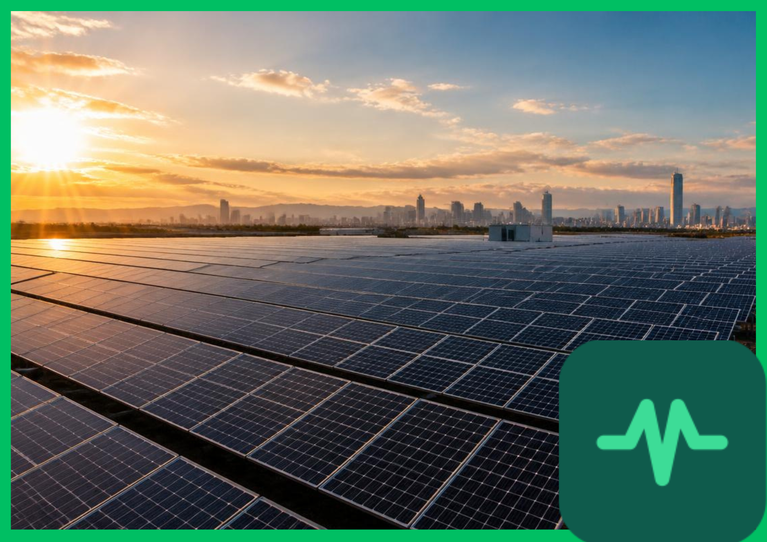
According to the International Renewable Energy Agency (IRENA), the world added 692 gigawatts (GW) of renewable power capacity in 2025, taking total installed renewable capacity to approximately 5,149 GW. Renewable capacity increased by 15.5% during the year.
Solar photovoltaic technology accounted for approximately 510 GW of the new capacity, while wind power added around 159 GW. This means solar alone represented nearly three-quarters of all renewable capacity added during the year.
Solar Remains the Main Driver
The figures demonstrate how strongly solar PV is shaping the global renewable-energy market.
The IEA’s Global Energy Review 2026 also shows the increasing importance of solar and wind in the global electricity system. Solar PV and wind together accounted for 17% of global electricity generation in 2025, compared with around 15% in 2024 and approximately 5% a decade earlier.
Solar generation itself experienced particularly strong growth. The IEA reports that global solar PV electricity generation increased by about 620 terawatt-hours (TWh) in 2025, compared with approximately 450 TWh of additional generation in 2024.
Europe Also Records Strong Growth
Europe remains an important part of the story.
The IEA reports that the European Union added nearly 85 GW of renewable capacity in 2025. This is a record for the region. Solar PV accounted for almost 70 GW of those additions.
Germany added approximately 17 GW of solar capacity, while Spain added around 14 GW. That is Spain's highest annual increase to date.
The EU’s electricity mix is also changing. Solar PV and wind together reached 30% of EU electricity generation in 2025, surpassing fossil fuels for the first time.
What Does This Mean for the Global Energy System?
The rapid expansion of solar is more than a story about new panels being installed.
It is changing the way electricity systems need to operate.
Because solar generation varies with sunlight, countries adding large amounts of solar capacity also need flexible electricity systems, storage, transmission infrastructure and demand-management technologies.
This creates opportunities beyond solar-panel manufacturing itself. Battery storage, smart grids, electricity interconnections and digital energy-management technologies are becoming increasingly important as variable renewable generation expands.
The IEA expects renewable electricity generation to continue growing strongly. In its 2026 electricity analysis, the agency projects that solar PV generation will overtake wind and nuclear generation globally in 2026 and hydropower by 2029.
The Global Picture Is Not Uniform
Although global renewable deployment is accelerating, the benefits are not distributed equally.
IRENA’s figures show that renewable capacity growth remains heavily concentrated in particular regions, while many developing economies continue to face challenges involving financing, infrastructure, electricity access and grid development.
For countries in Africa and other emerging markets, the opportunity is therefore not simply to install more solar panels. The bigger question is whether investment in generation can be matched with transmission, distribution, storage and affordable financing.
EcoTech View
The latest numbers show that solar is no longer a niche technology within the global energy transition. It has become a central component of new electricity capacity.
But the next phase of the solar boom will require more than continued panel deployment.
The countries that can combine solar generation with reliable grids, storage, financing and efficient electricity markets will be better positioned to turn renewable capacity growth into dependable electricity supply.
For consumers and businesses, the growing importance of solar also means that the surrounding technologies—batteries, inverters, smart energy systems and grid infrastructure—deserve just as much attention as the panels themselves.
Source: International Renewable Energy Agency (IRENA), Renewable Capacity Statistics 2026; International Energy Agency (IEA), Global Energy Review 2026 and Electricity 2026.
Comments (0)
Login to leave a comment.
No comments yet. Be the first to share your thoughts!