
Increasingly, buyers are choosing something different, solar panels paired with battery storage from the very beginning. Here's an honest look at why.
The shift happening in the market
Recent industry investment data reveals something genuinely striking. Funding specifically directed toward combined solar-plus-storage projects has grown dramatically, while investment in standalone solar installations without any storage component has actually declined over the same period.
This isn't a subtle trend. It represents a genuine, significant shift in how both large-scale investors and everyday buyers are thinking about solar energy.
Why standalone solar alone is becoming less appealing
Solar panels without storage face a real, honest limitation. Excess energy generated during peak sunlight hours either gets exported back to the grid for a modest credit, or in some situations, simply goes unused if the grid can't easily absorb the extra supply.
As more people adopt solar panels within the same region, this oversupply issue during peak sunlight hours has become genuinely more pronounced in some markets, occasionally even leading to periods where electricity prices briefly turn negative due to genuine oversupply.
Why adding storage changes the equation
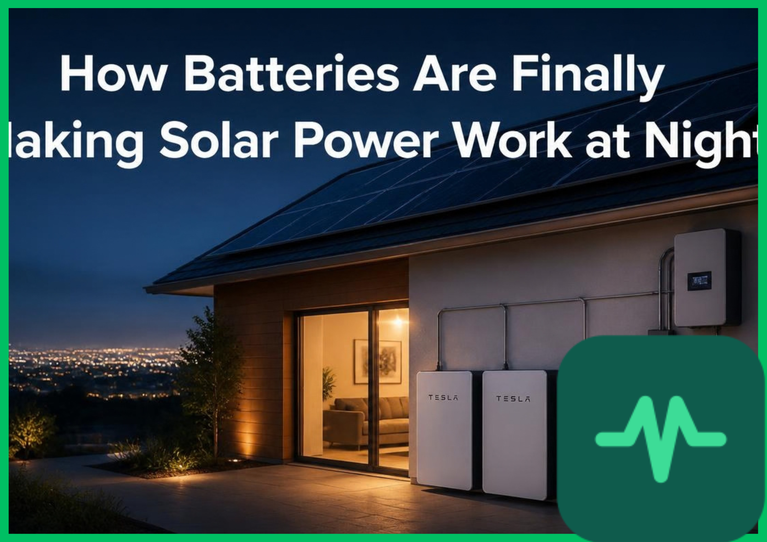
A battery paired with solar panels captures that excess daytime energy instead of exporting or wasting it, then makes it available for use later, precisely when you actually need it most.
This transforms solar from a resource that's only useful during specific daylight hours into one that can meaningfully cover a much larger portion of your actual daily energy needs, regardless of what time it happens to be.
The honest financial comparison
Adding battery storage increases your upfront investment, genuinely and honestly. There's no way around acknowledging that reality clearly.
However, the value proposition has shifted alongside changing electricity market dynamics. In many regions, exporting excess solar energy back to the grid provides considerably less financial benefit than it once did, while using that same energy yourself, later in the day via stored battery power, offers more consistent, reliable value.
What determines whether adding a battery makes sense for you
Your typical daily energy usage pattern matters considerably. If you use significant electricity in the evening, after solar panels stop producing, a battery lets you actually use your own generated solar energy rather than relying entirely on the grid at that time.
Local electricity pricing and export compensation rates matter too. Where exporting excess solar energy back to the grid pays relatively poorly, the case for storing and using it yourself instead becomes considerably stronger.
Your comfort with the higher upfront cost also matters honestly. Not every household needs to add storage immediately when installing solar panels. It's genuinely reasonable to start with panels alone and add battery storage later, once budget allows.
The backup power consideration
Beyond simply maximizing solar usage, batteries also provide backup power during grid outages, something standalone solar panels genuinely cannot offer on their own, since most standard solar systems shut down automatically during a grid outage for safety reasons, even while the sun is shining directly on your roof.
This backup capability adds genuine peace of mind for many households, independent of the pure financial savings calculation.
Why the industry itself is shifting this direction
It's genuinely telling that professional investors, who study these markets closely and stake real money on their conclusions, are increasingly favoring combined solar-plus-storage projects over standalone solar alone.
This shift among sophisticated investors reflects the same underlying economic logic available to individual homeowners considering the same basic decision, storage genuinely increases the practical, everyday value of solar energy.
A realistic way to approach this decision
If budget allows, adding battery storage alongside your initial solar installation typically proves more cost-effective than installing it separately at a later date, due to shared installation costs and design considerations.
If budget is genuinely tight, starting with solar panels alone remains a completely reasonable, valuable choice. You can meaningfully evaluate adding storage later, once you better understand your actual usage patterns and local energy market conditions.
The honest bottom line
The shift toward combining solar with battery storage isn't just a passing trend or clever marketing angle. It reflects genuine, evolving market economics that increasingly favor storing your own solar energy over simply exporting it.
Whether adding a battery makes sense specifically for you depends on your individual circumstances, but it's genuinely worth serious consideration rather than automatically assuming solar panels alone represent the complete, final answer.

Comments (0)
Login to leave a comment.
No comments yet. Be the first to share your thoughts!