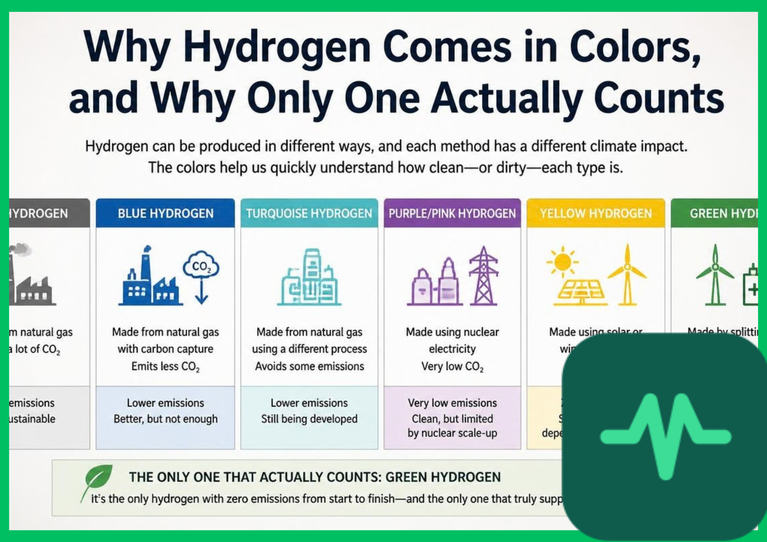
Here's what that actually means, in plain terms.
Why hydrogen gets a color label at all
The color doesn't describe the gas itself. It describes how the hydrogen was produced. This matters enormously, because different production methods create very different amounts of pollution.
Think of it like coffee. Whether it's brewed at home or bought from a shop, it's still coffee. But how it was made, and what it cost the planet to make it, can be very different.
Gray hydrogen, the most common kind
Most hydrogen produced today is called gray hydrogen. It's made using natural gas, through a process that releases a significant amount of carbon dioxide into the atmosphere.
This is the cheapest, most established way to make hydrogen. It's also the least clean, since it relies on fossil fuels and creates real emissions in the process.
Blue hydrogen, a partial fix
Blue hydrogen starts the same way as gray hydrogen, using natural gas. The difference is that the carbon dioxide produced gets captured and stored, rather than released into the air.
This makes blue hydrogen cleaner than gray hydrogen, but it's not perfect. Capturing carbon isn't a flawless process, and some emissions typically still escape.
Green hydrogen, the cleanest version
Green hydrogen skips fossil fuels entirely. Instead, it's made by splitting water into hydrogen and oxygen using electricity, through a process called electrolysis.
The key detail is where that electricity comes from. For hydrogen to genuinely count as green, the electricity powering this process must come from renewable sources like solar or wind.
Why green hydrogen is the one that actually matters
Green hydrogen produces essentially no direct carbon emissions during production. It uses water and clean electricity, two things that don't add new carbon to the atmosphere.
This is why green hydrogen gets so much attention. It offers a genuinely clean path to a fuel that can power vehicles, heat buildings, and support heavy industry, all without the fossil fuel emissions baked into older hydrogen production methods.
Why green hydrogen isn't everywhere yet
Making hydrogen this way currently costs more than gray or blue hydrogen. Electrolysis requires significant amounts of electricity, and that electricity needs to come from renewable sources specifically to keep the process genuinely clean.
Building enough renewable electricity capacity, plus the electrolysis equipment itself, requires real investment. This cost barrier is the main reason green hydrogen remains less common than dirtier alternatives right now.
Why costs are starting to fall
As renewable electricity gets cheaper, and as electrolysis equipment improves and gets manufactured at larger scale, the cost of green hydrogen has been steadily dropping.
Several companies have moved from small pilot projects into much larger, factory-scale production in recent years. This kind of scaling typically drives costs down significantly over time, following a pattern seen in many other clean technologies.
What green hydrogen could actually be used for
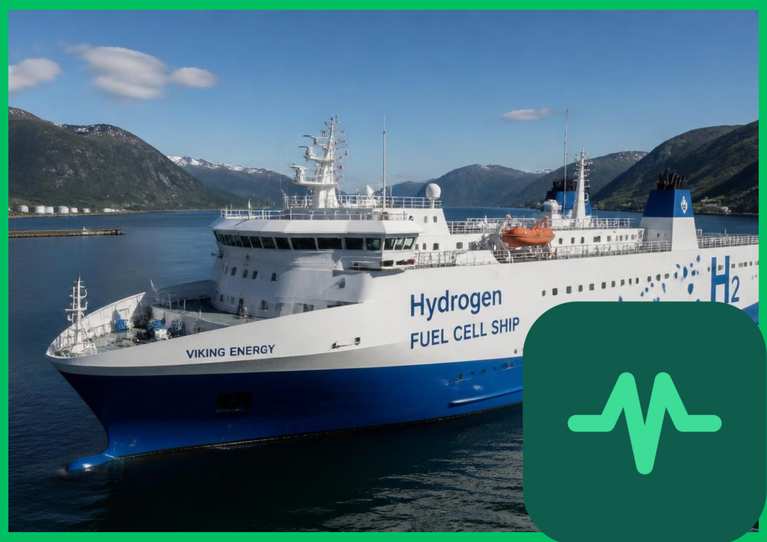
Green hydrogen has real potential in areas that are hard to clean up using batteries or direct electricity alone. Heavy trucks, ships, and certain industrial processes like steel production are strong candidates.
It can also help store excess renewable electricity. When solar and wind produce more power than needed, that extra electricity can make hydrogen instead of going to waste, storing that energy for later use.
Why not every use case makes sense for hydrogen
Hydrogen isn't the best answer for everything. For passenger cars, battery electric vehicles are often more efficient and already widely available. Hydrogen tends to make more sense for heavier, harder-to-electrify applications instead.
Understanding this distinction helps set realistic expectations about where hydrogen will actually matter most, rather than assuming it will replace every other clean energy solution.
Why this color system genuinely helps
Without these color labels, it would be much harder to talk clearly about hydrogen's real environmental impact. The colors give everyone, from scientists to everyday readers, a simple shorthand for a genuinely important distinction.
Next time you see the term green hydrogen in the news, you'll know exactly what makes it different from the more common, dirtier alternatives still dominating hydrogen production today.
The bottom line
Hydrogen itself is colorless, but the label tells you everything about how it was made and how clean it actually is. Green hydrogen, made from water and renewable electricity, is the version worth genuine excitement.
It costs more today, but that gap is shrinking steadily as the technology matures and scales up. For the hardest-to-clean parts of our economy, green hydrogen may end up playing a genuinely important role in the years ahead.

Comments (0)
Login to leave a comment.
No comments yet. Be the first to share your thoughts!