
 , or
 ) dominates global stationary storage but experiences substantial capacity fade and charging restrictions below
 (
 ). Sodium-ion (
 ) batteries replace scarce lithium, cobalt, and copper current collectors with earth-abundant sodium salts, iron-based or layered oxide cathodes, hard carbon anodes, and aluminum foils on both electrodes. Because sodium ions (
 ) exhibit weaker Lewis acidity and lower solvation energy in carbonate electrolytes than lithium ions (
 ), sodium-ion cells retain over 85% to 90% of nominal discharge capacity at
 (
 ) and operate down to
 (
 ). Evaluating hard carbon anode kinetics, Prussian white cathode stability, electrolyte desolvation barriers, and residential peak shaving economics is essential for analyzing sodium-ion residential battery storage low-temperature performance.
Solvation Energy and Electrolyte Desolvation Kinetics
The primary electrochemical barrier limiting low-temperature battery discharge and charging is charge-transfer resistance ( ) at the electrode-electrolyte interface rather than bulk ion transport alone. In liquid organic electrolytes—typically sodium hexafluorophosphate (
 ) or sodium bis(fluorosulfonyl)imide (
 ) dissolved in linear and cyclic carbonates—cations travel surrounded by a tightly bound solvation shell of solvent molecules.
Before entering the solid electrode lattice, each ion must shed its solvent molecules through an endothermic desolvation step governed by Arrhenius activation kinetics:
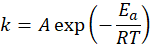
where  is the interfacial charge-transfer rate constant,
 is the pre-exponential frequency factor,
 is the activation energy barrier (
 ),
 is the universal gas constant, and
 is absolute temperature (
 ). Because
 possesses a larger ionic radius (
 ) than
 (
 ), its lower surface charge density weakens electrostatic attraction to polar solvent molecules. Lower solvation energy reduces the desolvation activation barrier (
 ) at the solid electrolyte interphase (SEI), preserving high ionic flux and suppressing polarization voltage drops at sub-zero ambient temperatures (
 to
 [
 to
 ]).
Hard Carbon Anode Kinetics and Intercalation Mechanics
Unlike lithium-ion batteries that rely on crystalline graphite anodes, sodium ions do not form thermodynamically stable binary intercalation compounds with standard graphite due to unfavorable redox potentials and lattice strain. Sodium-ion batteries therefore utilize disordered, non-graphitizable hard carbon anodes synthesized from biomass precursors, phenolic resins, or pitch.
Hard carbon microstructures consist of randomly oriented, curved graphene-like nanodomains interspersed with turbostratic graphitic layers (interlayer spacing  ) and closed nanopores. Sodium storage occurs via two distinct mechanisms:
- Sloping Voltage Region (
 to
 vs.
 ):
 ions adsorb onto surface defect sites, heteroatom functional groups, and expanded graphitic interlayers.
- Low-Voltage Plateau Region (
 vs.
 ): Quasi-metallic sodium clusters fill internal closed nanopores, delivering high reversible capacity (
 ).
Wide interlayer spacing and open three-dimensional diffusion pathways within hard carbon reduce solid-state diffusion barriers during cold-weather operation. Additionally, because sodium plating occurs at a slightly less aggressive kinetic threshold than dendritic lithium plating on graphite, hard carbon anodes tolerate low-temperature charging down to  (
 ) without rapid metallic dendrite shorting, though charging below
 (
 ) still requires controlled current derating or pre-heating to prevent irreversible plating.
Prussian White Cathode Stability and Polyanionic Frameworks
Commercial sodium-ion stationary cells employ three main cathode families: Prussian blue analogues (specifically rhombohedral Prussian white,  ), polyanionic compounds (such as sodium iron pyrophosphate,
 or
 ), and transition-metal layered oxides (
 ).
Prussian white cathodes feature an open three-dimensional face-centered cubic or rhombohedral framework formed by iron cations bridged via cyanide ( ) ligands. Large interstitial channels (
 ) allow rapid, low-strain
 insertion and extraction with minimal volumetric expansion (
 ), enabling specific capacities of
 and stable rate capability at sub-zero temperatures. Maintaining Prussian white cathode stability requires synthesizing low-vacancy crystals free of coordinated interstitial water, which otherwise reacts with
 electrolytes to form hydrofluoric acid (
 ) and accelerate capacity fade. Polyanionic
 cathodes offer an alternative stationary architecture, trading slightly lower gravimetric energy density (
 ) for strong covalent phosphate-oxygen bonds that elevate thermal runaway onset above
 (
 ) and extend cycle life beyond
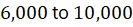 cycles.
Technical Data Specifications of Residential Sodium-Ion vs. LFP Storage
| Residential Storage Parameter | Sodium-Ion ( ) Specification | Lithium Iron Phosphate ( ) Benchmark |
|---|---|---|
| Cell Gravimetric Energy Density |  (  ) |  (  ) |
| Cell Volumetric Energy Density |  (  ) |  (  ) |
Discharge Retention at  (  ) | 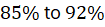 of nominal capacity | 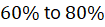 of nominal capacity |
| Minimum Operating Temperature |  (  ) discharge capable |  (  ) typical BMS cutoff |
| DC Round-Trip Efficiency | 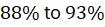 at  /  (  ) | 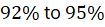 at  /  (  ) |
| Cycle Life to 80% Retention |  cycles (chemistry dependent) |  cycles |
| Thermal Runaway Onset |  to  (  to  ) |  to  (  to  ) |
Round-Trip Electrochemical Efficiency and Residential Peak Shaving
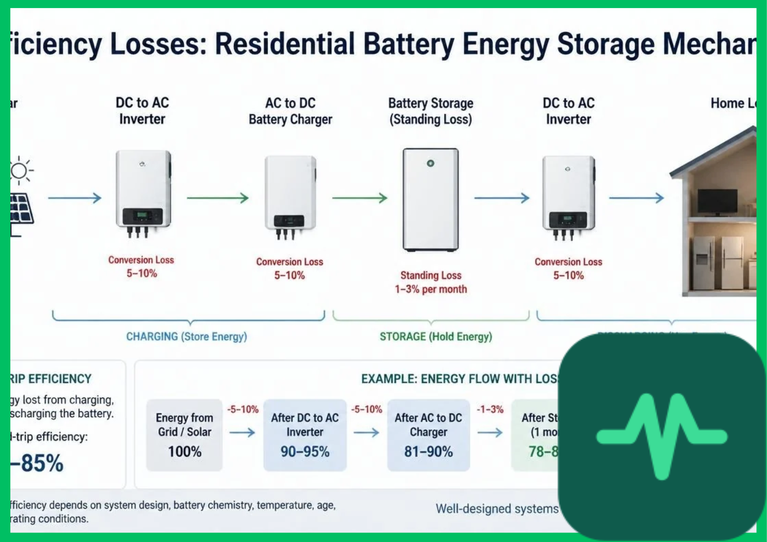
In residential energy storage installations—typically sized between  and
 with continuous inverter ratings of
 to
 (
 to
 )—round-trip electrochemical efficiency directly determines solar self-consumption and time-of-use arbitrage returns. Because sodium-ion cells operate across a wider nominal voltage window (
 to
 , averaging
 to
 ) than flat-plateau
 cells (
 nominal), hybrid inverters require wider DC-bus voltage tracking ranges to maintain high conversion efficiency at low states of charge.
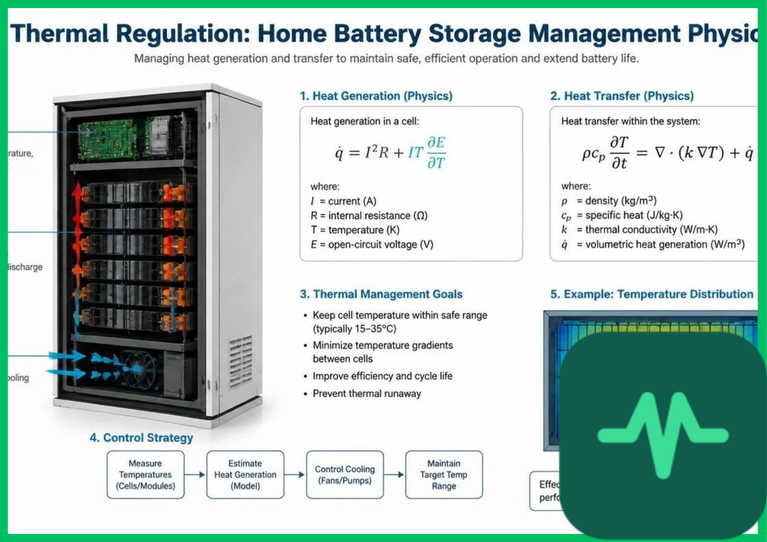
In unconditioned garages, outdoor utility enclosures, or off-grid cabins exposed to freezing winter conditions, conventional  battery enclosures must divert
 to
 of stored energy into internal resistive heating pads to keep cell temperatures above
 (
 ) before accepting solar charge. Eliminating or reducing active thermal management overhead allows sodium-ion residential systems to maintain higher net system-level efficiency during winter residential peak shaving and backup operation. While
 retains an advantage in volumetric footprint for space-constrained indoor installations, sodium-ion chemistry delivers superior cold-weather resilience, zero-volt deep-discharge transport safety (using aluminum current collectors on both electrodes without copper dissolution), and diversified critical mineral supply chains.
Comments (0)
Login to leave a comment.
No comments yet. Be the first to share your thoughts!