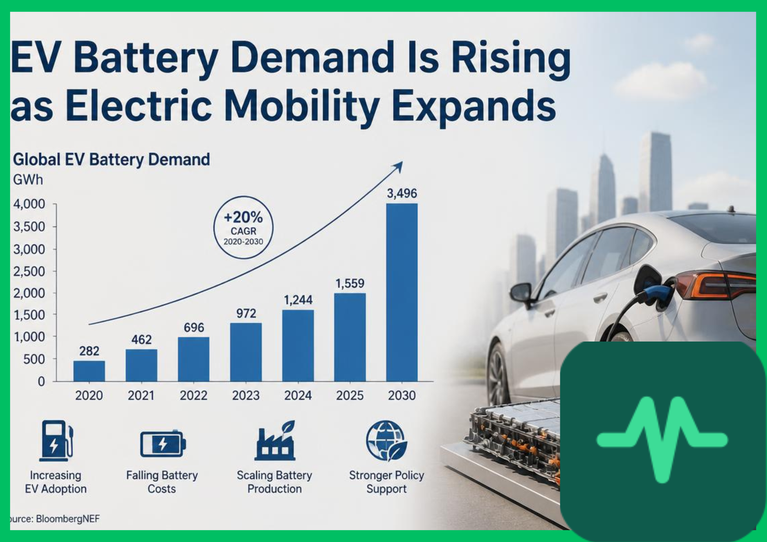
Electric vehicles depend on batteries. As EV sales increase, demand for batteries rises too. The IEA reports that global EV battery deployment reached 1.2 terawatt-hours in 2025. This is an increase of almost 30% from 2024. That is more than seven times the level recorded in 2020.
Cars Still Dominate
Light-duty vehicles remain the biggest users of EV batteries. They represented more than 85% of EV battery deployment in 2025.
However, electric trucks are growing particularly quickly. Battery demand for electric trucks more than doubled during the year.
That could become an important trend because heavy vehicles require much larger batteries.
Battery Prices Are Falling
The IEA reports that average battery prices declined by 8% in 2025. Manufacturing improvements, technology changes and stronger competition contributed to the decline.
Lower battery prices can make electric vehicles more affordable. They can also improve the economics of stationary battery storage. Therefore, battery innovation has effects beyond the automotive industry.
China Dominates Deployment
China accounted for around 60% of global EV battery deployment in 2025. The European Union accounted for almost 15%. The United States represented about 10%. This concentration creates both opportunities and risks.
Large-scale manufacturing can reduce costs. However, heavy concentration can create supply-chain vulnerabilities.
Critical Minerals Matter
Battery manufacturing requires materials such as lithium, nickel, cobalt and graphite. As production increases, demand for these materials also increases.
That creates new challenges. Mining needs to expand responsibly. Processing capacity needs to grow. Supply chains need to become more diverse.
Recycling Will Become More Important
Today's growing battery fleet will eventually create a large stream of used batteries. Recycling can recover valuable materials. It can also reduce pressure on new mineral extraction.
The IEA says recycling will be important for the long-term sustainability and resilience of battery supply chains.
The Outlook Is Large
The IEA expects global EV battery deployment to approach 3 TWh by 2030 under both its Current Policies and Stated Policies scenarios. By 2035, deployment could reach around 4 TWh in the Current Policies Scenario and almost 5 TWh in the Stated Policies Scenario. That means today's battery industry could become much larger.
EcoGreenPulse Analysis
Battery technology sits at the centre of several major EcoGreenPulse trends. It connects EVs, renewable energy, electricity storage and critical minerals.
Therefore, battery manufacturing is becoming an important strategic industry. Countries that develop battery supply chains could gain economic opportunities. Those that remain heavily dependent on imports could face greater supply risks.
Conclusion
EV battery demand is growing rapidly. Falling prices are helping the industry expand, while electric vehicles are becoming a major source of battery deployment.
The next challenge will be building a battery supply chain that is affordable, secure and environmentally responsible.
Source: IEA, Global EV Outlook 2026 — Electric Vehicle Batteries
Comments (0)
Login to leave a comment.
No comments yet. Be the first to share your thoughts!