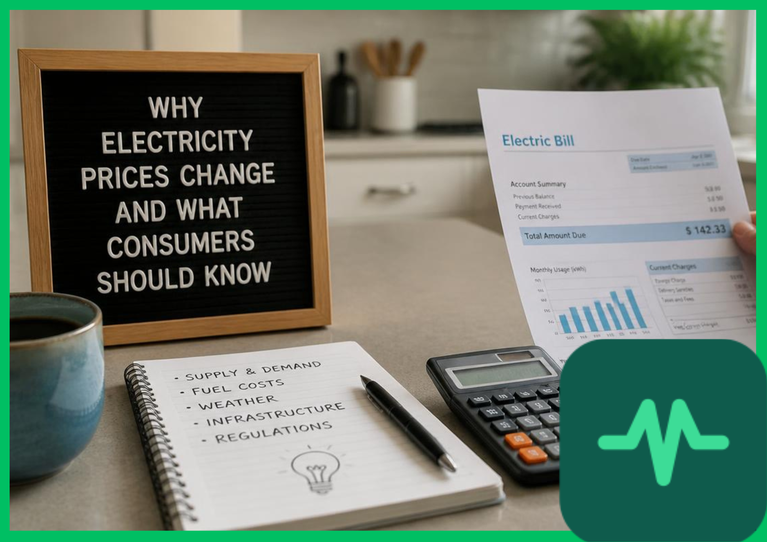
Electricity is essential. Homes use it for almost everything. Yet the price consumers pay for electricity can shift over time.
Sometimes prices rise. Sometimes they fall. Sometimes they stay relatively stable for long stretches. So why does this happen?
The answer is genuinely complicated. Electricity prices get shaped by fuel costs, power generation, demand, transmission networks, taxes, government policy, and market design. All of these factors vary from one country to the next too.
Electricity Is Different From Many Products
Electricity has an unusual quality. It generally has to be produced close to the moment it gets consumed.
Power systems must balance supply and demand continuously, in real time. If demand rises suddenly, the system needs more electricity fast. If supply drops, other sources need to respond quickly to fill the gap. This constant balancing act directly shapes prices.
Fuel Prices Can Affect Electricity Prices
Some power plants run on fuels like natural gas, coal, or oil. When those fuel prices rise, the cost of producing electricity from those plants rises too.
This can ripple through wholesale electricity markets. The exact effect depends on a country's electricity mix and market structure. Countries that lean heavily on imported fuel tend to feel international price swings the hardest.
Natural Gas Can Be Important
Natural gas plays a major role in electricity generation across many countries. When gas prices climb, generation costs climb right along with them, which pushes wholesale power prices higher too.
This relationship matters most in markets where gas-fired plants play a big role in setting the electricity price. It's exactly why energy crises abroad can eventually show up on a household electricity bill.
Renewable Energy Changes the Market
Solar and wind power use no fuel to generate electricity. Once a solar plant or wind farm is up and running, it doesn't need to buy coal or gas for every unit it produces.
This reduces exposure to fossil-fuel price swings. Renewable energy doesn't eliminate all electricity costs, though. Projects still need real investment. Power grids still need to be built and maintained. Storage may be needed too.
Solar and Wind Are Variable
Solar power depends on sunlight. Wind power depends on wind conditions. Because of this, their output naturally changes throughout the day.
When solar and wind generation run high, they supply a large share of the grid's electricity. When output drops, other sources need to step in and cover the gap. This is exactly why modern electricity systems need more flexibility than they used to.
Energy Storage Can Help
Batteries can store electricity when supply runs high. They can release that power later, exactly when it's needed.
This helps manage periods when renewable generation dips. It also helps the grid respond quickly to sudden shifts in demand. Batteries aren't free, though, and they have limited storage duration. Storage is one useful piece of a much larger electricity system, not a complete solution on its own.
Electricity Demand Matters
Prices also shift with demand. Very hot weather pushes demand up, since people run more air conditioning. In cold regions, demand rises when electric heating gets used heavily. Industrial activity affects demand too.
Weather and economic conditions, in other words, directly influence electricity markets.
The Growth of Electric Vehicles
Electric vehicles are adding real new demand to the grid. Millions of electric cars now operate worldwide. The IEA reports that global electric-car sales exceeded 20 million in 2025.
As EV adoption keeps growing, electricity demand from transportation will keep growing too. Smart charging could help manage this, though. EVs could simply charge when overall electricity demand is lower, easing the strain during peak hours.
Heat Pumps Also Increase Electricity Demand
Heat pumps tell a similar story. A household that swaps a gas or oil heating system for an electric heat pump may use more electricity overall. It will likely use far less fossil fuel, though.
This shows why rising electricity demand shouldn't automatically be seen as a problem. The real question is how that additional electricity gets generated and managed.
Grid Investment Affects Bills
Electricity doesn't travel straight from a power plant into your home. It needs infrastructure along the way, including transmission lines, substations, and local distribution networks.
Building and maintaining all of this costs real money, and those costs show up in consumer bills. So even when generation costs fall, network costs can still push final prices higher.
Government Policy Matters
Governments shape electricity markets in many ways. They can offer subsidies. They can impose taxes. They can regulate providers directly. They can introduce price caps. They can support renewable energy projects. They can provide direct assistance to struggling households too.
Because of all this, the price a consumer actually pays doesn't always reflect just the raw cost of generating electricity.
Electricity Prices Are Not the Same Everywhere
One common mistake is assuming there's a single global electricity price. There isn't.
Prices vary significantly between countries. They vary between regions within the same country too. Your final bill depends on a mix of factors:
- Generation costs
- Network charges
- Taxes
- Government support
- Supplier margins
- Market rules
- Household consumption
Always look at your own local market rather than assuming a national or global average applies to you.
Wholesale vs Retail Prices
It's worth understanding the difference between wholesale and retail electricity prices. Wholesale prices reflect transactions between generators and buyers in the power market itself.
Retail prices are what households and businesses actually pay their electricity provider. The two are related, but they aren't identical. Retail bills often include network charges, taxes, and other costs layered on top of the wholesale price.
Why Bills Can Rise Even When You Use Less Electricity
Here's a frustrating reality: a household can use less electricity and still see a higher bill. This happens when the underlying electricity price itself rises.
Cutting consumption by 10% doesn't automatically cut the bill by 10%, since parts of a bill are often fixed charges regardless of usage. It helps to ask two separate questions: how much electricity am I using, and how much am I paying per unit?
Fixed and Variable Charges
Some providers charge a fixed fee no matter what. Others charge purely based on consumption. Many markets use a mix of both.
This means cutting your electricity use often has a bigger effect on the variable portion of your bill than on the fixed portion. Read your electricity bill carefully to understand exactly how it's structured.
Time-of-Use Electricity Prices
Some providers charge different rates depending on the time of day. Electricity often costs more during high-demand periods and less during quieter hours.
This structure encourages consumers to shift flexible electricity use to cheaper windows. An EV could charge overnight. A washing machine could run during a lower-cost period. A battery could store power when prices dip.
Smart Technology Can Help
Smart meters and home energy-management systems help consumers respond to these price shifts. A smart system can monitor usage in real time. It can automate certain appliances too.
This makes it easier to avoid unnecessary electricity use during expensive periods. Just note that you need access to the right kind of tariff for this to actually deliver financial benefit.
Can Solar Protect Consumers From Price Changes?
Home solar reduces how much electricity a household needs to buy from the grid. This offers some real protection against rising retail prices.
Solar doesn't eliminate energy costs entirely, though. The system requires upfront investment. There are maintenance and eventual replacement costs too. And solar generation still varies throughout the day. Weigh the complete financial picture, not just the promise of "free" sunlight.
Batteries Add More Flexibility
A battery stores electricity for later use. A home with solar could store excess daytime generation and use it that same evening instead.
In some markets, batteries can also respond directly to shifting electricity prices. The financial case still depends heavily on local tariffs and the cost of the battery itself, though.
What Consumers Can Do
Consumers can't control global energy markets. They can manage their own exposure, though. Practical steps include:
- Monitor electricity consumption
- Improve energy efficiency
- Compare electricity plans where possible
- Use appliances efficiently
- Consider smart controls
- Consider solar where appropriate
- Explore time-of-use tariffs
- Avoid unnecessary electricity use
These steps make household energy use far more manageable, even amid market swings you can't control.
The Future of Electricity Prices
The electricity system is changing fast. Renewable energy keeps expanding. Battery storage keeps growing. Electric vehicles are becoming common. Heat pumps are spreading. Smart meters and digital systems keep improving.
These shifts could make electricity markets genuinely more flexible over time. They also create new challenges, though. Grid investment will be needed. More electricity demand will need careful management. Storage and flexible generation will only grow more important.
EcoGreenPulse View
Electricity prices are shaped by far more than just the cost of generating power. Fuel prices, renewable energy, grid investment, taxes, government policy, and consumer demand all play a role together.
For households, understanding these moving parts makes energy bills feel far less confusing. It also helps consumers make smarter decisions about efficiency, solar power, batteries, and smart technology.
Conclusion
Changing electricity prices are a normal part of modern energy markets. Prices can rise because of fuel costs. They can shift because of demand. They can also move because of renewable generation, grid costs, and government policy.
Look beyond the headline price on your bill. Understanding how electricity gets generated, delivered, and billed helps households make smarter energy decisions overall.
As the world moves toward a more electrified energy system, understanding electricity prices will only become more important for everyday consumers.
Sources: International Energy Agency, electricity-market, energy-efficiency, and energy-transition resources.
Comments (0)
Login to leave a comment.
No comments yet. Be the first to share your thoughts!