

Distribution Transformer Loading and Thermal Limits
Physical congestion at the distribution level manifests primarily as voltage deviations outside statutory bands and thermal overload on feeders, overhead conductors, underground cables, and step-down transformers. In oil-immersed distribution transformers, continuous current flow generates copper winding losses proportional to current squared ( ) alongside core and stray eddy-current losses, raising winding hot-spot temperature (
 ) and top-oil temperature above ambient conditions.
Under IEEE and IEC transformer thermal loading standards, cellulosic paper insulation aging accelerates exponentially when winding hot-spot temperatures exceed reference thresholds—typically  (
 ) for
 (
 ) average winding rise designs—reducing insulation mechanical tensile strength and shortening expected equipment life. High ambient air temperatures (
 to
 [
 to
 ]) during summer cooling peaks or coincident evening electric vehicle charging compress thermal margin further. An aging acceleration factor above unity indicates elevated loss-of-life per operating hour:

where  and
 are actual and reference hot-spot temperatures in degrees Celsius (
 ). Dynamic tariffs aligned with real-time or forecast thermal headroom curb coincident peak demand during high-stress hours, easing distribution transformer loading without requiring immediate hardware replacement across every feeder.
Marginal Nodal Pricing and Feeder Power Flow Physics
Wholesale power markets price energy using locational marginal pricing or marginal nodal pricing, where the marginal cost of serving an additional megawatt ( , or
 ) at a specific bus or node reflects system lambda (marginal generation cost), transmission congestion rent, and marginal electrical losses. Real power losses (
 ) across a radial feeder segment of resistance
 carrying current
 scale quadratically with current magnitude:
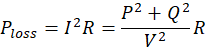
where  is active power (
 ),
 is reactive power (
 ), and
 is line-to-neutral or line-to-line voltage (
 ). Because ohmic losses scale with the square of current, shaving a narrow 20% peak demand spike cuts peak resistive losses by roughly 36% on that line segment, while heavy localized loads at the end of a long distribution feeder depress nodal voltage unless compensated by tap changers, voltage regulators, or reactive power control.
Extending granular temporal and locational pricing signals toward distribution nodes links retail electricity rates to physical capacity constraints. When midday solar generation floods a feeder, localized prices can drop or turn negative to incentivize charging or thermal storage; when evening ramps coincide with transformer thermal limits, prices rise sharply to reflect scarcity and congestion costs.
Technical Data Specifications of Tariff and Grid Congestion Parameters
| Tariff & Grid Parameter | Engineering & Operational Specification Standard |
|---|---|
| Static Time-of-Use (ToU) Windows | Fixed peak, shoulder, and off-peak blocks (e.g.,  peak) |
| Dynamic / Real-Time Pricing Granularity |  to  intervals tied to system/feeder state |
| Transformer Hot-Spot Reference Limit |  (  ) insulation aging reference point |
| Ambient Thermal Operating Envelope |  to  (  to  ) equipment/load span |
| Statutory Feeder Voltage Tolerance | Typically  to  of nominal RMS voltage |
| Active-to-Horsepower Unit Basis |  ;  |
| Flexible Load Dispatch Response | Sub-minute to multi-hour automated shifting via smart meters/DERs |
Demand Response Elasticity and Load-Shifting Arbitrage
Whether price signals relieve distribution bottlenecks depends on demand response elasticity—the percentage change in electricity consumption resulting from a 1% change in price across specific hours and load categories. Short-run own-price elasticity for inelastic baseload appliances remains low, whereas automated or price-responsive loads—including electric vehicle charging schedules, heat pump thermal pre-conditioning, residential and commercial battery storage, and industrial process batching—exhibit higher effective elasticity when paired with automated energy management controllers.
Automated control executes load-shifting arbitrage by shifting flexible consumption from high-price peak intervals into low-price or surplus renewable periods. A battery energy storage system or smart thermal water heater charges when marginal prices are low and discharges or coasts through high-price intervals, capturing spread value while flattening net feeder demand peaks. IEA grid flexibility analyses emphasize that pairing dynamic retail tariffs with interoperability standards and automated device dispatch converts passive consumers into active flexibility resources without demanding constant manual intervention.
Design Pitfalls: Synchronized Rebound Peaks and Equity Trade-Offs
Poorly calibrated dynamic tariffs can trigger new physical problems on distribution feeders. If hundreds of electric vehicles or heat pumps on the same distribution transformer switch on simultaneously at the exact minute an off-peak tariff window begins, synchronized load rebound creates a sharp secondary demand spike that overloads transformers or trips protective relays.
Mitigating rebound peaks requires randomized start delays, staggered price steps, local feeder capacity limits, and automated aggregation controls that spread charging across off-peak hours rather than concentrating it at a single timestamp. Tariff designers must also account for households with limited ability to shift loads—due to rigid work schedules, lack of smart appliances, or uninsulated building envelopes—by structuring base allowances, predictable guardrails, or opt-in dynamic tiers alongside automated load shifting.
Integrating Dynamic Tariffs with Grid-Enhancing Technologies
Dynamic pricing delivers maximum network relief when paired with distribution observability, advanced metering infrastructure, and grid-enhancing technologies (GETs). Distribution system operators with limited low-voltage telemetry risk setting tariffs blind to actual phase imbalances, transformer oil temperatures, or reverse power flows from distributed solar.
Combining real-time sensor data, dynamic line or transformer ratings, and automated demand response allows utilities to unlock latent hosting capacity on existing infrastructure while deferring costly copper and steel reinforcements. Grounded in circuit physics and thermal limits, well-structured dynamic tariffs align economic incentives with the physical realities of alternating-current delivery networks.

Comments (0)
Login to leave a comment.
No comments yet. Be the first to share your thoughts!