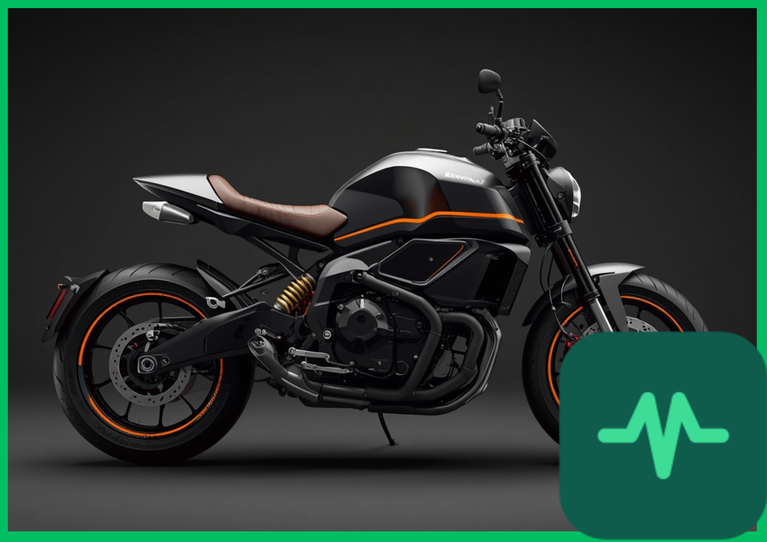
It feels effortless.
Beneath that sleek metal frame, however, intense physical forces are at work.
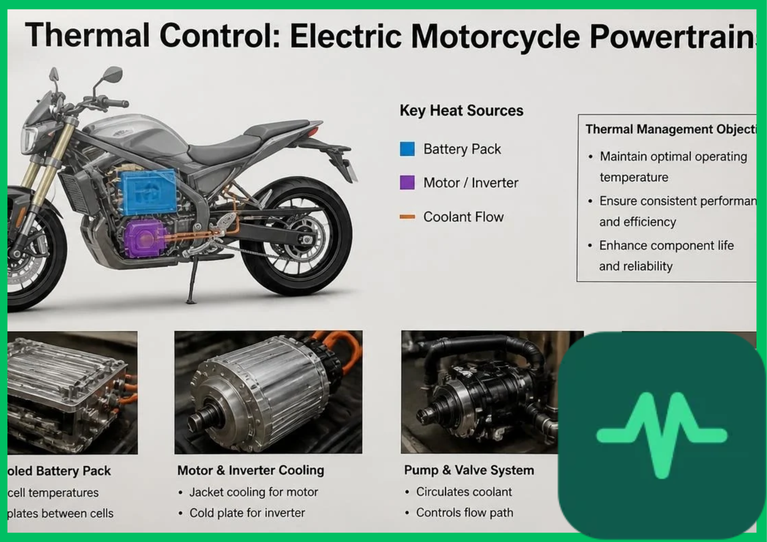
High-voltage batteries discharge massive bursts of energy to feed the motor. High-speed chargers pump electricity back into those same packs in minutes.
That rapid movement of electrical current generates a tremendous amount of heat.
Managing that heat is the single greatest engineering challenge in modern two-wheeled electric transport.
According to electric vehicle assessments from the International Energy Agency (IEA), urban transport reports from the United Nations Environment Programme (UNEP), and academic vehicle research, advanced thermal management systems separate reliable high-performance bikes from failing machines.
Here is how thermal management systems work, why heat is the ultimate enemy of lithium-ion cells, and how engineers keep electric motorcycles cool under extreme conditions.
The Hidden Heat Inside the Battery Pack
To understand why thermal management matters so much, you have to look inside a lithium-ion battery pack.
A motorcycle battery is not a single large block. It consists of hundreds or thousands of individual lithium-ion cells packed closely together.
When you ride hard up a steep mountain pass or accelerate rapidly on an open highway, those cells discharge electricity at high amperage.
Internal electrical resistance causes the cells to heat up rapidly.
The problem multiplies during fast direct-current (DC) recharging. Pumping high-voltage energy into a compact battery pack in a matter of minutes creates a massive spike in internal thermal energy.
If that heat cannot escape, temperatures inside the pack soar.
Excessive heat degrades cell chemistry, shortens the overall lifespan of the battery, and triggers safety risks like thermal runaway.
A motorcycle chassis presents an extra challenge. Unlike a large electric car with plenty of room for bulky cooling hardware, a motorcycle has limited space and tight weight limits.
Engineers had to invent clever, compact ways to keep components cool.
Active Liquid Cooling Versus Passive Air Design
Electric motorcycles generally use one of two primary approaches to control temperature: passive air cooling or active liquid cooling.
Passive systems rely on ambient airflow. Engineers design aluminum cooling fins directly into the battery casing and motor housing.
As the motorcycle moves down the road, rushing air flows over the fins, pulling heat away from the electronics.
This approach works well for lightweight scooters and low-speed urban commuter bikes operating in moderate weather. It keeps mechanical complexity low and adds very little weight.
For high-performance electric motorcycles capable of highway speeds and rapid charging, passive air cooling is not enough.
High-performance machines demand active liquid cooling systems.
A liquid cooling setup circulates a specialized dielectric coolant or water-glycol mixture through micro-channels embedded directly against the battery modules and motor windings.
An electronic water pump pushes the warm fluid to a front-mounted radiator, where rushing air drops its temperature before the fluid cycles back to absorb more heat.
Academic multi-scale modeling studies show that serial and parallel liquid cooling architectures maintain exceptional temperature uniformity across every cell in the pack, preventing dangerous localized hot spots.
Intelligent Software Control and Battery Management
Hardware is only half the solution. The true brain of any thermal management system is software.
An advanced Battery Management System (BMS) acts as the nervous system of the motorcycle.
The BMS monitors temperature sensors placed strategically throughout the battery pack and motor casing in real time.
If the rider pushes the bike hard on a scorching summer afternoon where ambient temperatures exceed 35 degrees Celsius (approx. 95 degrees Fahrenheit), the software steps in.
Before any component reaches a dangerous threshold, the intelligent controller automatically throttles maximum power output slightly.
This protective action safeguards the battery cells from thermal stress without interrupting the ride abruptly.
During rapid charging, the software communicates directly with the charging station, slowing down the electrical current as the battery reaches capacity to prevent overheating.
Cold-Weather Thermal Conditioning
Thermal management is not just about cooling down. It is also about warming up when winter arrives.
Lithium-ion cells lose efficiency and discharge capacity when exposed to freezing temperatures—such as minus 10 degrees Celsius (approx. 14 degrees Fahrenheit).
Drawing high currents from an ice-cold battery damages the internal structure of the cells permanently.
Advanced thermal management systems feature bidirectional capabilities, using electric heating elements to warm the battery pack up to an optimal operating range before you even twist the throttle.
By maintaining stable internal temperatures year-round, the system ensures consistent power delivery and preserves battery health across thousands of charging cycles.
Riding Into a Reliable Electric Future
Electric motorcycles prove that high performance and zero emissions can coexist beautifully.
Unlocking that potential requires mastering the invisible physics of heat.
Through sophisticated liquid cooling circuits, intelligent battery management software, and smart thermal design, engineers ensure that high-voltage powertrains remain safe, reliable, and durable.
We are overcoming the technical hurdles of electric mobility.
With advanced thermal management keeping things cool under pressure, every ride delivers smooth, dependable power on the road ahead.
Comments (0)
Login to leave a comment.
No comments yet. Be the first to share your thoughts!