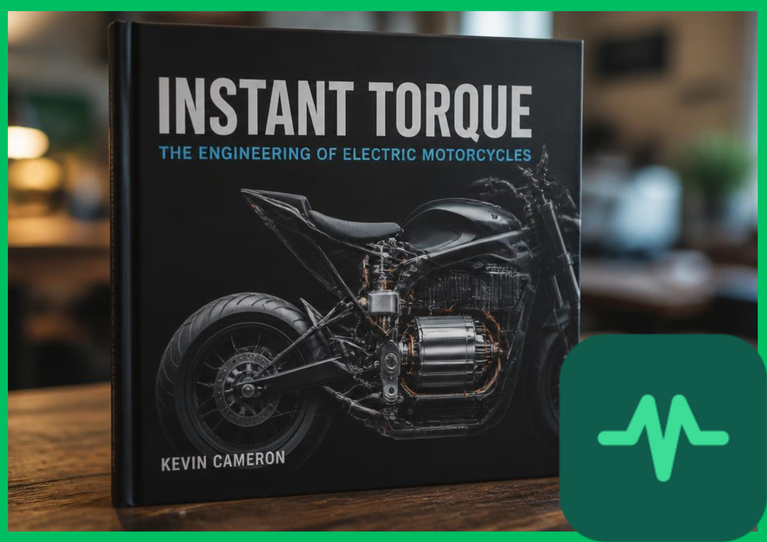
You hear the engine roar, feel the mechanical vibration of pistons pumping, and wait for the transmission to catch up as the RPMs climb.
That brief pause between twisting the grip and feeling the surge forward is a familiar part of riding.
Now, imagine eliminating that pause entirely.
When you twist the throttle on an electric motorcycle, the response is immediate, smooth, and absolute.
For decades, performance enthusiasts viewed electric two-wheelers with skepticism, missing the mechanical noise and the ritual of shifting gears.
That attitude is changing rapidly.
According to urban mobility reports from the United Nations Environment Programme (UNEP), International Energy Agency (IEA) transport transition reviews, and academic electric vehicle research, electric motorcycles offer an entirely new kind of riding dynamic.
At the heart of that dynamic lies instant torque.
Here is how electric powertrains work, why magnetic physics deliver force at zero RPM, and how instant torque transforms the engineering of two-wheeled travel.
The Mechanical Lag of Internal Combustion
To understand why electric motorcycles feel so radically different, you have to look at how traditional internal combustion engines generate power.
A gasoline motorcycle engine relies on a complex sequence of chemical explosions.
Fuel and air mix inside a cylinder, spark plugs ignite the mixture, pistons plunge downward, and crankshafts spin.
For that engine to produce meaningful pulling power—known as torque—it has to spin at higher revolutions per minute (RPM).
When you sit at a standstill, the engine idles. When the traffic light turns green, you have to slip the clutch, rev the engine, and wait through a multi-speed transmission before the bike hits its power band.
There is a physical delay between your hand opening the throttle and the rear wheel receiving force.
That delay is baked into the physics of burning liquid fuel.
The Physics of Instantaneous Electromagnetism
Electric motors throw out that entire sequence of mechanical delay.
An electric motor operates using pure electromagnetism. It contains two primary parts: a stationary outer housing called the stator, and a spinning inner core called the rotor.
When you twist the throttle on an electric motorcycle, the onboard motor controller releases a surge of electricity from the high-voltage battery pack into the stator windings.
This electrical current creates a powerful rotating magnetic field.
That magnetic field immediately pulls against the magnets or induction coils on the rotor, forcing it to spin.
The physics happen at the speed of electricity.
There are no pistons to build momentum, no idle speed to maintain, and no gears to wait for.
As academic electric vehicle studies confirm, electric motors develop 100% of their available torque from zero RPM.
The moment current flows, maximum rotational force is ready at the rear wheel.
The Software Conductor: Giving Power Manners
Producing massive torque instantly is an impressive engineering feat, but raw power alone does not make a great motorcycle.
If an electric motor dumped all its available force onto the rear tire instantly without restraint, the bike would be unridable, spinning its tire or throwing the rider off balance.
This is where the motor controller becomes critical.
Think of the controller as the intelligent conductor of the powertrain.
It reads your throttle input in milliseconds, drawing energy safely from the battery while managing power delivery.
Advanced software algorithms shape the torque curve to match human expectations.
They provide crisp, linear acceleration that feels natural and deeply controllable.
When you pull away from a tight urban corner or merge into fast-moving traffic, the power arrives with absolute authority, but without abrupt shocks.
Simplified Drivetrains and Weight Distribution
Because electric motors produce usable torque across a massive RPM range, they do not require complex multi-speed gearboxes or heavy manual clutches.
Most electric motorcycles feature a simplified direct-drive or single-speed transmission.
Eliminating clutches, gears, oil pumps, and exhaust systems removes substantial mechanical complexity from the machine.
This simplified architecture reduces maintenance overhead, lowers overall mechanical friction, and frees up precious framing space.
Engineers use that freed space to place heavy battery packs low and central in the chassis.
Low center-of-gravity placement improves handling balance, making a heavy electric motorcycle feel nimble, agile, and planted when leaning through corners.
Riding Into a Clean, Responsive Future
The appeal of an electric motorcycle goes far beyond eliminating tailpipe emissions.
It changes the intimate connection between rider, machine, and road.
By harnessing the laws of electromagnetism, electric powertrains deliver instant torque that makes urban commuting and highway riding effortless.
We are moving past the mechanical limits of combustion engines and embracing cleaner, smarter engineering.
With silent operation and immediate response, electric motorcycles prove that sustainable transport can be thrilling, efficient, and deeply rewarding to ride.
Comments (0)
Login to leave a comment.
No comments yet. Be the first to share your thoughts!