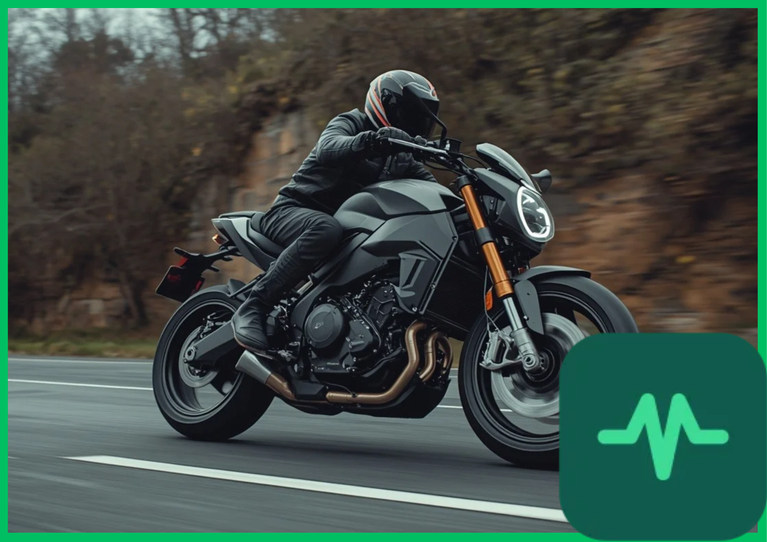
On a traditional motorcycle powered by a roaring gasoline engine, this moment means burning energy away.
You squeeze the front brake lever. Friction pads clamp down hard against metal brake rotors.
The kinetic energy driving your bike forward is instantly converted into intense heat. That heat radiates uselessly into the surrounding air, while brake dust flakes off onto the pavement.
Every time you slow down, precious energy vanishes into thin air.
Now, imagine riding an electric motorcycle through that exact same city traffic.
You roll the throttle forward. Instead of just coasting or losing momentum, something amazing happens.
The bike slows down smoothly, controlled and deliberate.
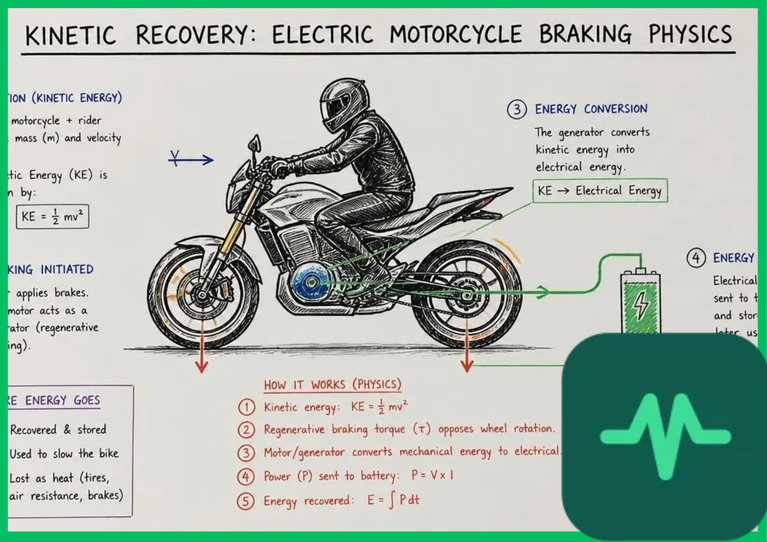
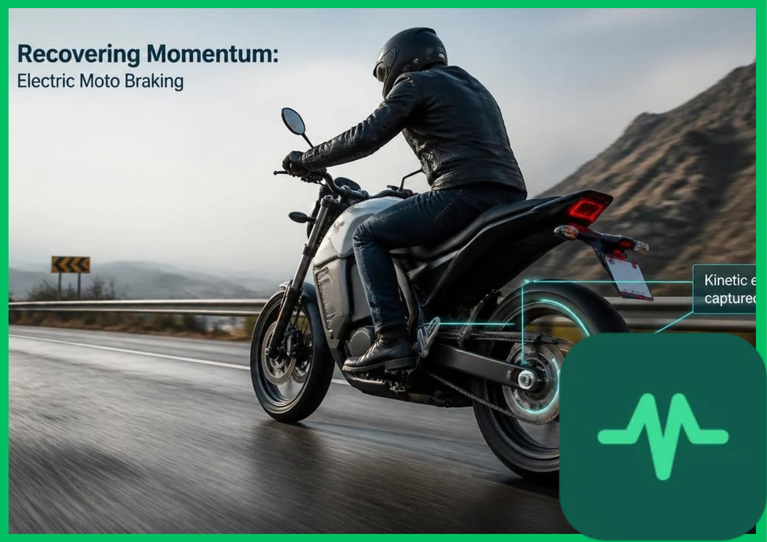
At the same time, the electric motor reverses its role. It turns into a generator, capturing your forward momentum and pumping fresh electricity right back down into your battery pack.
You stopped to wait for the light, and your bike actually recovered power while doing it.
That magic trick changes the physics of urban riding.
According to global clean transport reports from the International Energy Agency (IEA), resource efficiency guidelines from the United Nations Environment Programme (UNEP), appliance efficiency benchmarks from ENERGY STAR, and academic electric drivetrain research, electric motorcycle regenerative braking transforms how we manage energy on two wheels.
By capturing kinetic energy during deceleration, we extend our range and reduce mechanical wear.
Here is how energy recovery systems work, why rolling off the throttle feels so revolutionary, and how braking efficiency shapes our sustainable future.
The Wasteful Physics of Traditional Friction Braking
To understand why regenerative braking feels like a superpower, you have to look at the wastefulness of traditional friction brakes.
When you ride a heavy vehicle at high speeds, you build up immense kinetic energy.
Physics dictates that an object in motion stays in motion until an outside force stops it.
On an old-fashioned motorcycle, friction is that force.
Brake pads press against steel discs with tremendous hydraulic pressure. The resulting friction stops the wheels, but it destroys the energy you spent fuel to create.
That energy does not vanish from the universe; it turns into thermal heat.
If you ride down a steep mountain pass using only your friction brakes, your rotors can heat up past 300°C (approx. 572°F).
That heat wastes fuel, wears out expensive brake pads every few thousand miles or kilometers, and fills the air with microscopic brake dust particles.
We accepted that waste because we assumed stopping a vehicle always required friction.
Electric powertrains proved that assumption wrong.
What Is Electric Motorcycle Regenerative Braking?
An electric motorcycle regenerative braking system flips the relationship between your motor and your battery.
An electric motor and an electric generator are essentially the same machine wired in different directions.
When you twist the throttle open, electricity flows from the battery into the motor, creating magnetic forces that spin the rear wheel and push you forward.
When you roll the throttle backward past its resting point, the process reverses instantly.
The momentum of the heavy motorcycle forces the rear wheel to spin the electric motor rotor.
Instead of drawing power from the battery, the spinning motor acts as a generator.
Magnetic resistance grabs hold of the drivetrain. That magnetic drag slows the motorcycle down smoothly, turning forward momentum back into electrical current.
That electrical current travels through power electronics and flows straight back into the lithium-ion battery pack.
You slow down safely, and your battery gains a little extra charge.
The Science of Kinetic Energy Recovery
How much energy can you actually recover through regenerative throttle deceleration?
Academic electric drivetrain research shows that in heavy stop-and-go city traffic, regenerative systems can recover up to 10% to 20% of the energy consumed during acceleration.
When you commute through a busy urban center filled with dozens of intersections, traffic lights, and crosswalks, those recovered watt-hours add up quickly.
Instead of throwing away your kinetic energy at every single stoplight, you harvest it.
Furthermore, this process reduces physical wear on your mechanical brake pads.
Many daily riders find they can navigate entire city routes using almost exclusively throttle-based regeneration, touching their physical brake levers only for emergency stops.
According to ENERGY STAR and international appliance efficiency evaluations, regenerative systems represent peak electromechanical efficiency, capturing waste streams and putting them back to work.
Tuning the Ride: Feel and Control
Not all regenerative braking systems feel the same.
Motorcycle engineers spend countless hours tuning software to make the transition between acceleration and regeneration feel completely natural.
If a system engages too aggressively the moment you roll off the throttle, the rear wheel can chatter or skid, unsettling the chassis in the middle of a corner.
If it engages too weakly, you lose the satisfying, connected feel of engine braking.
Modern electric motorcycles feature adjustable regenerative settings.
You can dial in heavy regeneration for winding city streets where you want one-throttle commuting, or back it off for smooth, rolling country roads where you prefer a relaxed, free-wheeling coast.
According to UNEP sustainable transport frameworks, maximizing energy recovery systems lowers overall power consumption, reducing the strain on regional electrical grids during peak charging hours.
IEA clean mobility reports highlight that every watt recovered through braking extends the daily operational range of electric two-wheelers, making them more practical for everyday global commuters.
Riding Toward a Sustainable Future
Electric motorcycle regenerative braking proves that clever engineering can turn a wasteful process into a source of renewed power.
We no longer have to accept that slowing down means throwing away energy and burning through physical brake pads.
By capturing kinetic energy during deceleration, turning motors into generators, and feeding electricity back into our batteries, we change how we move through the world.
We step away from mechanical waste, embracing an efficient, elegant way to ride.
Through brilliant electrical engineering, smart software tuning, and a deep respect for resource conservation, electric motorcycles capture our momentum and power our sustainable future.
Comments (0)
Login to leave a comment.
No comments yet. Be the first to share your thoughts!