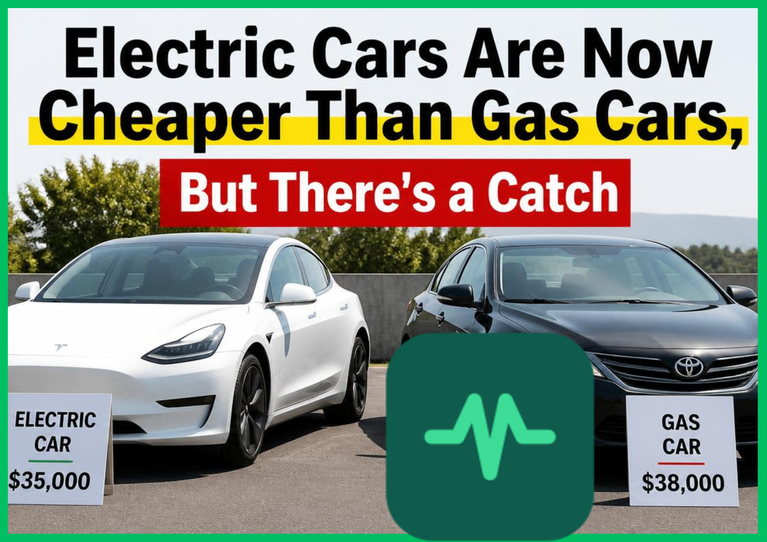
Recent research comparing total ownership costs found something genuinely striking. Across their full lifetime, electric cars often work out meaningfully cheaper than gas cars, once you look past the initial purchase price.
That's a real, important finding. But it comes with an honest catch worth understanding before you buy.
Why the sticker price misleads people
When you compare two cars side by side in a showroom, the electric one often looks more expensive. That single number is what most people remember, and it quietly shapes their whole decision.
But a car's true cost isn't just what you pay on day one. It's everything you spend over the years you own it, fuel or electricity, maintenance, repairs, and the eventual resale value.
What the full picture actually shows
When researchers looked at the complete ownership cost, not just the purchase price, electric cars came out ahead in many comparisons. Lower running costs, fewer mechanical parts to maintain, and reduced fuel-equivalent expenses added up over time to outweigh that higher initial price tag.
This genuinely surprises people the first time they see it laid out clearly. The car that looked more expensive in the showroom often ends up being the more affordable choice by the time you account for everything.
The honest catch nobody wants to talk about
Here's the part worth knowing before you get too excited. Not every electric car battery ages the same way, even among identical models built the same year.
A large, genuinely comprehensive study testing hundreds of thousands of real-world batteries found meaningful variation in battery health between individual vehicles of the exact same model. Some batteries held up beautifully. Others degraded noticeably faster, even under similar driving conditions.
This matters because your battery is the single most expensive component in an electric car. If yours happens to degrade faster than expected, your actual savings could shrink considerably compared to the average numbers everyone quotes.
Why this variance happens at all
Battery health isn't purely random luck, though some of it comes down to manufacturing variation that's genuinely hard to predict from the outside.
Charging habits play a real role too. Frequently charging to completely full, or regularly draining the battery to nearly empty, tends to accelerate wear compared to keeping the charge level in a more moderate range most of the time.
Climate matters as well. Extreme heat, in particular, tends to be harder on battery longevity than milder conditions.
What this means for your actual decision
This doesn't mean the savings story is false. It means the average number isn't a guarantee for every single buyer. Your actual experience could land above or below that average, depending on factors partly within your control and partly not.
The smart approach is treating published savings figures as a realistic expectation, not a guaranteed outcome carved in stone.
Practical steps to protect your investment
Ask about battery warranty coverage before buying. Most manufacturers cover significant battery degradation for a meaningful number of years, which genuinely protects you against the worst-case scenario.
Adopt sensible charging habits from day one. Keeping your daily charge level in a moderate range, rather than constantly maxing it out, genuinely helps preserve long-term battery health.
If you're buying used, ask specifically about the battery's current health status, not just the car's mileage. A car with low mileage but poor battery health is a genuinely worse deal than one with more miles but a healthier battery.
Why this honest nuance actually matters
Buyers deserve the full picture, not just the encouraging headline. Electric cars genuinely can save you real money over their lifetime. That part is true, and worth taking seriously.
But going in with realistic expectations, understanding that batteries aren't all identical, and taking a few sensible precautions, puts you in a much stronger position than simply assuming the average savings apply automatically to you.
The honest bottom line
Electric cars are, on average, genuinely cheaper to own than gas cars once you look at the whole picture. That's real, meaningful, and worth taking seriously if you're considering the switch.
Just go in with your eyes open about battery variance, ask the right questions before buying, and treat published savings numbers as a solid average, not a personal guarantee. Do that, and you're making a genuinely informed decision, not just following a headline.

Comments (0)
Login to leave a comment.
No comments yet. Be the first to share your thoughts!