
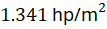
 , equivalent to
 or
 ). Evaluating photothermal carbonized aerogels, salt rejection crystallization, latent heat water vaporization, and off-grid brackish water treatment is essential for analyzing solar interfacial evaporation desalination physics.
Photothermal Carbonized Aerogels and Heat Localization
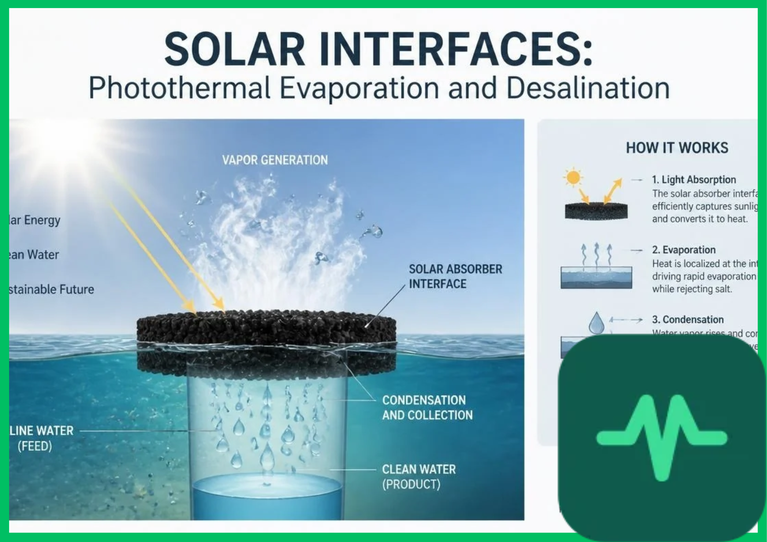
Solar-driven interfacial evaporation separates solar energy harvesting from bulk liquid heating by concentrating photothermal conversion at a thin evaporating surface layer. Broadband solar absorbers—including photothermal carbonized aerogels, carbon nanotubes, graphene foams, plasmonic metal nanoparticles, and conjugated polymer composites—capture incident irradiance across ultraviolet, visible, and near-infrared wavelengths ( to
 ) and convert photon energy into localized thermal vibrations via electron-phonon relaxation or molecular excitation.
Porous hydrophilic architectures—such as carbonized biomass aerogels, cellulose sponges, or porous hydrogels—wick saline water from beneath via capillary action while insulating the underlying bulk liquid against conductive heat loss (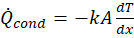 , where
 is effective thermal conductivity,
 is area, and
 is temperature gradient). Low thermal conductivity of water-filled micro/nano-channels and trapped vapor pockets restricts heat from sinking into deep water, keeping thermal energy concentrated at the meniscus where liquid evaporates into vapor.
Latent Heat Water Vaporization and Evaporation Rate Physics
Converting liquid water into vapor requires supplying the latent heat of water vaporization ( , approximately
 at
 [
 ] and roughly
 at typical solar evaporation temperatures of
 to
 [
 to
 ]). Under one-sun irradiance (
 ), the theoretical maximum evaporation mass flux (
 in
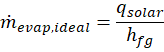
 ) when 100% of absorbed solar power drives phase change is:
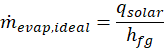
At  (
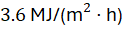 ), ideal evaporation rate sits near
 depending on vaporization enthalpy and operating temperature. Solar-to-vapor conversion efficiency (
 ) quantifies how effectively absorbed and net solar irradiance converts into vapor mass flux:
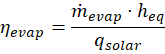
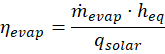
where  denotes effective enthalpy of vaporization accounting for sensible heating and any water-cluster or confinement effects. Crucially, engineering evaluations must report actual mass collected or weighed rather than apparent mass loss alone, because wicking capillary flows, ambient humidity, wind convection, and environmental heat gain from warm water or air above
 can inflate apparent evaporation metrics if not controlled rigorously.
Technical Data Specifications of Solar Interfacial Desalination Systems
| Desalination Parameter | Solar Interfacial Evaporation | Conventional Bulk Solar Still |
|---|---|---|
| Heat Localization Zone | Thin surface meniscus / porous evaporator | Entire bulk water basin volume |
| Solar Irradiance Benchmark |  ( 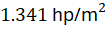 ;  ) |  ( 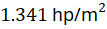 ;  ) |
| Operating Temperature Span |  to  (  to  ) surface |  to  (  to  ) basin |
| Salt Fouling Control Mode | Salt rejection crystallization / diffusion / convection | Brine concentration in basin floor |
| Off-Grid Power Requirement | Passive solar / low-power condensate collection | Passive solar (low yield per  ) |
| Feedwater Salinity Envelope | Brackish water to seawater ( TDS) | Brackish water to seawater |
| Condenser / Collection Need | Cold condensing surface + vapor routing | Glazing condensation + trough runoff |
Salt Rejection Crystallization and Brine Transport
Continuous water evaporation from saline feedwater—such as brackish groundwater or seawater ( total dissolved solids)—concentrates non-volatile salts such as sodium chloride (
 ) at the evaporating interface. If salt transport back into the bulk reservoir is slower than advective salt accumulation toward the surface, local brine salinity exceeds saturation limits and triggers salt rejection crystallization on the photothermal evaporator.
Accumulated salt crystals block incident photons, plug capillary pores, impede water supply, and degrade evaporation flux over time. Engineers counter salt accumulation using several physical mechanisms:
- Diffusive and Convective Back-Transport: Designing vertical wicking channels, porous spacing, or natural convection loops so concentrated brine diffuses or drains downward into bulk water faster than evaporation concentrates it.
- Janus / Directional Salt Localization: Engineering hydrophilic-hydrophobic interfaces or patterned crystallization zones where salt precipitates outside active optical absorption pores and can be harvested or rinsed away cleanly.
- Periodic Flushing or Brine Exchange: Circulating feedwater or flushing concentrated brine periodically to maintain steady salt concentration during extended off-grid brackish water treatment.
Off-Grid Brackish Water Treatment and Condensate Recovery
Producing potable water from vapor requires capturing and condensing generated steam without re-contaminating distillate or losing heat unnecessarily. In compact solar desalination units, vapor migrates from the warm evaporating interface to a cooler condensing surface—such as a cooled metallic or polymer plate, a passive radiative/convective condenser, or a multi-effect condensation stage that recovers latent heat released during condensation to drive additional evaporation stages.
For off-grid brackish water treatment in remote communities, arid regions, or disaster-response settings, system durability depends on resistance to biofouling, mineral scaling, ultraviolet degradation, and wind or wave disturbances. Pairing high-absorption photothermal carbonized aerogels or durable porous membranes with passive salt-rejection pathways and reliable condensate collection turns intermittent solar irradiance into clean freshwater without complex grid infrastructure.

Comments (0)
Login to leave a comment.
No comments yet. Be the first to share your thoughts!