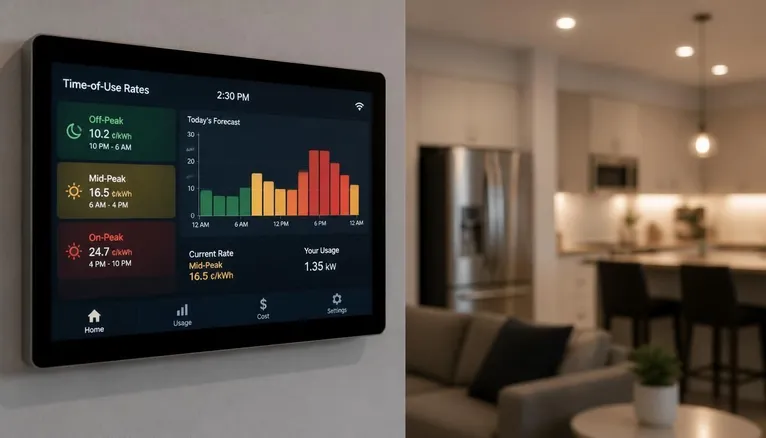
Time-of-use rates change the price of electricity throughout the day. Some hours are cheap. Other hours are painfully expensive. If you are not paying attention, this new system can quietly drain your wallet. It can feel like a sneaky trap hiding inside your monthly bill, waiting to catch you off guard.
But there is good news too. Smart home automation offers a real, practical way to fight back. In this guide, we will break down time-of-use rates in simple terms. We will look at why they exist. We will look at how smart devices can help you dodge the worst of it. By the end, you will feel far more confident facing this new pricing world.
Why Time-of-Use Rates Exist in the First Place
Let's start with the reason behind this shift. Utility companies face a tough challenge every single day. Everyone tends to use power at the exact same time. People come home from work. They turn on the AC. They cook dinner. They plug in devices. This creates a massive evening rush.
To handle this rush, utilities need expensive backup power plants ready to go. But these plants sit mostly unused for the rest of the day. That is wasteful and costly. Time-of-use rates were created to fix this imbalance.
By raising prices during busy hours, utilities hope to nudge people away from that evening rush. It sounds fair on paper. But for busy families, shifting habits is not always easy. This is exactly the tension that makes time-of-use rates feel so frustrating for everyday households.
Understanding the Pricing Windows
Time-of-use rates usually break the day into three simple zones. Knowing these zones is the first step toward beating them.
Off-peak hours are the cheapest. These usually fall late at night and early in the morning, when most people are asleep. Mid-peak hours sit in the middle of the day. Prices here are moderate, often helped by strong solar output. Peak hours are the most expensive. These typically run from about 4:00 PM to 9:00 PM, exactly when families are busiest at home.
This peak window is where time-of-use rates hit the hardest. In some places, peak prices can cost three to four times more than off-peak rates. That is a painful jump for anyone caught off guard.
The Emotional Sting of a Surprise Bill
Imagine opening your power bill and seeing a number far higher than expected. That moment can feel like a punch to the gut. You did nothing differently. You just lived your normal life. Yet somehow, the bill jumped.
This is the harsh reality many households face under time-of-use rates. Without the right tools, it is easy to get penalized simply for living a normal, busy evening routine. This unfair-feeling sting is exactly why so many people are turning to smart home automation for relief.
How Smart Thermostats Fight Back
Your air conditioner is usually the biggest energy hog in your home. Simply turning it off during peak hours sounds smart, but it often leads to a hot, uncomfortable house. Nobody wants to suffer through a sweaty evening just to save a few dollars.
This is where smart thermostats step in like a quiet hero. Devices like Nest or Ecobee use a clever trick called pre-cooling. They watch the clock closely, syncing directly with your utility's time-of-use rates schedule.
Before peak pricing kicks in, the thermostat cools your home a few extra degrees. Then, right as expensive rates begin, it shuts the system off completely. Thanks to your home's natural insulation, that stored coolness lingers for hours. You stay comfortable. Your air conditioner stays quiet. And your wallet stays a little safer from harsh time-of-use rates.
Water Heaters Join the Fight
Water heaters are another sneaky contributor to high bills. Many run constantly, keeping water hot all evening, even if nobody needs it right away. Under time-of-use rates, this constant cycling can get expensive fast.
Smart water heater controllers, like Aquanta, solve this problem gently. They heat your water tank right before peak pricing starts. Then, they pause heating completely during the expensive window. Because insulated tanks hold heat well, your water stays warm enough for dishes and showers, all without pulling a single costly watt during peak hours.
This small shift feels surprisingly satisfying. You get the comfort you need. You avoid the sting of time-of-use rates. It is a simple win that adds up to real savings over time.
Delaying Appliances for Bigger Savings
Beyond thermostats and water heaters, everyday appliances can help too. Dishwashers and clothes dryers are often big energy users. Running them during peak hours only adds fuel to an already expensive fire.
Modern smart appliances let you delay these tasks automatically. You can set your dishwasher to run at midnight, long after time-of-use rates drop back down. Your dryer can wait quietly until early morning hours, when electricity is cheap and plentiful.
When you combine smart thermostats, smart water heaters, and delayed appliances together, something powerful happens. Many households manage to shift up to 70 percent of their heavy energy use away from peak hours entirely. That is a massive win against time-of-use rates, achieved almost entirely through quiet, background automation.
From Frustration to Empowerment
There is something deeply satisfying about turning the tables on a system that once felt unfair. Time-of-use rates can feel like a hidden trap at first. But once you understand the pattern, that fear can turn into real confidence.
Smart home automation gives you back a sense of control. Instead of feeling punished by your own daily routine, you start feeling like you are quietly winning a game. Every degree of pre-cooling. Every delayed dishwasher cycle. Each small action adds up into real, meaningful savings.
This shift matters emotionally, not just financially. Many homeowners describe genuine relief once their automation is set up. The anxiety of an unpredictable bill fades. In its place comes a calm, steady sense of mastery over something that once felt confusing and stressful.
Common Questions About Time-of-Use Rates
Do all utility companies use time-of-use rates? Not yet, but adoption is growing fast. Many regions are shifting away from flat-rate billing as renewable energy grows and grid demand becomes harder to predict.
How much can I really save by automating around time-of-use rates? Savings vary by household, but automated homes often cut their monthly bills by up to 30 percent. The exact number depends on your habits, appliances, and local pricing structure.
Do I need expensive equipment to beat time-of-use rates? Not necessarily. A smart thermostat alone can make a big difference. Adding a smart water heater controller or appliance delay features simply increases your savings even further.
Is it hard to set up automation around time-of-use rates? Most smart devices are designed for easy setup. Many even sync automatically with your utility's published pricing schedule, requiring very little manual effort once installed.
Where Time-of-Use Rates Are Spreading Fastest
Not every region has adopted time-of-use rates yet, but the trend is spreading quickly. States and countries with heavy investment in solar and wind power are leading this shift. As renewable energy grows, grid demand becomes harder to predict using old, flat-rate models.
California, parts of Europe, and Australia are among the regions pushing time-of-use rates most aggressively. In these areas, utilities have found that dynamic pricing helps reduce strain during peak hours, while encouraging people to use cheap solar power during the sunny middle of the day.
As more regions add solar and wind to their grids, expect time-of-use rates to expand into new markets. Utilities see this pricing model as an essential tool, not just an experiment. For homeowners, this means understanding time-of-use rates is quickly becoming a normal part of managing a household budget, not just a niche concern for early adopters.
Building a Whole-Home Strategy Around Time-of-Use Rates
The real power of smart automation comes from combining multiple tools together, rather than relying on just one device. A smart thermostat alone helps. A smart water heater alone helps too. But when everything works together, the results feel dramatically stronger.
Think of your home as a small, coordinated team. Your thermostat handles cooling. Your water heater handles hot water timing. Your appliances handle their own delayed schedules. Each piece quietly does its job, all guided by the same underlying goal: avoiding the harshest hours of time-of-use rates.
Many modern smart home hubs can even coordinate these devices automatically, learning your habits over time. This means your home slowly becomes smarter and more efficient the longer you use it. Instead of manually adjusting settings every day, your house handles the heavy lifting quietly in the background, letting you focus on your actual life instead of constantly worrying about time-of-use rates.
This kind of whole-home coordination is where the real savings happen. Individually, each device chips away at your bill. Together, they can transform how your entire household experiences time-of-use rates, turning a once-stressful pricing system into something almost invisible in daily life.
Final Thoughts
Time-of-use rates are not going away. As the world shifts toward renewable energy, this kind of dynamic pricing will likely become the new normal almost everywhere. That can feel intimidating at first, but it does not have to stay that way.
Smart home automation offers a real, practical path forward. Pre-cooling thermostats, smart water heaters, and delayed appliances all work quietly together, protecting your comfort while shielding your wallet from the harshest edges of time-of-use rates.
What once felt like a confusing, unfair system can slowly become something manageable, even empowering. With the right tools in place, time-of-use rates stop feeling like a threat and start feeling like just another small, solvable puzzle.
In the end, beating time-of-use rates is not about sacrifice. It is about working smarter, letting quiet automation carry the load, while you simply enjoy a comfortable home and a much calmer monthly bill.

Comments (0)
Login to leave a comment.
No comments yet. Be the first to share your thoughts!