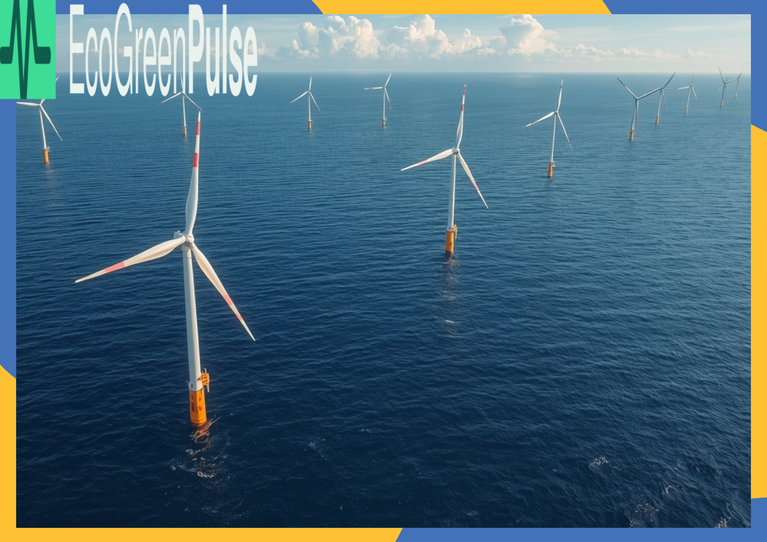
Traditional offshore wind turbines have done wonderful things for coastal regions. They brought clean power to cities near the shore. But these turbines share one frustrating weakness. They must be bolted directly into the seafloor. This only works in shallow water, less than 60 meters deep.
This limit locked out a massive amount of the world's best wind resources. Entire coastlines, like the Pacific edges of North America and Japan, drop quickly into deep ocean trenches. Old technology simply could not reach the powerful winds blowing just beyond the shallow shelf. Offshore floating wind farms finally break through this barrier, and the story behind that breakthrough feels genuinely exciting.
In this guide, we will explore how offshore floating wind farms work. We will look at the engineering keeping massive turbines steady in rough seas. We will look at why deep-ocean wind is so much more powerful than coastal wind. By the end, you will understand why so many engineers feel hopeful about this bold new frontier in clean energy.
Why Shallow Water Was Never Enough
Let's start with the old limitation. Traditional offshore wind turbines rely on fixed foundations. Steel towers get driven directly into the seabed, standing rigid and permanent, much like a building's foundation.
This method works fine in shallow coastal waters. But once the ocean floor drops past about 60 meters, this construction approach becomes impossible. The cost and engineering challenge of building a fixed tower that deep simply do not make sense.
This restriction quietly locked away over 80 percent of the world's deepest, most powerful wind corridors. Regions with steep continental shelves, dropping quickly into deep ocean, were essentially off-limits for wind energy. This felt like a painful missed opportunity, watching incredible wind resources sit completely untapped simply because of water depth.
Offshore floating wind farms remove this restriction entirely. Instead of anchoring rigidly to the seafloor, these turbines float. This single shift opens up enormous new stretches of ocean that were previously impossible to use.
What Makes Offshore Floating Wind Farms Different
So what exactly are offshore floating wind farms? Instead of standing on a fixed tower bolted to the ocean floor, these turbines sit on massive floating platforms. These platforms stay in place using heavy mooring lines anchored deep into the seabed below.
This design feels almost like a bold leap of engineering confidence. Picture a structure taller than most skyscrapers, with blades spinning across an area wider than a football field, floating freely on the open ocean. It sounds almost impossible, yet offshore floating wind farms are already proving this concept works in the real world.
The key breakthrough came from an unexpected place: the oil and gas industry. Engineers borrowed decades of experience building stable floating platforms for deep-sea oil extraction. This existing knowledge gave offshore floating wind farms a huge head start, rather than requiring engineers to solve deep-ocean stability problems completely from scratch.
The Three Main Floating Designs
Offshore floating wind farms rely on a few different platform designs, each solving the stability challenge in its own creative way.
Spar-Buoy Platforms
This design uses a long, heavy steel cylinder that extends deep underwater. Think of it like a fishing bobber, but massively scaled up and reinforced. Heavy ballast weight sits at the bottom of this cylinder, pulling the center of gravity far below the waterline.
This low center of gravity keeps the turbine remarkably stable, even in rough seas. It naturally resists tipping, much like a weighted toy that always rights itself no matter how hard you push it over. Offshore floating wind farms using this design tend to work especially well in very deep water, where the long cylinder has plenty of room to extend downward.
Semi-Submersible Platforms
This second design uses a cluster of hollow, buoyant columns connected together by strong steel bracing. These columns float near the surface, rather than extending deep below like a spar-buoy.
The clever part lies in how these columns handle wave motion. Their shape traps and dampens water movement internally, absorbing wave energy before it can destabilize the turbine above. Offshore floating wind farms using this design are often easier to build and tow, since much of the structure floats closer to the surface.
Tension-Leg Platforms
The third major design uses tight, vertical mooring lines pulled taut against the seafloor. These lines create tension that holds the platform firmly in place, resisting both vertical and horizontal movement.
This design offers excellent stability, though it requires very precise anchoring and careful installation. Offshore floating wind farms using tension-leg platforms tend to sit lower and steadier in the water, trading some flexibility for extra rigidity against ocean forces.
Staying Anchored Through Violent Storms
No matter which platform design gets used, offshore floating wind farms all rely on something crucial: strong, reliable mooring systems. Heavy-duty synthetic lines connect each platform to massive anchors embedded deep in the seafloor sediment below.
These mooring lines allow the turbine to sway gently with ocean currents, rather than fighting against every small movement. This flexibility actually helps, letting the structure absorb energy naturally instead of resisting it rigidly. Yet during violent storms, with waves capable of overwhelming almost anything built by human hands, these same mooring systems must hold absolutely firm.
This balance between flexibility and strength feels like a genuine engineering triumph. Offshore floating wind farms must remain gentle enough to sway safely during normal conditions, while staying strong enough to survive hurricane-force winds and massive ocean swells without breaking free.
Why Deep-Ocean Wind Is So Much More Powerful
Here is where the real excitement builds. The entire reason offshore floating wind farms matter so much comes down to one simple fact: deep-ocean wind is dramatically stronger and steadier than wind found near land.
Wind blowing over land gets constantly disrupted. Buildings, hills, trees, and general ground friction all slow it down and create turbulence. Even wind blowing over shallow coastal water faces similar disruption from nearby land and shifting coastal temperatures.
Deep-ocean wind faces none of these obstacles. It travels across thousands of miles of open, flat water with almost zero friction. This creates faster, steadier, more powerful wind currents than almost anywhere else on the planet.
Because wind power scales dramatically with speed, even a modest increase in wind velocity creates a massive jump in energy output. Offshore floating wind farms positioned in these deep-ocean corridors can generate up to double the annual electricity output of an identical turbine placed on land. That difference feels almost unbelievable, yet it represents genuine, measurable physics at work.
Bringing That Power Back to Shore
Generating massive amounts of clean electricity out in the deep ocean means nothing if that power cannot reach the cities that need it. Offshore floating wind farms rely on high-voltage subsea transmission cables to carry electricity from these floating platforms back to coastal power grids.
These cables run along the ocean floor, sometimes stretching for many miles before reaching land. Building and maintaining this underwater infrastructure adds real complexity and cost to offshore floating wind farms projects, though the payoff, access to incredibly powerful, consistent wind, often justifies this additional investment.
Once this power reaches shore, it can flow directly into major coastal metropolitan grids, offering these cities a genuinely reliable, high-capacity source of clean electricity. This connection between deep-ocean wind and hungry city grids feels like a quiet, powerful bridge, linking one of Earth's most remote resources directly to some of its busiest, most populated places.
The Real Challenges Facing This Technology
It would be dishonest to pretend offshore floating wind farms are without real, significant challenges. Building and maintaining massive floating structures far out at sea is genuinely difficult, and these hurdles deserve honest attention.
The Cost of Building Far From Shore
Constructing offshore floating wind farms costs significantly more than traditional coastal wind projects. Building massive floating platforms, laying long subsea cables, and installing deep-sea anchoring systems all require substantial upfront investment.
This higher cost has slowed adoption somewhat, especially compared to cheaper, simpler onshore wind projects. Over time, as manufacturing scales up and installation techniques improve, costs are expected to fall. But right now, this financial hurdle remains a genuine barrier for many potential offshore floating wind farms projects.
The Logistics of Deep-Sea Maintenance
Repairing a turbine sitting hundreds of miles out at sea is nothing like repairing one on land. Technicians cannot simply drive a truck out to fix a problem. Instead, massive support vessels must tow damaged components back to shore, or specialized crews must travel far out to sea for repairs.
This logistical challenge adds real complexity to offshore floating wind farms operations. Weather delays, rough seas, and long travel distances all make routine maintenance more expensive and time-consuming than typical onshore wind projects. Engineers are working hard to design more durable, low-maintenance components specifically to reduce how often these difficult repair trips become necessary.
Environmental and Marine Life Concerns
Building massive structures in the open ocean naturally raises questions about marine ecosystems. Offshore floating wind farms developers must carefully study local marine life before installing anchoring systems and subsea cables, ensuring minimal disruption to fish migration patterns, whale routes, and other sensitive ocean habitats.
Ongoing monitoring remains essential throughout a project's lifetime, tracking any unexpected effects on nearby marine ecosystems. Most developers work closely with environmental scientists, adjusting designs and locations as needed to minimize harm while still capturing the incredible wind resources available in deep water.
Why This Technology Feels So Exciting
There is something genuinely thrilling about watching engineers unlock a resource once considered completely out of reach. For years, some of the planet's strongest, steadiest winds sat unused, blowing endlessly over deep ocean water that human technology simply could not access.
Offshore floating wind farms change this story entirely. They prove that with enough creativity and borrowed expertise, even the most remote, challenging environments can become genuine sources of clean, reliable power. This feels like a real triumph of human ingenuity, turning a former limitation into a massive new opportunity.
For coastal cities desperate for more clean energy options, this breakthrough carries real emotional weight. It means access to wind resources that were previously nothing more than a missed opportunity, blowing steadily just beyond reach. Offshore floating wind farms finally let these cities tap into that power directly.
Where This Technology Is Already Working
Several pioneering offshore floating wind farms projects already exist around the world, proving this technology works far beyond the laboratory or drawing board. Scotland has been an early leader, deploying some of the first commercial-scale floating turbines in genuinely deep, challenging North Sea waters.
Japan, with its incredibly steep continental shelf, represents another promising region for offshore floating wind farms. Traditional fixed turbines were never realistic there, given how quickly the ocean floor drops away from the coast. Floating technology offers Japan a genuine path toward harnessing powerful ocean wind that was previously completely inaccessible.
The United States is also exploring this technology along its Pacific coastline, where similar deep-water conditions have long prevented traditional offshore wind development. Each successful project adds valuable real-world data, helping refine designs and lower costs for the next generation of offshore floating wind farms built elsewhere.
What the Future Holds
Looking ahead, the outlook for offshore floating wind farms appears genuinely promising. As manufacturing scales up and installation techniques mature, costs are expected to follow a familiar pattern, dropping steadily over time, much like early solar panels and onshore wind turbines did decades ago.
Larger, more efficient turbine designs are also on the horizon, potentially generating even more power per platform than current models. Combined with improving mooring technology and more efficient subsea cable systems, offshore floating wind farms should become increasingly cost-competitive with traditional energy sources over the coming decade.
Government support is growing too, with several nations announcing ambitious targets for floating wind capacity in the years ahead. This kind of policy backing feels essential, helping offshore floating wind farms move from promising pilot projects into genuine, large-scale contributors to global clean energy grids.
Common Questions About Offshore Floating Wind Farms
How deep can offshore floating wind farms operate? These platforms can operate in waters far deeper than traditional fixed turbines, often thousands of feet deep, since they float rather than anchor rigidly to the seafloor.
Why is deep-ocean wind more powerful than coastal wind? Deep-ocean wind travels across open water with minimal friction, making it faster and steadier than wind disrupted by land, buildings, or shallow coastal terrain.
What keeps offshore floating wind farms stable during storms? Heavy-duty mooring lines anchored deep into the seafloor keep platforms secure, while designs like spar-buoys and semi-submersible hulls help resist tipping and dampen wave motion.
Are offshore floating wind farms more expensive than traditional wind projects? Currently, yes, mainly due to platform construction and subsea cable installation costs. However, prices are expected to fall as the technology matures and scales up globally.
The Economic Opportunity Behind Floating Wind
Beyond the raw power numbers, offshore floating wind farms carry real economic promise for coastal regions and port communities. Building and maintaining these massive structures requires specialized shipyards, skilled marine engineers, and entire supply chains dedicated to manufacturing platforms, mooring systems, and subsea cables.
Ports located near deep-water wind corridors stand to benefit enormously. Many coastal towns that once relied heavily on fishing or shipping industries are finding new economic life supporting offshore floating wind farms construction and maintenance operations. This shift feels meaningful for communities searching for stable, long-term employment in a changing energy economy.
Shipbuilding expertise translates surprisingly well into this new industry too. Companies that once built oil platforms or large cargo vessels are repurposing their skills toward constructing floating wind platforms instead. This overlap allows offshore floating wind farms to scale up more quickly than an entirely new industry might, since much of the necessary infrastructure and expertise already exists in coastal shipbuilding regions.
Government investment is following this economic opportunity closely. Several nations have announced funding specifically aimed at developing port infrastructure capable of supporting offshore floating wind farms at scale. This kind of targeted investment helps ensure that the economic benefits of this technology reach beyond just electricity bills, extending into genuine, lasting job creation for coastal communities worldwide.
Final Thoughts
Offshore floating wind farms represent a genuine leap forward for clean energy, unlocking wind resources that were completely out of reach just a few years ago. By borrowing proven engineering from the oil and gas industry, these floating platforms finally free wind turbines from the strict limits of shallow water.
Real challenges remain, from high construction costs to complicated deep-sea maintenance logistics. Yet these feel like solvable engineering problems, not permanent barriers. Just like early offshore wind projects once faced their own steep learning curves, offshore floating wind farms are steadily working through theirs today.
As costs fall and technology matures, expect offshore floating wind farms to become an increasingly important part of the global clean energy mix. This technology offers something genuinely valuable: access to some of the strongest, steadiest wind on the entire planet, previously locked away by nothing more than water depth.
In the end, offshore floating wind farms remind us that some of our greatest untapped resources are not hidden in distant, exotic locations. They are blowing steadily, right now, just beyond the edge of the shallow coastline, finally within reach thanks to bold, creative engineering.
Comments (0)
Login to leave a comment.
No comments yet. Be the first to share your thoughts!