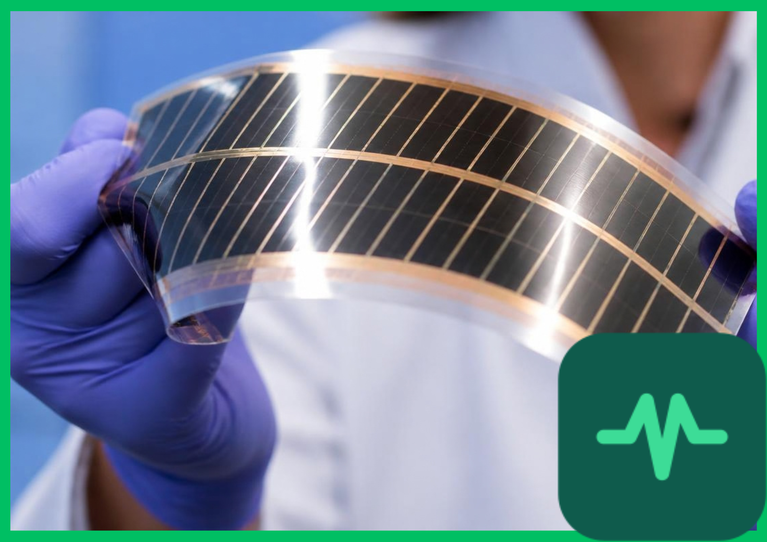
A new material called perovskite is pushing solar technology further than traditional panels ever could alone.
What perovskite actually is
Perovskite isn't one single substance. It's a class of crystal structures that can be manufactured relatively cheaply and tuned to capture sunlight very efficiently.
Scientists have been studying it for years, and recent progress has made it genuinely practical for real solar panels, not just laboratory experiments.
Why this matters so much
Traditional solar panels use silicon, and silicon has a natural limit on how efficient it can become. We're already close to that limit with current technology.
Perovskite offers a way past that ceiling. When layered together with silicon, in what's called a tandem cell, the combination captures more sunlight than silicon alone ever could.
The efficiency numbers, explained simply
Efficiency simply means how much of the sunlight hitting a panel actually turns into usable electricity. Higher efficiency means more power from the same size panel.
Traditional silicon panels typically top out at a certain practical efficiency level. Tandem perovskite-silicon panels are pushing past thirty percent efficiency, a meaningful jump that translates into real, practical benefits.
What higher efficiency actually means for you
More efficient panels produce more electricity from the same roof space. This matters a lot for homes and businesses with limited roof area.
It also means solar farms can produce more power using less land. This is a genuinely big deal in places where land is limited or expensive.
Why this technology took so long to reach the market
Perovskite has a real, honest weakness. Early versions degraded quickly when exposed to moisture and heat, lasting only a fraction as long as traditional silicon panels.
This durability problem kept the technology stuck in labs for years. Scientists have spent considerable effort solving this exact issue, and recent progress suggests it's finally becoming manageable enough for commercial products.
The honest challenges still remaining
Manufacturing perovskite at a massive scale is still newer territory compared to decades of silicon panel production experience. Getting consistent quality across millions of panels takes time to perfect.
Long-term durability, while improved, still needs more real-world testing over many years before we know exactly how these panels perform after a decade or two of actual weather exposure.
Why manufacturers are excited anyway
Despite these honest challenges, the potential upside is large enough that major manufacturers are investing heavily in this technology. Getting meaningfully more power from the same panel size and cost is a genuinely compelling proposition.
This is similar to how many new technologies start. Real challenges exist, but the potential benefit is large enough to justify pushing through them.
What this means for solar costs going forward
Higher efficiency panels can lower the overall cost per unit of electricity generated, even if the panels themselves cost slightly more to produce. Fewer panels are needed to generate the same total power.
This could make solar energy even more competitive compared to other electricity sources, continuing a trend that's already been pushing solar costs down for years.
When you might actually see this technology
Some tandem perovskite-silicon panels are already reaching commercial availability in limited markets. Broader, widespread availability is expected to grow over the next few years as manufacturing scales up and durability testing continues proving successful.
This isn't a distant, decades-away technology. It's arriving now, gradually, the same way most major technology shifts unfold in the real world.
Why this fits the bigger renewable energy story
Solar power has already become one of the cheapest ways to generate electricity in many parts of the world. Technology like perovskite tandem cells pushes that advantage even further.
Every meaningful efficiency gain makes solar more attractive against other energy sources, accelerating how quickly the world can shift toward cleaner electricity generation overall.
The bottom line
Perovskite solar technology represents a genuine, meaningful step forward for solar panels, pushing past limits that silicon alone could never overcome on its own. Real challenges around durability and manufacturing scale remain, but progress has been substantial and encouraging.
This is one of the more exciting developments in renewable energy happening right now, quietly promising more power from the same rooftop, the same solar farm, and the same sunlight we've always had.



Comments (0)
Login to leave a comment.
No comments yet. Be the first to share your thoughts!