What a virtual power plant actually is
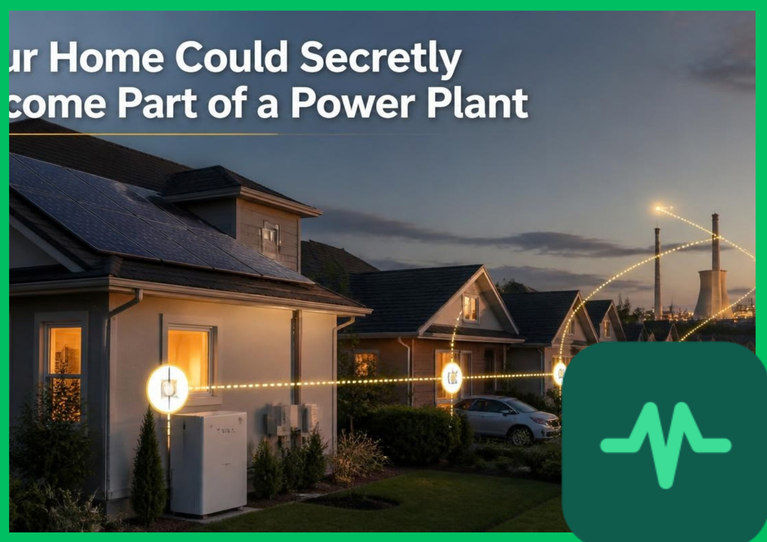
A virtual power plant isn't one building at all. It's a network of many small energy sources, working together as if they were one big power plant.
This might include home batteries, solar panels, smart thermostats, and even electric car chargers, all connected and coordinated through software.
How this actually works
Imagine thousands of homes, each with a solar panel and a home battery. On their own, each one is tiny. Together, coordinated by smart software, they can behave like a genuine power source the grid can rely on.
When the grid needs extra power, the system can pull a small amount from thousands of batteries at once. Individually, nobody notices. Collectively, it adds up to something meaningful.
Why this idea makes so much sense
Building a traditional power plant takes years and enormous investment. A virtual power plant uses equipment that many homes already own, or plan to buy anyway, like solar panels and batteries.
Instead of building something new, this approach organizes what already exists into something more useful. It's a clever way to unlock hidden value sitting quietly in individual homes.
What's actually in it for homeowners
Homeowners who join these programs are often paid for the flexibility they provide. When your battery shares power with the grid during high demand, you typically get compensated for that contribution.
This turns home batteries into something more than just a personal backup. They become a small, genuine source of income, while still protecting your own home during outages.
Why grids need this kind of help
Electricity demand spikes at certain times, like hot summer afternoons when everyone runs air conditioning at once. Traditional grids handle this by keeping extra backup power plants ready, often sitting unused most of the year.
Virtual power plants offer a cheaper, more flexible alternative. Instead of an expensive backup plant sitting idle, thousands of home batteries can step in only when truly needed.
The honest limits worth knowing
This only works well in areas where enough homes already have batteries and solar panels installed. In regions where this equipment isn't yet common, virtual power plants can't really get off the ground.
Trust and communication also matter. Homeowners need clear, simple ways to see how their equipment is being used, and confidence that the arrangement genuinely benefits them, not just the grid operator.
Why this fits perfectly with the rise of home batteries
As more homeowners install batteries alongside solar panels, mainly to save money and gain backup power, this creates the exact foundation virtual power plants need to succeed.
This is a case where individual, personal decisions, buying a battery for your own home, add up into something bigger and genuinely useful at a whole different scale.
What role artificial intelligence plays here
Coordinating thousands of individual batteries and devices requires careful, constant management. This is where software and smart algorithms become essential.
These systems predict grid needs, decide exactly when to draw power from which homes, and make sure no single household loses too much of its own stored energy. This kind of coordination would be impossible to manage manually at this scale.
Why utility companies are increasingly interested
Traditional utilities have started partnering with virtual power plant programs instead of treating them as competition. This makes sense once you see the numbers.
Building fewer backup power plants saves money. Using homeowners' existing equipment instead creates a cheaper, more flexible system for everyone involved, including the utility itself.
What this could look like in the future
As more homes add batteries, solar panels, and smart devices, virtual power plants could grow considerably larger and more capable. Entire neighborhoods, even entire cities, could eventually contribute meaningfully to grid stability this way.
This represents a genuine shift in how we think about power generation, moving away from a few giant plants toward millions of small, connected contributors working together.
The bottom line
A virtual power plant proves that you don't always need to build something new to solve a big problem. Sometimes, connecting what already exists in a smarter way works just as well, or better.
As more homes add batteries and solar panels, expect this idea to keep growing, quietly turning ordinary homes into a genuine, valuable part of how the grid keeps the lights on for everyone.
Comments (0)
Login to leave a comment.
No comments yet. Be the first to share your thoughts!