Electrochemical Architecture and Solid Electrolyte Interphase Mechanics
The foundational structural advantage of solid-state battery architecture is the elimination of flammable liquid organic solvents. Conventional liquid lithium-ion cells utilize porous polymer separators impregnated with organic liquid electrolytes (such as lithium hexafluorophosphate [ ] dissolved in ethylene carbonate and dimethyl carbonate) to facilitate lithium-ion transport between the cathode and anode. Under high current draws or mechanical piercing, these liquid electrolytes degrade, releasing flammable gases and triggering exothermic thermal runaway reactions.
Solid-state batteries substitute liquid components with solid ionic conductors belonging to specific chemical families:
- Sulfide-Based Solid Electrolytes: Materials such as lithium phosphorus oxynitride (
 ) or argyrodites (
 ) exhibit exceptionally high room-temperature ionic conductivities ranging from
 to
 , approaching or exceeding liquid electrolyte performance.
- Oxide-Based Solid Electrolytes: Garnet-type structured cubic lithium lanthanum zirconium oxide (
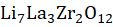 or LLZO) provides superior chemical stability and mechanical hardness, effectively blocking lithium dendrite penetration during rapid charging cycles.
Replacing the conventional intercalating graphite anode with a pure lithium metal foil anode eliminates inactive host material mass, dramatically elevating cell-level gravimetric energy density.
Gravimetric and Volumetric Energy Density Metrics
Energy density improvements in solid-state e-bike batteries stem directly from material substitutions that optimize mass and volume utilization within confined micro-mobility frame geometries. Traditional commercial liquid-electrolyte 18650 or 21700 cylindrical cells achieve gravimetric energy densities between  and
 (
 ) and volumetric energy densities around
 to
 .
In contrast, solid-state pouch cells incorporating high-nickel cathode active materials (such as  or NMC811) coupled with solid electrolytes and lithium metal anodes achieve gravimetric energy densities ranging from
 to
 (
 ) and volumetric energy densities exceeding
 to
 . This quantum leap in energy density allows e-bike manufacturers to reduce total battery pack weight by 40% to 50% while maintaining identical capacity, or double the operational range without increasing frame storage volume.
Technical Data Specifications of Solid-State Battery Parameters
| Electrochemical & Physical Parameter | Conventional Liquid Li-Ion | Advanced Solid-State Battery |
|---|---|---|
| Gravimetric Energy Density |  to  (  ) |  to  (  ) |
| Volumetric Energy Density |  to  |  to  |
| Electrolyte Phase & Composition | Liquid organic carbonate solution | Sulfide or oxide solid ionic conductor |
| Anode Material Chemistry | Intercalating graphite / silicon-graphite | Pure lithium metal foil anode |
Ionic Conductivity ( ) |  (liquid state) |  to  (solid ceramic) |
| Thermal Runaway Threshold |  to  (  to  ) |  (  ) high stability |
| Operating Temperature Range |  to  (  to  ) |  to  (  to  ) |
Interfacial Resistance and Mechanical Stack Pressure Management
Despite superior energy density metrics, commercializing solid-state batteries for micro-mobility applications presents severe manufacturing and engineering challenges, primarily centered on solid-solid interfacial contact resistance. In liquid electrolyte systems, the liquid wets the porous separator and electrode surfaces perfectly, maintaining seamless ionic contact across microscopic voids. In solid-state cells, rigid solid electrolyte separators and solid electrodes touch only at discrete point contacts, creating high interfacial resistance that impedes lithium-ion flux.
Furthermore, during charge and discharge cycles, lithium electrodeposition and stripping at the lithium metal anode induce volumetric expansion and contraction. Without continuous external mechanical stack pressure (typically ranging from  to
 [
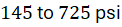 ]), microscopic gaps form at the solid-solid interfaces, leading to localized current constriction, overpotential spikes, and lithium dendrite penetration through grain boundaries. Engineering robust micro-mobility casing structures requires integrating spring-loaded or elastomeric clamping mechanisms that maintain uniform compressive stack pressure across the cell stack throughout thousands of charge-discharge cycles.
Thermal Stability, Safety, and Abuse Tolerance
Solid-state battery architectures provide exceptional thermal stability, eliminating the primary safety hazards associated with conventional e-bike lithium-ion packs. Organic liquid electrolytes have low flash points and decompose exothermically at temperatures above  to
 (
 to
 ), generating oxygen gas that accelerates thermal runaway.
In contrast, inorganic solid electrolytes are non-flammable and maintain structural and ionic integrity at temperatures exceeding  (
 ). Academic research reports confirm that solid-state pouch cells withstand severe mechanical nail penetration, overcharging to 200% voltage limits, and external short-circuits without catching fire or venting toxic gases. This high abuse tolerance simplifies battery management system (BMS) thermal protection circuitry, reducing parasitic weight and enhancing overall micro-mobility safety standards.
The Final Take
Mastering solid-state battery e-bike energy density transforms micro-mobility engineering by combining high gravimetric and volumetric capacity with absolute thermal safety. Citing IEA advanced battery assessments and electrochemical literature, replacing volatile liquid electrolytes with inorganic solid ionic conductors unlocks pure lithium metal anodes and eliminates thermal runaway risks. By resolving solid-solid interfacial resistance and implementing precise stack pressure management, solid-state energy storage establishes an indispensable technical foundation for high-performance electric bicycles.


Comments (0)
Login to leave a comment.
No comments yet. Be the first to share your thoughts!