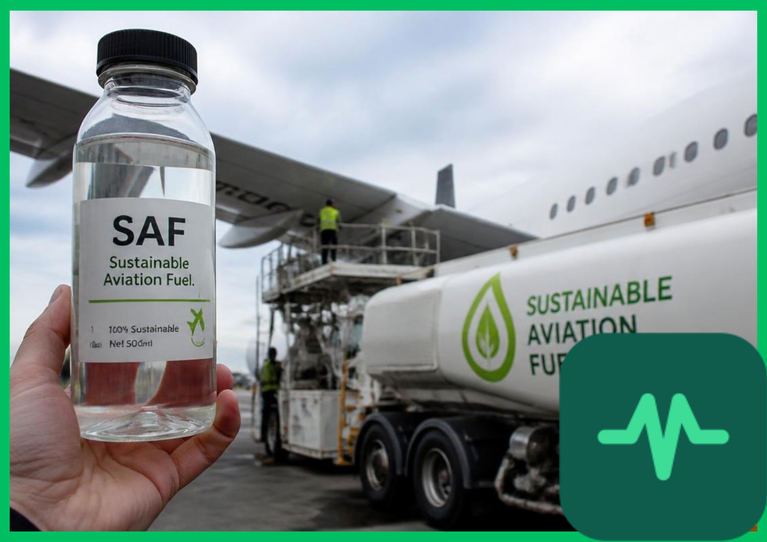
Batteries are heavy, and planes need to stay light to fly. This is exactly why sustainable aviation fuel matters so much right now.
What sustainable aviation fuel actually is
Sustainable aviation fuel, often just called SAF, is a fuel made to work in existing jet engines without any modification. The difference is how it's made.
Instead of coming from crude oil, this fuel comes from renewable sources. That might mean used cooking oil, certain crops, or even carbon captured directly from the air combined with clean electricity.
Why planes can't simply go electric
A car battery is heavy but manageable. A battery big enough to power a large passenger jet across an ocean would be so heavy the plane could barely lift off the ground, let alone fly efficiently.
This basic physics problem means batteries aren't a realistic option for long-distance flights anytime soon. Liquid fuel remains the only practical choice for now, which is exactly why making that fuel cleaner matters so much.
How sustainable aviation fuel is actually made
Several different methods exist. One common approach converts used cooking oil and animal fats into jet fuel through a chemical process.
Another approach uses specific crops grown specifically for fuel production, rather than food. A newer, more advanced method combines captured carbon dioxide with hydrogen made from clean electricity, essentially building fuel from scratch using cleaner ingredients.
Why this fuel is considered more sustainable
Traditional jet fuel comes from crude oil pulled out of the ground, adding entirely new carbon into the atmosphere when burned. Sustainable aviation fuel instead often uses carbon that was already part of a more recent, natural cycle, like plants that absorbed carbon dioxide while growing.
This doesn't mean the fuel produces zero emissions when burned. It means the overall carbon math works out considerably better across the fuel's entire life cycle, compared to fuel made from fossil sources.
Why airlines can use this fuel right now
One of the most practical advantages of sustainable aviation fuel is that it works in existing airplane engines, without needing new equipment or new airports built around it.
Airlines can simply blend this fuel with traditional jet fuel, gradually increasing the proportion over time as more supply becomes available. This makes adoption considerably easier than switching to an entirely new technology.
The honest challenges holding this back
Right now, sustainable aviation fuel costs noticeably more than traditional jet fuel. This price difference is a real, practical barrier to widespread adoption.
Supply is also still limited. Producing this fuel at the scale airlines actually need requires much more investment in production facilities than currently exists.
Why costs should improve over time
Like most new technologies, costs tend to fall as production scales up and processes improve. Early production runs are always more expensive than mature, established industries producing the same product.
As more facilities get built and production methods improve, expect sustainable aviation fuel to gradually become more affordable, following a familiar pattern seen across other clean energy technologies.
What this means for your next flight
You likely won't notice any difference in how a flight feels using this fuel. It works the same way traditional jet fuel does, powering the same engines in the same planes.
The difference lies entirely in where the fuel came from and how much extra carbon it added to the atmosphere in the process, not in your actual flying experience.
Why aviation matters so much for climate goals
Air travel represents a meaningful, genuine source of global emissions, and it's one of the hardest sectors to clean up given the physical limits we discussed earlier.
Making real progress on aviation emissions requires solutions like sustainable aviation fuel, since batteries and other clean alternatives simply aren't realistic for most flights, especially longer ones, anytime in the near future.
What genuine progress will require
Meaningful growth in sustainable aviation fuel will require continued investment in production facilities, ongoing research to improve efficiency, and enough demand from airlines willing to pay a premium during this earlier stage.
This is a gradual, honest transition, not an overnight fix. But steady progress is already happening, with more airlines committing to increasing their use of this fuel each year.
The bottom line
Sustainable aviation fuel offers a genuinely realistic path toward cleaner air travel, working within the physical limits that make batteries impractical for most flights. It's not perfect, and it's not yet cheap, but it's one of the few honest, workable solutions currently available for this particularly difficult sector.
Expect gradual, steady growth rather than a sudden transformation. That's simply how mea



Comments (0)
Login to leave a comment.
No comments yet. Be the first to share your thoughts!