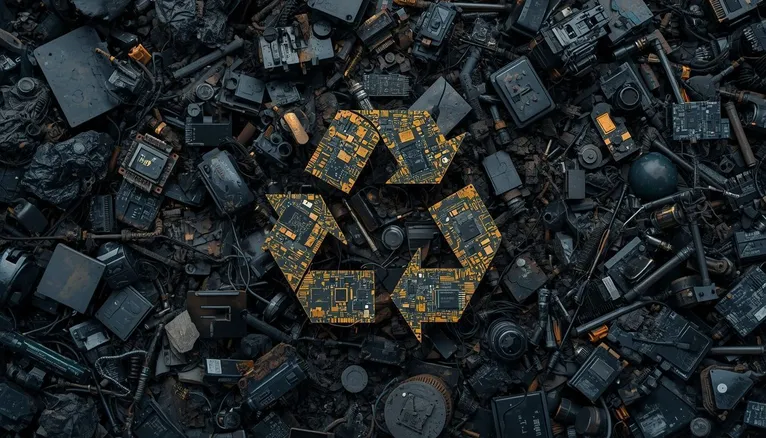
Every year, the world makes over 60 million metric tons of e-waste. Most of it goes to landfills. Some of it gets burned in unsafe conditions. This is bad for people. It is bad for the planet too.
But there is good news. E-waste recycling is changing the story. Old phones are not junk. They are full of gold, copper, and rare metals. In fact, one ton of old phones has more gold than one ton of mined gold rock. That is a wild fact. It shows why e-waste recycling matters so much.
In this guide, we will look at how e-waste recycling actually works. We will look at smart robots. We will look at clean chemistry. We will also look at rare earth metals, and why saving them matters for the future.
Why E-Waste Recycling Matters So Much
Let's start with the basics. Why does e-waste recycling matter at all? The answer is simple. Mining is destructive. Digging up gold or copper from the earth damages land. It uses huge amounts of water. It can even poison nearby communities.
E-waste recycling offers a better way. Instead of digging up new metal, we pull metal out of old devices. This is often called urban mining. It sounds strange, but it works. Cities are full of old phones, laptops, and tablets. Each one holds tiny amounts of valuable metal inside.
When you add it all up, the numbers are huge. Millions of devices get thrown away every year. Through e-waste recycling, we can pull real value from all of that waste. We can also protect the planet at the same time.
The Robots Behind E-Waste Recycling
Taking apart a phone is not easy. Phones use tiny screws. They use strong glue. Doing this by hand is slow. It is also expensive. This used to be a major hurdle for e-waste recycling.
Now, robots are solving this problem. Apple built a robot named Daisy just for this job. Daisy can take apart 23 different iPhone models. It works fast too. Daisy can process 200 phones every hour.
Daisy uses smart tools. It uses cold air blasts to loosen parts safely. This keeps the circuit boards from getting damaged. Once the phone is apart, sensors take over. These sensors use AI to sort the pieces. They separate metal, plastic, and magnets in seconds.
This kind of automation is a big deal for e-waste recycling. It makes the whole process faster. It also makes it cheaper. As more robots join the process, e-waste recycling becomes easier to scale up around the world.
Clean Chemistry: How Metals Get Pulled Out
Once a device is taken apart, the real magic begins. This next step in e-waste recycling is all about chemistry. It is called hydrometallurgy.
In the past, factories used a method called smelting. Smelting means burning circuit boards in extreme heat. This does pull out metal. But it also releases toxic gas into the air. That gas can harm workers and pollute nearby towns.
Modern e-waste recycling skips this dirty step. Instead, it uses special acid solutions. These solutions dissolve the metal at room temperature. No burning is needed. No toxic smoke escapes into the air.
Here is how it works. Circuit boards get shredded into powder first. Then, the powder gets washed in a liquid bath. This bath is carefully mixed to target specific metals. Slowly, gold appears. Then silver. Then copper. Then palladium. Each metal comes out one at a time.
This process is incredibly efficient. Modern e-waste recycling can recover up to 99 percent of the precious metal inside a circuit board. That is almost no waste at all. And since the chemical bath gets reused, the whole system stays clean and closed-loop.
Saving Rare Earth Metals Through E-Waste Recycling
Gold and copper are not the only treasures hiding inside old phones. There is also a group of rare metals called rare earth elements. These include neodymium and dysprosium.
These metals are tiny, but they matter a lot. They power the vibration motor in your phone. They help your laptop speakers work. They even help spin the motors inside electric cars. Without them, modern tech simply would not work the same way.
Mining these metals from the ground is extremely harmful. It often creates radioactive wastewater. It also destroys huge areas of land through open-pit digging. This is exactly why e-waste recycling plays such a big role here.
Instead of digging up new rare earth metals, recycling centers now pull them from old devices. They remove old speakers and motors. Then, they use heat and chemicals to release the trapped metal safely. Once cleaned, this metal becomes powder again. That powder can be sold straight back to electronics makers.
This closes the loop entirely. Thanks to e-waste recycling, the same rare metal can be reused again and again, instead of being mined from the earth every single time.
The Bigger Picture: A Cleaner Tech Industry
Step back for a moment. Why should everyday people care about all of this? The answer touches almost everyone. Nearly every household owns a phone or laptop. That means almost everyone is part of this cycle, whether they realize it or not.
As demand for electronics keeps rising, e-waste recycling becomes more important every year. Electric cars need batteries and motors. Laptops need rare metals too. Without strong e-waste recycling systems, the world would need to mine far more raw material just to keep up with demand.
This is why so many companies are investing in e-waste recycling right now. It is not just good for the planet. It is also smart business. Recovered gold, copper, and rare metals can be sold and reused. This turns old trash into real profit.
Governments are noticing too. Many places are creating new rules around e-waste. These rules push companies to recycle more responsibly. As these rules grow stronger, expect e-waste recycling to become a standard part of how tech gets made and remade.
Common Questions About E-Waste Recycling
Is e-waste recycling actually profitable? Yes. Recycling e-waste can be very profitable. Gold, silver, copper, and rare metals all have real market value. Companies that invest in e-waste recycling often turn old junk into a steady stream of income.
Do I need to do anything special to recycle my old phone? Not really. Most programs which are into e-waste recycling make it simple. Many phone makers and electronics stores offer drop-off points. From there, the e-waste recycling process takes over automatically.
Is e-waste recycling safe for workers? Modern e-waste recycling is much safer than older methods. Hydrometallurgy avoids toxic smoke from smelting. This makes e-waste recycling facilities far safer for the people working inside them.
Why can't we just keep mining instead of using it? Mining is slow, costly, and damaging to the environment. E-waste recycling offers a faster, cleaner way to get the same valuable metals. As demand grows, e-waste recycling will likely become even more important than traditional mining.
Where E-Waste Recycling Is Growing Fastest
Some regions are moving faster than others. Parts of Europe already have strict e-waste recycling laws in place. These laws require companies to take responsibility for old products. Asia is also investing heavily in e-waste recycling, since many electronics get made there in the first place.
In North America, e-waste recycling is growing too, though rules still vary by state and city. As more places adopt clear e-waste recycling standards, the whole system becomes easier to scale. This steady growth is a strong sign that e-waste recycling is becoming a normal part of the tech industry, not just a niche idea.
Final Thoughts
Old phones and laptops are not trash. They are treasure, just waiting to be found. Thanks to smart robots and clean chemistry, e-waste recycling is turning that treasure into something useful again.
From Apple's disassembly robots to acid baths that pull out pure gold, e-waste recycling shows how far this industry has come. What used to be slow and dirty is now fast, clean, and highly efficient.
As electronics keep piling up around the world, e-waste recycling will only grow more important. It protects rare earth metals. It reduces harmful mining. It even creates new jobs and profit along the way.
The next time you upgrade your phone, remember this. Your old device is not the end of the story. With the right e-waste recycling system, it becomes the start of something new all over again.
Comments (0)
Login to leave a comment.
No comments yet. Be the first to share your thoughts!