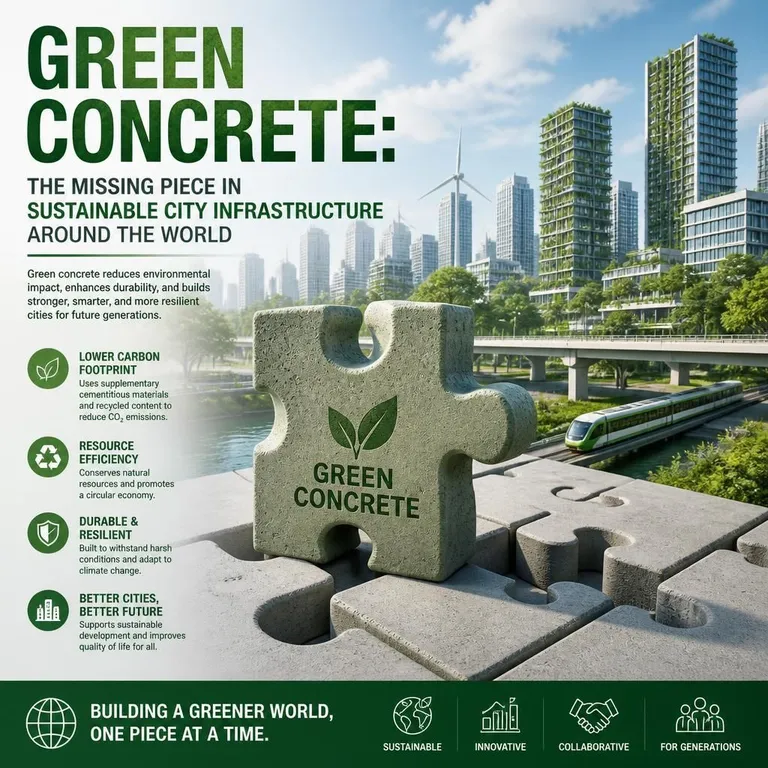
But there is a hidden cost behind all of this concrete. Making it releases a huge amount of carbon dioxide. This gas goes straight into the air. Traditional concrete production causes about 8 percent of all global carbon emissions. That is a massive number for just one material.
This is where green concrete comes in. Scientists and builders are working hard to fix this problem. They are changing how concrete gets made. Some new methods even trap carbon dioxide inside the material itself. In this guide, we will look at how green concrete works. We will see why it matters. We will also see how it could change the future of construction.
Why Regular Concrete Is So Bad for the Planet
To understand green concrete, we first need to understand the problem it solves. Regular concrete relies on a key ingredient called Portland cement. This cement acts like glue. It holds everything together.
Making Portland cement is not simple. Factories bake crushed limestone and clay inside huge kilns. These kilns reach temperatures over 1,400 degrees Celsius. That is incredibly hot. It also takes a lot of fuel to get there.
This process causes damage in two separate ways. First, burning fuel to heat the kilns releases carbon dioxide. Second, the heat itself triggers a chemical reaction called calcination. This reaction splits limestone into two parts: calcium oxide and carbon dioxide gas. That gas floats straight into the atmosphere.
Because of these two problems, cement making is one of the dirtiest industrial processes on Earth. If the global concrete industry were its own country, it would rank as the third-largest carbon emitter in the world. That is more emissions than most entire nations produce in a year.
This is exactly why green concrete matters so much. It attacks both of these problems at once. It cuts emissions from multiple angles, not just one.
How Green Concrete Cuts Emissions
Green concrete does not rely on a single trick. Instead, it uses a mix of smart strategies. These strategies work together to lower its carbon footprint. Let's look at the biggest ones.
Using Industrial Waste Instead of Raw Cement
One major method here is replacing regular cement with recycled industrial materials. Two of the most common substitutes are fly ash and blast-furnace slag.
Fly ash comes from power plants. Blast-furnace slag comes from steel factories. Both used to be treated as waste. Both would often end up sitting in landfills. But it turns out these materials have strong binding properties. They work a lot like cement itself.
By blending fly ash and slag into concrete mixes, builders can cut raw cement use. In some cases, the cut is as high as 50 percent. This single change dramatically lowers the carbon footprint of a project. It also gives a second life to materials that would otherwise be thrown away. This makes green concrete a smart recycling solution as well as a climate one.
Trapping Carbon Dioxide Inside the Material
This next method is where things get really interesting. It is called carbon mineralization. Companies like CarbonCure have pioneered this process.
Here is how it works. During mixing, recycled carbon dioxide gas gets injected directly into the wet concrete. The moment this happens, a chemical reaction begins. The CO2 reacts with calcium inside the mix. This reaction creates tiny calcium carbonate crystals.
Once these crystals form, something remarkable happens. The carbon dioxide becomes permanently locked inside the concrete. It stays trapped for centuries. It even stays trapped after the building is torn down. In other words, green concrete does not just avoid making new emissions. It actually captures and stores carbon that would have otherwise stayed in the atmosphere.
This process also has a bonus benefit. The tiny crystals fill in small gaps inside the concrete mixture. This makes the material stronger. Because of this added strength, engineers can often use less concrete overall in a foundation. They can do this without losing structural safety. So green concrete is not just cleaner. It can also be tougher than the material it replaces.
Exploring New Binding Materials
Beyond recycling waste and trapping carbon, researchers are also testing brand-new ingredients. One promising option is called a geopolymer. Geopolymers are made from volcanic rock and clay. They need far less heat to set compared to regular cement. This means far less energy use during production.
Another fascinating option is something called bio-concrete, or living concrete. This version includes special bacteria mixed right into the material. Over time, small cracks naturally form in any concrete structure. When moisture and air reach these cracks, the bacteria wake up. They produce natural limestone crystals. Those crystals seal the cracks from the inside.
This self-healing ability is a huge deal for infrastructure. It means roads, bridges, and buildings made this way could last much longer. They would also need far less repair work. Fewer repairs mean fewer emissions from future construction projects too. That adds another layer of environmental benefit.
Where Green Concrete Is Already Being Used
Green concrete is not just a lab experiment anymore. It is already being used in real construction projects around the world.
Commercial office buildings are one common example. Many developers now choose green concrete to lower a building's environmental footprint from day one. Highways and public infrastructure projects are also starting to use it. This is especially true in regions with strong climate goals.
High-rise foundations are another growing use case. The carbon mineralization version can be stronger than standard concrete. Because of this, it works well in large foundations that need serious structural strength. This makes it a practical choice, not just an environmentally friendly one.
As more cities set climate targets, expect green concrete to show up in even more public projects. Government contracts increasingly favor materials with a lower carbon footprint. This trend gives it a real competitive edge in bidding processes.
The Challenges Facing Green Concrete
Despite all its benefits, green concrete still faces some real hurdles. The biggest one is scale. The global construction industry uses an enormous amount of concrete every single year. Meeting that level of demand with green concrete requires massive changes to supply chains.
Not every region has easy access to fly ash or blast-furnace slag either. These materials depend on nearby power plants and steel factories. Areas without these industries nearby may find it harder to source what they need.
Cost can also be a factor, at least for now. Some methods, especially newer ones like bio-concrete, still cost more than traditional materials. As these methods become more common, prices are expected to drop. This is similar to how solar panel costs fell as production scaled up.
Even with these challenges, the shift toward green concrete continues to grow. Governments, builders, and material scientists all see the long-term value. They see it, even if the transition takes time.
Why Green Concrete Matters for the Future
Cities around the world are growing fast. More people need homes. More roads need to be built. More bridges need to connect growing communities. All of this construction will require concrete, one way or another.
If cities keep using traditional concrete at this pace, emissions will keep climbing right along with construction. This is why green concrete matters so much for the future of urban development. It offers a way to keep building. It does this without keeping the same heavy carbon cost attached to every project.
Beyond emissions, green concrete also supports stronger, longer-lasting infrastructure. Self-healing designs mean fewer repairs. Carbon-trapped designs mean stronger foundations. These are not just environmental wins. They are practical, financial wins too. Long-lasting infrastructure means fewer repair costs for cities and taxpayers alike.
Common Questions About Green Concrete
Is green concrete as strong as regular concrete? Yes. In most cases, it matches or exceeds the strength of standard concrete. The carbon mineralization method actually improves compressive strength compared to traditional mixes.
Does green concrete cost more than regular concrete? It depends on the method. Some types, like fly ash blends, are often similar in price. Some are even cheaper. Newer methods, like bio-concrete, can cost more right now. They are expected to become more affordable over time.
Can green concrete be used in any building project? Most projects can use some form of it. The best method depends on local material availability and project requirements. Engineers typically choose the mix based on the specific structure being built.
How long does green concrete last? Green concrete generally lasts as long as, or longer than, traditional Portland cement concrete. Self-healing bio-concrete may even extend a structure's lifespan. It does this by repairing small cracks automatically over time.
What Comes Next for Green Concrete
Looking ahead, the outlook for green concrete continues to improve. Researchers around the world are testing new mixes, new binders, and new carbon-capture methods. They test something new almost every year. Each small improvement adds up over time.
Some companies are working on ways to capture carbon dioxide directly from factory smokestacks. That captured gas can then be injected into the green concrete mix during production. This creates a closed loop. Emissions from one process become raw material for another.
Government policy is also starting to play a bigger role. Many regions are introducing stricter carbon limits for construction projects. As these rules tighten, green concrete becomes less of an optional upgrade. It becomes more of a practical requirement for builders who want to win public contracts.
Investment is growing too. Clean-tech startups focused on this technology are attracting more funding each year. This kind of financial support helps speed up research. It also lowers production costs and expands supply chains faster than would happen naturally.
As all of these pieces come together, expect green concrete to keep gaining ground. It may take years to fully replace traditional concrete on a global scale. But every new project built this way chips away at the industry's massive carbon footprint. It happens one foundation, one highway, and one building at a time.
Final Thoughts
Green concrete is proving that even the most common building material on Earth can be reinvented. What was once one of the world's biggest sources of carbon emissions is slowly becoming part of the climate solution instead.
From recycled industrial waste to carbon-trapping technology to self-healing bacteria, this material brings together several smart ideas under one roof. Each method chips away at the same core problem. How do we keep building the cities we need without destroying the planet we live on?
Scaling up to match global demand will not happen overnight. Supply chains need work. Costs need to keep falling. But the direction is clear. Green concrete is moving from a niche innovation into a mainstream building material, one project at a time.
As more cities adopt this material, the impact could be massive. Lower emissions. Stronger buildings. Longer-lasting roads and bridges. For an industry as large as construction, even small shifts can add up to a much cleaner future for cities around the world.

Comments (0)
Login to leave a comment.
No comments yet. Be the first to share your thoughts!