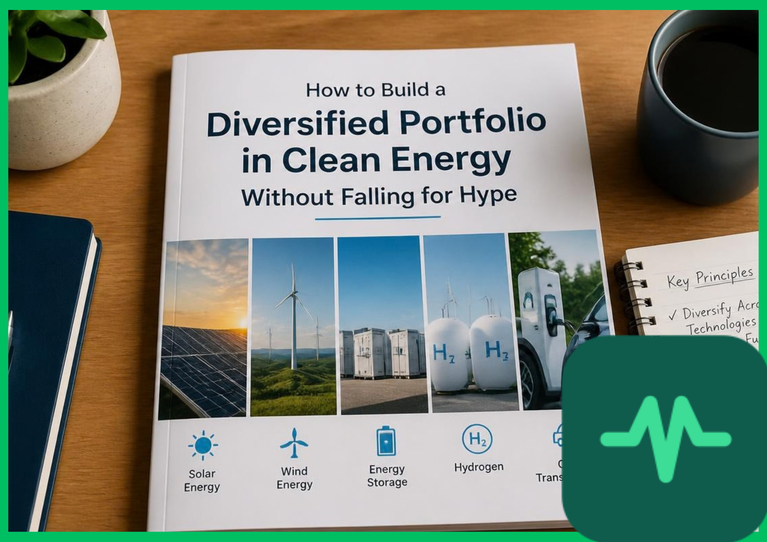
You want your money to be part of that transformation. You want to grow your wealth while supporting a sustainable future.
Then you look at the stock market. Prices swing wildly. One month, a green tech company is soaring. The next month, it crashes hard.
Investing in the future feels like riding a runaway roller coaster.
It does not have to be that way.
Green energy stock diversification strategies offer a steady path forward. They help you navigate market volatility, protect your capital, and build a resilient financial portfolio without chasing risky hype.
Here is how to approach clean energy investing with a clear head and a long-term vision.
The Trap of Market Hype
Every technological revolution attracts noise.
When a new clean tech sector captures public attention, speculative money floods the market. Promising start-ups see their valuations skyrocket overnight, fueled by excitement rather than solid earnings.
Retail investors get caught up in the rush. They buy at the peak, hoping to catch a quick wave of profit.
Then reality sets in. Supply chain bottlenecks hit, interest rates shift, or regulatory hurdles appear. The stock price plummets, leaving everyday investors nursing heavy losses.
Hype is the enemy of smart investing.
True wealth-building does not come from gambling on the trendiest company of the week. It comes from patient, disciplined asset allocation across proven, diversified market sectors.
Understanding Renewable Portfolio Allocation
If you want to invest in the global energy transition, you cannot put all your eggs in one basket.
Renewable portfolio allocation means spreading your investments across different segments of the clean energy economy. Think of the energy transition as an entire ecosystem, not a single product.
That ecosystem includes several distinct asset classes:
- Power Generation: Companies that build, own, and operate utility-scale solar farms, wind parks, and hydroelectric facilities. These companies often generate steady revenue through long-term power purchase agreements.
- Technology and Equipment Providers: The manufacturers who produce high-efficiency solar panels, advanced wind turbines, and next-generation power electronics.
- Energy Storage and Infrastructure: The firms developing battery storage systems, grid-level software, and upgraded transmission lines that keep power stable when weather conditions shift.
- Clean Tech Materials: Companies supplying critical raw materials, recycling vital minerals, or engineering sustainable industrial alternatives.
When you spread your investments across these diverse categories, a downturn in one sector is balanced by stability or growth in another.
Managing Risk in Sustainable Markets
Every investment carries risk, and clean energy is no exception.
Policy shifts, raw material costs, and interest rate fluctuations impact renewable projects heavily. When interest rates rise, capital-intensive infrastructure projects face higher borrowing costs, squeezing profit margins.
Effective environmental, social, and governance risk management means looking closely at how companies weather these financial storms.
Look for businesses with strong balance sheets, manageable debt levels, and diversified geographic operations. Avoid companies that rely entirely on government subsidies or a single product line to survive.
A resilient portfolio is built to withstand economic shifts, ensuring that your capital remains secure through market cycles.
The Long-Term View on Clean Tech Trends
Investing in clean energy is a marathon, not a sprint.
Global energy demand is rising. Industrial economies are under intense pressure to lower carbon emissions, modernize power grids, and secure reliable energy sources.
This transition represents one of the largest economic shifts in human history. It will play out over decades, not months.
By focusing on broad clean tech market trends rather than daily stock tickers, you align your investments with structural, unstoppable global changes. You stop reacting to market noise and start investing in long-term infrastructure.
Building Your Portfolio Step by Step
You do not need a degree in finance to build a well-diversified clean energy portfolio.
Start by assessing your overall risk tolerance. Decide how much of your total investment capital you want to allocate toward sustainable assets.
Look toward broad market exchange-traded funds or specialized clean energy indexes that hold dozens of companies across different sectors and countries. This provides instant diversification, spreading your risk across established industry leaders and growing innovators alike.
Keep your emotions in check. Ignore the daily hype cycles, tune out speculative noise, and focus on companies solving real-world energy challenges.
Your financial future—and our collective environmental future—deserves a steady, thoughtful approach.




Comments (0)
Login to leave a comment.
No comments yet. Be the first to share your thoughts!