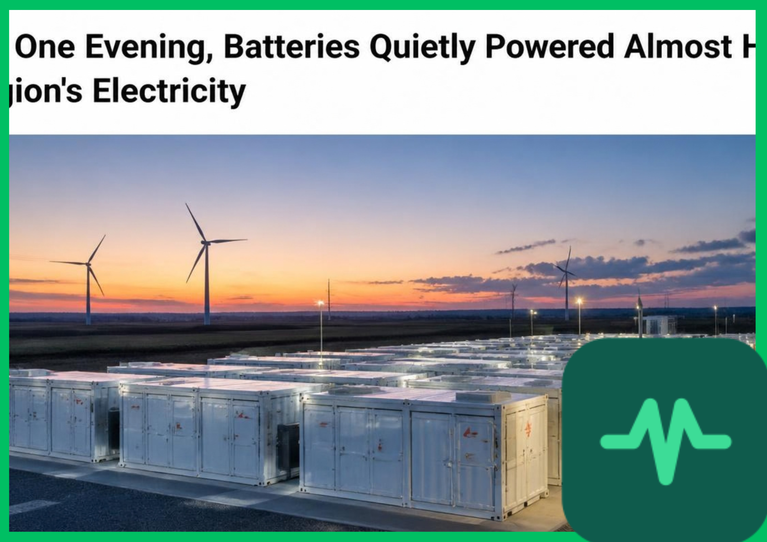
What actually happened during this specific moment
According to detailed grid data, battery storage output supplied more than 40 percent of one region's total electricity load during part of an evening in March 2026. This happened during peak demand hours, precisely when electricity use typically runs highest and grid stability matters most.
This wasn't a small, isolated test. It represented real, meaningful supply to real homes and businesses, at a genuinely significant scale, during exactly the hours when reliable power matters most.
Why this moment matters so much
For years, skeptics questioned whether battery storage could ever meaningfully contribute to overall grid supply during genuine peak demand, rather than serving only a smaller, supplementary role. This kind of real-world result offers concrete, honest proof that batteries can genuinely handle a very significant share of demand when it matters most.
This shifts the conversation from theoretical potential toward demonstrated, real-world capability, based on actual grid operating data rather than projections or laboratory testing alone.
Why this specific timing matters
Evening hours present a particular challenge for renewable-heavy electricity grids. Solar panels stop producing as the sun sets, right around when many households increase their electricity use for cooking, lighting, and general evening activities.
Batteries charged during the day, using excess solar power, can then discharge during exactly this challenging evening window, precisely covering the gap between falling solar production and continued, rising demand.
Why this required years of steady, prior investment
This kind of significant contribution didn't happen overnight. It reflects years of steady, substantial investment in battery storage capacity within this specific region, building toward a system genuinely capable of this kind of significant real-world performance.
This region has seen particularly strong battery storage deployment in recent years, specifically because it also has a genuinely high share of solar and wind power in its overall electricity generation mix, creating exactly the conditions where battery storage provides the most obvious, immediate practical value.
Why this offers a genuine preview for other regions
As other regions continue adding their own solar, wind, and battery storage capacity, similar moments become increasingly likely elsewhere too. This specific example offers a genuinely concrete preview of what's becoming realistically achievable as storage capacity continues its rapid growth worldwide.
This matters for understanding where the broader clean energy transition is genuinely heading, beyond abstract percentage targets discussed in policy documents, showing exactly what real, operational success can look like in practice.
Why this connects directly to individual home battery systems too
While this specific example involved large, utility-scale battery systems, the same basic underlying principle applies directly to home battery systems as well. A home battery charged during sunny daytime hours, then used during the evening, applies this exact same logic at a considerably smaller, individual household scale.
This means individual home battery owners are genuinely participating in the same broader pattern demonstrated at this larger, regional scale, storing daytime solar energy for use precisely when it's needed most in the evening.
Why this moment doesn't mean every challenge is solved
It's worth being honest that this represents one specific, favorable moment in one particular region with especially strong existing renewable and storage infrastructure already in place. Not every region has reached this same level of capability yet, and even this specific region doesn't maintain this exact percentage constantly throughout every single evening.
This kind of achievement represents a genuinely encouraging demonstration of real capability, not a claim that every grid everywhere has already reached this same level of battery-supported reliability.
Why grid operators pay such close attention to moments like this
For electricity grid operators specifically, this kind of real-world data provides genuinely valuable, practical confirmation about how much they can realistically rely on battery storage during actual peak demand conditions, informing future planning and investment decisions with real evidence rather than theoretical projections alone.
This kind of demonstrated performance builds genuine confidence for continued investment in similar battery storage capacity elsewhere, based on concrete, proven results rather than speculation about future potential.
What this means for the broader clean energy story
Moments like this offer a genuinely tangible, specific example of exactly what a mature, renewable-and-storage-powered electricity grid can look like in practice, rather than remaining an abstract future possibility discussed mainly in policy reports and long-term projections.
The bottom line
For part of one evening in early 2026, battery storage alone supplied more than 40 percent of one region's total electricity demand during genuine peak hours, offering real, concrete proof that battery storage can meaningfully handle significant grid demand, not just serve a smaller, supplementary role.
This achievement reflects years of steady investment in both renewable generation and battery storage capacity, and it offers a genuinely encouraging preview of what other regions can realistically achieve as their own solar, wind, and battery storage capacity continues its rapid, ongoing growth.
Comments (0)
Login to leave a comment.
No comments yet. Be the first to share your thoughts!