The actual numbers worth understanding
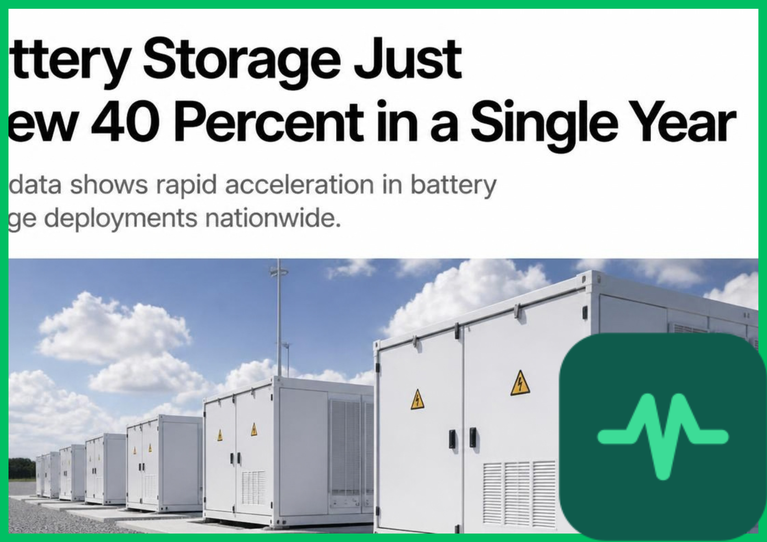
According to a major global energy report, developers installed 108 gigawatts of new battery storage capacity worldwide in a single recent year, a 40 percent increase compared to the year before. Total global battery storage capacity now stands at roughly eleven times what it was just a few years earlier.
This kind of growth rate is genuinely rare for any major energy technology, reflecting a rapid, sustained acceleration rather than a slow, steady climb.
Why this growth matters so much for renewable energy specifically
Solar and wind power don't produce electricity on a constant, predictable schedule. Batteries solve this mismatch by storing extra power generated during sunny or windy periods, then releasing it later when it's actually needed, like in the evening after solar panels stop producing.
Nearly 80 percent of this new storage capacity involved large-scale, grid-connected projects, specifically supporting this kind of renewable energy integration at a genuinely significant scale.
Why one specific battery type has come to dominate this growth
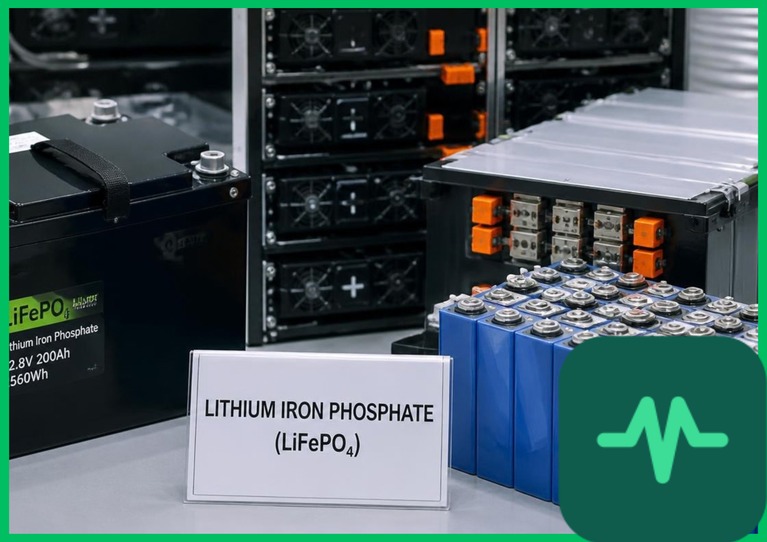
Lithium iron phosphate batteries, often called LFP for short, accounted for roughly 90 percent of new storage deployments recently. Developers increasingly favor this particular battery type because it costs less and handles repeated charging cycles more efficiently than some alternatives.
This same battery chemistry, as discussed elsewhere, has also become increasingly common in electric vehicles, reflecting its broader advantages across multiple different applications beyond just vehicles alone.
Why storage duration has been increasing too
Alongside overall capacity growth, the typical length of time these battery systems can provide power has also been increasing. Developers have moved beyond primarily building shorter, two-hour systems toward increasingly common four-hour or longer configurations.
This matters because longer duration storage can cover more extended periods of low renewable generation, like an entire evening rather than just a brief window, making the stored power genuinely more useful for maintaining reliable electricity supply.
Why this rapid growth reflects falling costs too
Alongside this dramatic capacity growth, battery storage costs have fallen remarkably as well, dropping by more than 90 percent over roughly the past decade and a half. This represents one of the fastest cost declines ever recorded for any clean energy technology tracked by major international energy analysts.
This falling cost trend directly supports continued rapid growth, since batteries have become considerably more economically attractive compared to just a few years ago.
Why this connects directly to home battery systems too
While much of this growth involves large, utility-scale projects, the same underlying technology and cost improvements directly benefit home battery systems as well. As the broader industry scales up and costs continue falling, home battery options become increasingly affordable and accessible for individual households too.
This means the dramatic industry-wide growth discussed here isn't purely an abstract, large-scale story. It reflects real, tangible improvements that directly benefit anyone considering a home battery system for their own household.
Why regional growth has looked so different around the world
This rapid growth hasn't been distributed evenly. One major manufacturing region accounted for roughly 60 percent of new capacity added recently, while other regions, including parts of the Middle East, have been accelerating their own adoption more recently as well.
This uneven pattern reflects genuine differences in local energy needs, existing renewable energy capacity, and available investment, rather than suggesting battery storage only makes sense in certain specific places.
Why continued growth remains genuinely necessary
Despite this impressive recent growth, major energy analysts have noted that global battery storage capacity still needs to grow considerably further, potentially by several times its current level, to fully support ambitious global renewable energy targets already agreed upon internationally.
This means the current rapid growth, while genuinely impressive, represents real progress toward a considerably larger goal, rather than suggesting the challenge has already been fully solved at this point.
Why this matters for anyone watching clean energy progress generally
Battery storage growth doesn't always receive the same public attention as new solar or wind projects, yet it's becoming an increasingly essential piece of making those renewable technologies genuinely reliable and effective at a large, practical scale.
Understanding this rapid growth provides a more genuinely complete picture of how the broader clean energy transition is actually progressing, beyond simply counting new solar panels or wind turbines in isolation.
What this means if you're considering your own home battery
This broader industry growth reflects genuine, ongoing cost improvements and technology maturation that directly benefit individual home battery buyers too. The same trends driving this dramatic global growth are the ones making home battery systems increasingly practical and affordable for individual households right now.
The bottom line
Global battery storage capacity grew by a remarkable 40 percent in a single recent year, reaching roughly eleven times its level from just a few years earlier. This rapid growth reflects falling costs, expanding renewable energy needs, and genuine, sustained industry momentum.
This dramatic industry-wide growth directly benefits home battery buyers too, as the same cost improvements and technology advances driving this large-scale expansion make individual home battery systems increasingly practical and accessible for households considering this option today.
Comments (0)
Login to leave a comment.
No comments yet. Be the first to share your thoughts!