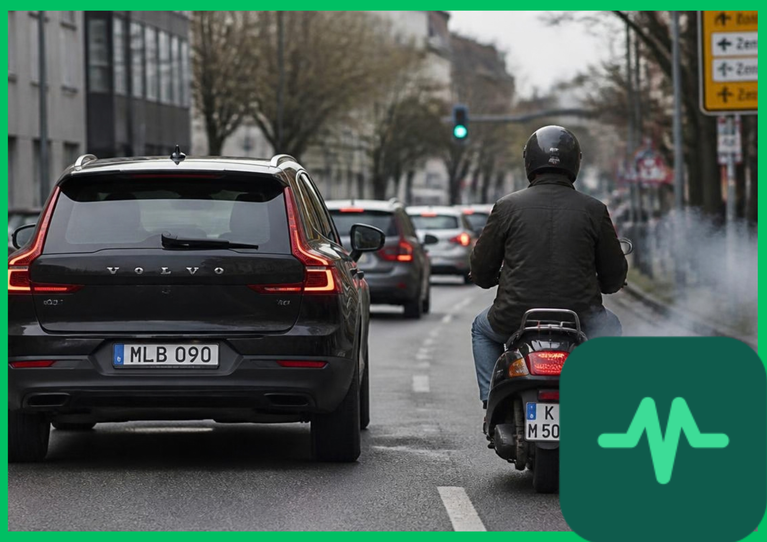
The honest, surprising comparison worth understanding
According to global environmental assessments, older two-stroke scooters can produce more harmful particle pollution than an entire passenger car, despite being dramatically smaller and using far less fuel overall.
This finding surprises most people, since size and fuel use seem like they should predict pollution levels fairly directly. For this specific type of pollution, that simple assumption doesn't hold up.
Why two-stroke engines create this particular problem
Two-stroke engines, common in many older, smaller motorcycles and scooters, work differently from the four-stroke engines typically found in cars. This design burns a mixture of fuel and oil together, and this combustion process tends to release more particulate matter than modern four-stroke engines typically produce.
This isn't about total pollution volume matching a car's larger engine size. It's about the specific type and concentration of pollution released relative to how the fuel actually burns inside this particular engine design.
Why particle pollution specifically matters so much for health
Particulate matter, especially very fine particles, can penetrate deep into human lungs and even enter the bloodstream, contributing to genuine respiratory and cardiovascular health problems over time. This makes it a particularly concerning type of pollution from a direct human health perspective, beyond simply its climate impact.
Black carbon, another pollutant closely associated with these older, less efficient engines, also acts as a potent contributor to short-term climate warming, adding an additional layer of genuine environmental concern beyond direct health effects alone.
Why this matters so much given how many of these vehicles exist
Recall that hundreds of millions of two and three-wheelers remain in daily use worldwide, with the vast majority still running on traditional gas engines, many of them older, less efficient two-stroke designs specifically.
Given this massive scale, even a seemingly small individual pollution problem multiplies into a genuinely significant collective impact across the enormous number of these vehicles currently in daily use around the world.
Why this makes the case for electric alternatives particularly strong
Electric two-wheelers eliminate this specific tailpipe pollution problem entirely, since they have no combustion engine at all, let alone an older, less efficient two-stroke design. This directly addresses one of the most concerning aspects of traditional two-wheeler pollution.
This adds a genuinely compelling health and immediate local air quality argument to the case for electric two-wheelers, alongside the climate and cost-saving benefits discussed elsewhere.
Why this particular pollution problem often gets overlooked
Public attention regarding vehicle pollution often focuses heavily on cars and larger trucks, given their obvious size and fuel consumption. Two-wheelers, despite their smaller individual size, receive considerably less scrutiny, even though this specific research suggests their pollution impact per vehicle can genuinely rival or exceed that of a car in certain important respects.
This oversight matters given just how many two-wheelers exist globally, and how directly they affect daily air quality specifically in dense urban areas where they're most heavily used.
Why newer traditional engines have improved somewhat
It's worth noting that not every gas-powered two-wheeler uses this older, more polluting two-stroke design. Many newer traditional models use improved four-stroke engines, which produce meaningfully less particulate pollution than their older counterparts.
This means the specific pollution concern discussed here applies more heavily to older vehicles still in widespread daily use, rather than representing every single traditional gas-powered two-wheeler currently on the road.
Why this makes fleet renewal genuinely important too
Beyond simply promoting new electric vehicle adoption, addressing this pollution concern also involves genuinely retiring the oldest, most polluting two-stroke vehicles still in active daily use, since these specific vehicles contribute disproportionately to this particular pollution problem.
This suggests effective policy approaches likely need to address both encouraging new electric adoption and genuinely retiring the worst-performing older vehicles currently still on the road.
Why this matters for urban air quality specifically
Given how densely two-wheelers get used in many crowded urban areas, this particular pollution source directly affects the air quality millions of people breathe daily in exactly the places where population density is highest.
This makes addressing this specific pollution source a genuinely direct, immediate public health priority in many rapidly growing cities, beyond its broader climate implications discussed elsewhere.
What this means for anyone still using an older two-stroke vehicle
If you currently use an older, two-stroke scooter or motorcycle, understanding this specific pollution concern adds real, additional weight to considering an eventual switch to an electric alternative, beyond simply the fuel cost savings already discussed elsewhere.
The bottom line
A small, older two-stroke scooter can genuinely produce more harmful particle pollution than an entire passenger car, a surprising, honest fact that challenges simple assumptions about vehicle size predicting pollution levels directly.
Given how many of these older vehicles remain in daily use worldwide, addressing this specific pollution source, through both electric vehicle adoption and retiring the oldest, most polluting traditional models, represents a genuinely important, if often overlooked, piece of the broader clean transportation story.

Comments (0)
Login to leave a comment.
No comments yet. Be the first to share your thoughts!