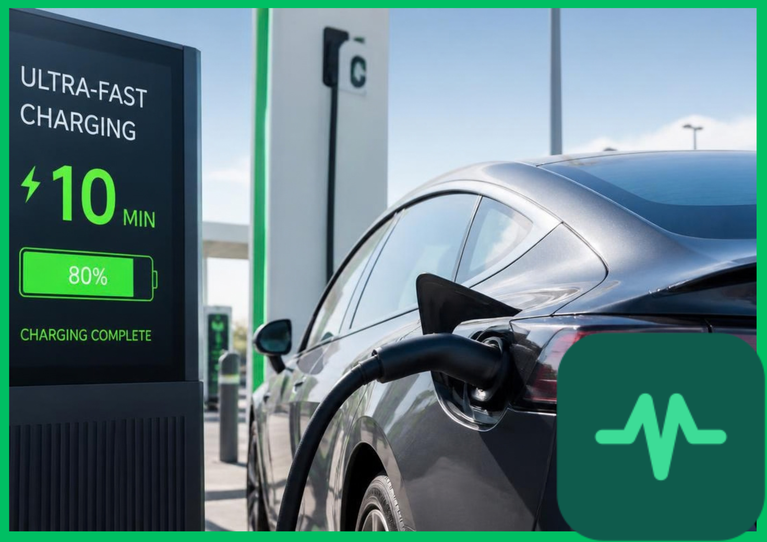
What actually changed to make this possible
New advances in power electronics, battery cell design, and overall battery pack construction have enabled charging systems that run at considerably higher voltage than before. The first models built around this new, higher-voltage approach reached the market recently, opening the door to genuinely faster charging times.
Higher voltage allows more energy to flow into a battery in the same amount of time, similar to how a wider pipe lets more water through without needing higher pressure to force it.
Why faster charging matters so much for everyday use
For many drivers, charging speed remains one of the most common hesitations about choosing an electric car. A ten-minute charge feels genuinely comparable to a typical fuel stop, removing much of the inconvenience that longer charging times used to represent.
This kind of speed could meaningfully change how people think about longer road trips specifically, since a brief stop for coffee or a bathroom break could realistically cover most of a full charging session.
The honest limitation most people don't realize yet
Here's the part worth understanding clearly. Very few electric cars on the road today can actually use chargers capable of delivering this kind of ultra-fast charging speed. Current estimates suggest less than 5 percent of the global electric vehicle fleet can currently take advantage of the fastest available charging technology.
This means the exciting headline about ten-minute charging applies to a genuinely small, specific slice of new vehicles right now, not to electric cars broadly across the board.
Why this gap between capability and access exists
Building a car capable of handling this kind of ultra-fast charging requires specific battery and electrical system designs that weren't standard until quite recently. Most electric cars already on the road, even relatively new ones, simply weren't built with this particular capability in mind.
At the same time, the charging stations themselves capable of actually delivering this level of power aren't yet widespread. Even if your car could theoretically use one, finding one nearby remains genuinely limited in most places.
Why this technology will likely spread gradually
As more manufacturers adopt these newer, higher-voltage designs in upcoming models, and as charging networks gradually add more ultra-fast stations, this capability should become considerably more common over the coming years.
This follows a familiar pattern in technology generally. A capability starts in a small number of premium or newer models before gradually becoming standard across a much wider range of vehicles over time.
Why charging speed isn't the only thing that matters here
Even without access to the fastest possible charging, most electric car owners still find that standard charging, typically done overnight at home, comfortably covers their regular daily driving needs without any real inconvenience at all.
Ultra-fast charging matters most specifically for longer trips or situations where quick turnaround genuinely matters, rather than being essential for typical day-to-day use for most drivers.
Why grid capacity could become a real consideration here
As faster charging and higher overall electric vehicle numbers both continue growing together, this creates genuine new pressure on local electricity grids, particularly at charging stations that need to deliver very large amounts of power very quickly.
This means expanding ultra-fast charging networks isn't just about installing more charging equipment. It also requires careful planning to ensure the surrounding electrical infrastructure can genuinely handle this kind of concentrated, high-speed demand reliably.
What this means if you're shopping for an electric car today
If ultra-fast charging genuinely matters for your specific driving needs, it's worth checking a particular model's actual charging capability directly, rather than assuming all new electric cars can take full advantage of the fastest available charging technology.
For most everyday driving, though, this specific capability matters considerably less than people initially assume, since regular overnight charging already covers typical daily needs comfortably for the vast majority of owners.
Why this progress still represents something genuinely exciting
Even though ultra-fast charging remains limited to a small share of vehicles today, its mere existence demonstrates real, continued technical progress addressing one of the most persistent concerns people raise about electric vehicles.
Watching this capability gradually expand from a rare, cutting-edge feature into something considerably more common offers a genuinely encouraging signal about where the whole technology is heading over the coming years.
The bottom line
Some new electric cars can now charge in under ten minutes, thanks to genuine advances in higher-voltage charging technology. This remains available in only a small share of vehicles today, with less than 5 percent of the current global fleet able to take full advantage of it.
As more manufacturers adopt this technology and charging networks continue expanding to support it, expect ultra-fast charging to gradually become considerably more common, addressing one of the most persistent, honest concerns that has followed electric vehicles for years.

Comments (0)
Login to leave a comment.
No comments yet. Be the first to share your thoughts!