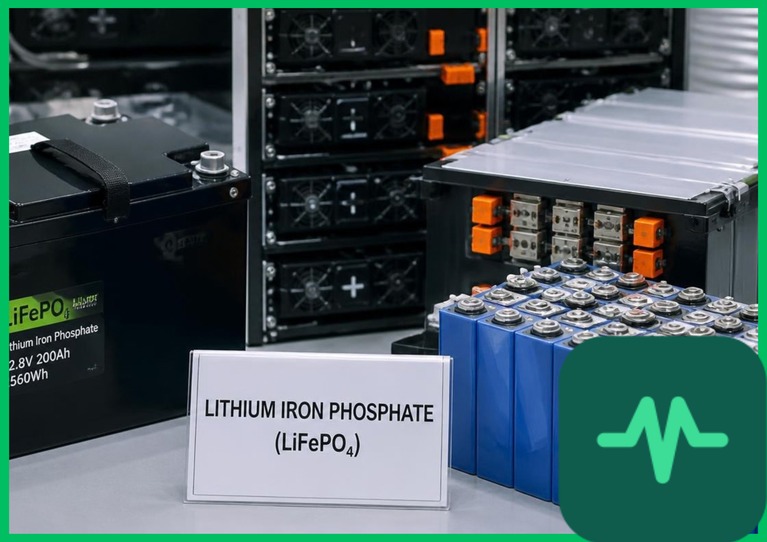
What this dominant battery chemistry actually is
The battery type in question is called lithium iron phosphate, often shortened to LFP. Like other lithium-based batteries, it stores and releases electricity using lithium ions moving between electrodes. What makes it different comes down to the specific materials used inside.
Unlike some other lithium battery types, LFP skips certain more expensive, less abundant materials, relying instead on iron and phosphate, both considerably more available and less costly to source.
Why the industry has converged so strongly on this specific choice
Cost plays a major role here. Because LFP batteries avoid pricier materials used in some alternatives, they've become genuinely more affordable to manufacture at scale, an important factor as demand for battery storage has grown so dramatically in recent years.
LFP batteries also handle repeated charging cycles particularly well, maintaining their performance through more charge and discharge cycles before meaningful degradation sets in, compared to some other battery chemistries.
Why cycle life matters so much for a home battery specifically
A home battery typically charges and discharges daily, sometimes multiple times depending on your household's energy use pattern and whether you're pairing it with solar panels. Over years of ownership, this adds up to a genuinely large number of total charge cycles.
A battery chemistry that handles more cycles before its capacity meaningfully declines offers real, practical value for this kind of daily, repeated use, potentially extending your system's useful working life considerably longer than a less durable alternative would.
Why safety considerations favor this chemistry too
LFP batteries are generally considered to have strong thermal stability compared to some other lithium battery types, meaning they're less prone to overheating issues under stress. For a battery system installed inside or near your home, this safety characteristic carries genuine, practical importance beyond simple performance metrics alone.
This safety advantage represents another significant reason this particular chemistry has become the clear preference for home and grid-connected storage applications specifically.
The honest tradeoff worth understanding
LFP batteries typically store somewhat less energy for their physical size compared to some other lithium battery chemistries. This means an LFP battery system might need to be slightly larger to store the same total amount of energy compared to a more energy-dense alternative.
For home use specifically, where space constraints are usually less critical than they'd be in something like a vehicle, this tradeoff generally matters far less than the genuine cost, safety, and longevity advantages LFP offers in return.
Why storage duration has become an important related consideration
Alongside battery chemistry, how long a system can provide power matters considerably too. Industry trends show a shift toward longer-duration systems, increasingly four hours or more, rather than the shorter two-hour systems that were previously more standard.
For a home system specifically, longer duration storage means your battery can cover a longer stretch of evening or overnight use, particularly valuable if you're pairing your battery with solar panels and want to maximize how much of your own generated power you can actually use yourself.
Why this matters when comparing home battery options
If you're researching home battery systems, it's genuinely worth confirming which battery chemistry a specific product actually uses, since this affects cost, expected lifespan, and safety characteristics in ways that matter for a long-term home investment.
Given how dominant LFP has become industry-wide, many reputable home battery products now use this chemistry as their standard choice, though it's still worth confirming directly rather than simply assuming every product on the market has made this exact same choice.
Why this industry-wide shift benefits home buyers directly
As LFP batteries have become the clear industry standard at massive global scale, manufacturing costs have continued falling due to this concentrated demand and production experience. This directly benefits individual home buyers through more competitive pricing than existed when the market was more fragmented across many different, less standardized options.
This kind of industry consolidation around one strong, well-understood chemistry generally benefits consumers, since manufacturers can focus their improvement efforts and cost reduction on refining one dominant approach rather than spreading investment thinly across many competing alternatives.
Why other battery chemistries still have their place
This doesn't mean every alternative battery chemistry has disappeared entirely. Certain specialized applications, where extreme energy density genuinely matters more than cost or cycle life, may still favor different chemistries. For typical home energy storage, though, LFP's particular combination of advantages has made it the genuinely clear preference for most buyers and manufacturers alike.
What this means for your own home battery research
If you're currently comparing home battery options, understanding this broader industry context helps you ask better, more informed questions. Confirming a product uses LFP chemistry, and understanding its typical storage duration, gives you a genuinely solid foundation for comparing different options fairly and confidently.
The bottom line
Roughly 90 percent of new battery storage systems installed worldwide now use lithium iron phosphate chemistry, reflecting its genuine advantages in cost, safety, and long-term durability compared to some alternatives.
For anyone considering a home battery system, this industry-wide consensus offers a genuinely useful, reassuring signal. The chemistry dominating the global market has earned that position through real, practical advantages, not just marketing, making it a genuinely solid, well-tested choice worth prioritizing in your own home battery research.
Comments (0)
Login to leave a comment.
No comments yet. Be the first to share your thoughts!