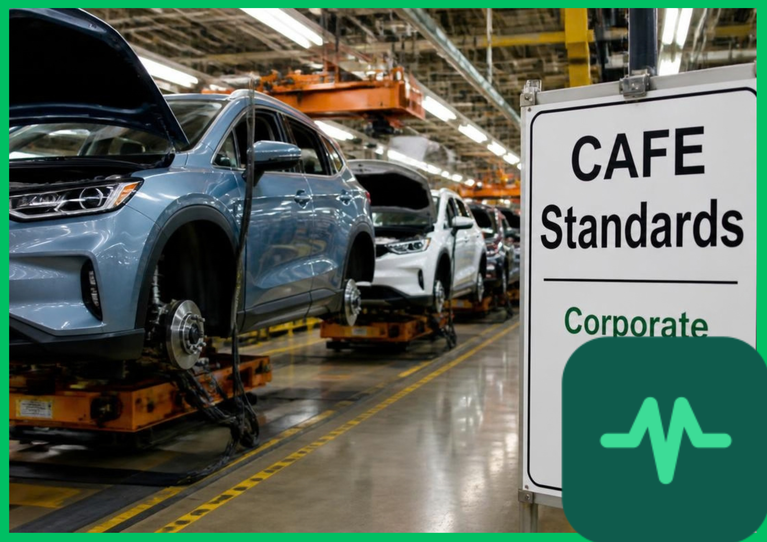
What fuel economy standards actually are
Many governments set rules requiring car makers to hit an average fuel efficiency level across all the vehicles they sell, not just one specific model.
If a company sells one gas-guzzling truck, it needs to balance that out by selling enough efficient vehicles, including electric ones, to keep its overall average within the required limit.
Why this creates real pressure on automakers
This isn't about any single car. It's about the whole lineup working together. A company can't simply build whatever sells best without also thinking about the required company-wide average.
This pushes automakers to include efficient options, especially electric vehicles, even if their most profitable, popular vehicles happen to be larger and less efficient.
Why this rule matters more outside of markets where it's weakened
In regions with strong, consistent fuel economy standards, this creates a steady, built-in reason for automakers to keep expanding their electric vehicle lineups, regardless of shifting consumer trends in any given year.
In places where these rules have been relaxed or removed, that steady pressure disappears, and automakers have more freedom to prioritize larger, less efficient vehicles if that's where short-term profit looks strongest.
Why this connects directly to real sales data
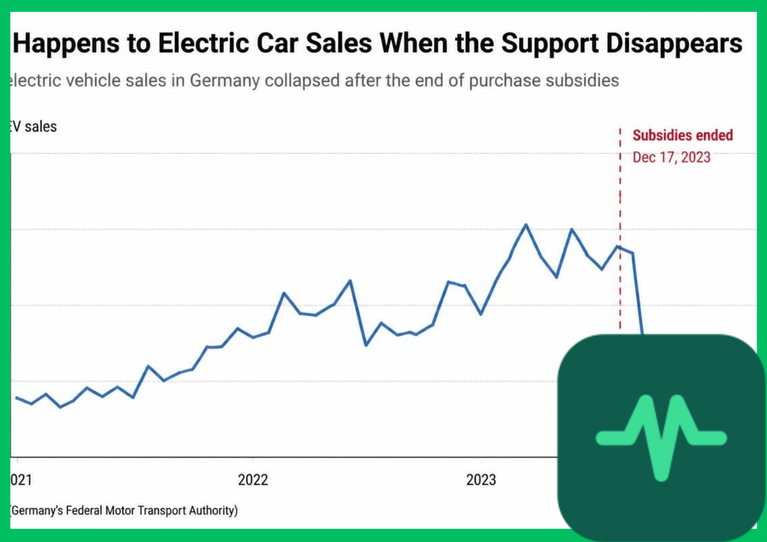
Recent global data shows a clear pattern. Markets with strong fuel economy requirements have generally continued seeing steady electric vehicle growth. Markets where these specific rules were weakened alongside other policy changes saw sharper declines.
This suggests fuel economy standards work as a genuinely powerful, if quiet, driver of the whole industry's direction, separate from simple consumer demand alone.
Why automakers don't just ignore these rules
Failing to meet required efficiency averages typically comes with real financial penalties. These penalties can be significant enough that building and selling more efficient vehicles, including electric ones, becomes the more economically sensible choice overall.
This turns compliance into a genuine business strategy, not just a regulatory box to check. Automakers plan years of vehicle development specifically around meeting these targets.
Why this matters even if you never buy an electric vehicle yourself
Even drivers who never plan to buy an electric vehicle are affected by this rule indirectly. It shapes which vehicles get developed, marketed, and prioritized across an automaker's entire lineup, influencing the overall market you shop within.
This is part of why electric vehicle options have expanded so significantly in recent years, even in markets where direct consumer demand alone might not have driven quite as much investment on its own.
The honest tension this creates
Automakers sometimes push back against strict fuel economy standards, arguing they limit consumer choice or raise costs. This is a genuine, honest debate worth understanding, not one with an obviously correct side.
Balancing environmental goals against cost and consumer preference is a real challenge, and different regions have reached different conclusions about where that balance should sit.
Why removing these rules has real, measurable effects
When fuel economy penalties disappear alongside other support like tax credits, the combined effect can be considerably larger than either change alone. This compounding effect helps explain particularly sharp sales declines seen in some specific markets recently.
Understanding this helps clarify why some regions saw such dramatic shifts, rather than assuming a single factor alone explains the whole story.



Comments (0)
Login to leave a comment.
No comments yet. Be the first to share your thoughts!