Gas cars feel simple. You fill up in five minutes. You drive 400 or 500 miles without a worry. Most electric cars cannot do that yet. Many need a charge every 250 miles or so. This gap has held the EV industry back for years.
Engineers have chased a fix for a long time. That fix is here now. It is called silicon-anode batteries. This breakthrough hits the exact weak spot holding batteries back. It promises longer range. It promises faster charging too. In this guide, we will look at how silicon-anode batteries work. We will look at the chemistry behind the idea. We will also look at the tricky problem that almost killed this technology for good. By the end, you will see why engineers feel so excited about silicon-anode batteries.
Why Graphite Reached Its Limit
Let's start with the old problem. Every EV battery has a part called an anode. This part stores lithium ions during charging. For years, graphite did this job.
Graphite works. But it has a strict limit. It takes six carbon atoms to hold just one lithium ion. This ratio caps how much energy a graphite anode can ever store. It does not matter how good the rest of the battery is.
This limit created a hard ceiling for the whole EV industry. Engineers could improve almost every other part of a battery. Yet graphite kept holding total power back. This is the exact wall that silicon-anode batteries were built to break.
What Makes Silicon So Special
So why silicon? The answer is simple chemistry. One silicon atom can bond with up to four lithium ions at once. That is a huge jump from graphite's six-to-one ratio.
On paper, this gap is huge. A pure silicon anode could store up to ten times more energy than graphite of the same weight. That single number explains why silicon-anode batteries got scientists so excited.
This chemical edge opens up two exciting paths. Automakers could build smaller, lighter battery packs that still match today's range. Or they could keep the same battery size and push range far higher instead, maybe past 500 miles on one charge. Either path feels thrilling for anyone who has worried about running out of charge on a long trip.
The Painful Problem That Almost Killed This Idea
If silicon sounds so perfect, why did it take years to reach real cars? The answer is a hard, almost heartbreaking problem. Silicon does not just store more lithium. It also swells a lot while doing it.
When a silicon anode soaks up lithium during charging, it can grow by up to 300 percent in size. Picture a material tripling in size, then shrinking back down. This happens every time you charge and drive your car. That constant swelling and shrinking puts huge stress on the material.
This stress caused real damage. Early silicon-anode batteries cracked and crumbled after just a few dozen charges. Wires inside the battery broke apart. A perfect idea on paper quickly became a real mess in testing. For years, this swelling problem kept silicon-anode batteries out of real cars. It was a hard setback for an otherwise exciting technology.
How Nanotechnology Saved the Day
Just when this idea seemed stuck for good, scientists found a clever fix. Instead of using solid sheets of silicon, they turned to nanotechnology. This means building the material at a tiny, tiny scale.
Modern silicon-anode batteries use tiny silicon particles instead of solid chunks. These particles get wrapped in carbon shells. Some sit inside flexible carbon-nanotube structures. Think of this like tiny, cushioned pockets. Each pocket is built to soak up the swelling.
This smart design gives the silicon room to grow and shrink safely. It does not crack or break its shell. It feels almost like a shock absorber built at the molecular level. Thanks to this fix, silicon-anode batteries can finally deliver on their promise. They no longer fall apart after a few uses.
This fix carries real weight for the scientists who worked on it for years. What once felt like a dead end slowly became a real, working answer. It saved a technology many had nearly given up on.
Doubling Range: What This Means for Drivers
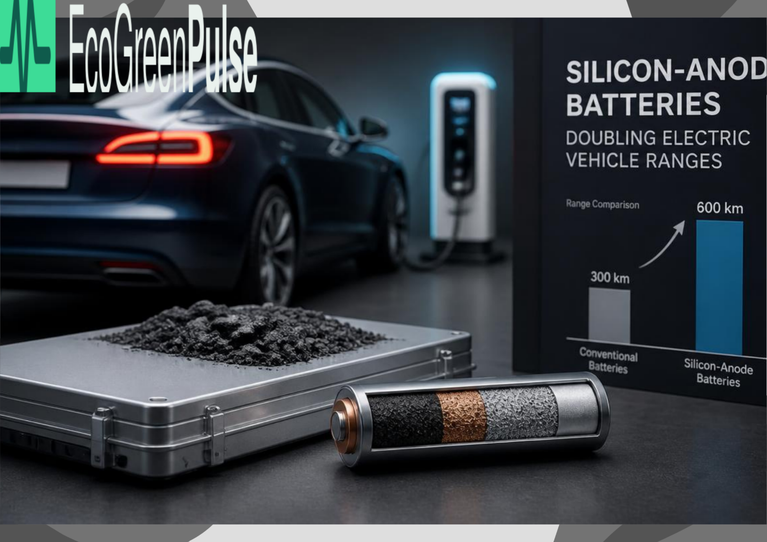
Let's talk about what matters most to drivers: real-world impact. Silicon-anode batteries promise something exciting. They could double the range of an electric car. And they can do this without making the car much bigger or heavier.
Picture a family EV that gets 250 miles per charge today. With silicon-anode batteries, that same car could travel 500 miles or more on one charge. That number changes everything for road trips. Fewer stops. Less worry about running low on charge in an unfamiliar place.
This upgrade feels deeply meaningful for anyone who has felt real range anxiety. That nagging fear of watching the battery drop on a long drive, wondering if the next charger is close enough, could soon fade away. Silicon-anode batteries make that possible.
Faster Charging Too
Range is not the only win here. Silicon-anode batteries also promise much faster charging. This is another big pain point for EV owners today. Silicon soaks up lithium ions better than graphite. So batteries built this way can charge faster without overheating.
This means shorter waits at public fast chargers. That is real relief for road-trippers and daily drivers alike. Combined with longer range, faster charging could finally make EVs feel just as easy as gas cars. Maybe even easier.
The EV industry has spent years fighting doubts about range and charging speed. Silicon-anode batteries offer real progress on both fronts at once. That combo feels like a true turning point, not just a small step.
Where This Technology Is Headed First
Right now, silicon-anode batteries mostly show up in premium cars and high-end gadgets. This makes sense. New tech often costs more at first. Premium buyers are usually more willing to pay extra for the newest performance.
Luxury EV makers are among the first to jump in. They want to offer customers the best range numbers around. High-end gadgets, like premium laptops, are exploring silicon-anode batteries too. They want longer battery life without extra bulk or weight.
Over time, as factories improve and costs drop, expect silicon-anode batteries to spread into everyday cars. This is the same path many car technologies have followed. They start in premium models. Then they become standard across entire lineups.
The Manufacturing Challenge Ahead
Scaling silicon-anode batteries from small test runs into full factory output is not easy. Building steady, reliable tiny particles across millions of battery cells takes very precise work.
Even a tiny mismatch in particle size or coating thickness could bring back the same cracking problems from before. So makers must spend heavily on quality checks. Every single battery cell must meet strict standards before it reaches a car.
Several companies are racing to solve this puzzle first. Whoever nails large-scale silicon-anode batteries production first gets a huge edge. This race is actually speeding things up. It is pushing the whole industry toward real, ready products faster than most expected.
Cost Considerations for Everyday Buyers
Cost is a big question for anyone hoping to see silicon-anode batteries in an affordable car soon. Early costs run higher than plain graphite battery making. This is because tiny particle work and special coatings take real skill.
Still, there is real reason for hope. Like most new tech, costs tend to drop once factories scale up. Silicon itself is cheap and easy to find. It is far more common than materials like cobalt or nickel.
Over the long run, silicon-anode batteries could end up cheaper to make than people assume, even with the extra work involved. Add in longer range and faster charging, and many experts believe this tech will bring real savings. Not just better performance for rich buyers, but real value for everyone.
Why This Breakthrough Feels So Important
There is something deeply satisfying about watching a stubborn problem finally get solved. For years, silicon's huge potential sat just out of reach. A physical limit blocked it, one that seemed almost impossible to beat.
Silicon-anode batteries prove that hard work and smart engineering can break through even the toughest problems. This matters far beyond cars alone. Any big jump in battery tech ripples out across many industries, from phones and laptops to clean energy storage.
The EV world has fought public doubt about range and charging speed for years. Silicon-anode batteries offer real, measurable progress, not empty promises. That difference matters a lot to buyers who have grown wary of bold claims.
Common Questions About Silicon-Anode Batteries
Why can silicon-anode batteries store more energy than graphite batteries? Silicon can bond with far more lithium ions than graphite, theoretically storing up to ten times more energy for the same weight of material.
What was the biggest obstacle preventing silicon-anode batteries from reaching the market sooner? Silicon expands dramatically during charging, up to 300 percent, which caused early designs to crack and fail after only a few charge cycles.
How did engineers solve the expansion problem in silicon-anode batteries? Scientists developed porous silicon nanoparticles wrapped in protective carbon structures, giving the material room to expand and contract without breaking apart.
When will silicon-anode batteries become available in affordable, everyday vehicles? Currently, this technology is mostly found in premium vehicles and high-end gadgets, though costs are expected to fall as manufacturing scales up over the coming years.
Safety Considerations Worth Understanding
Whenever battery tech changes a lot, safety becomes a big concern. Silicon-anode batteries are no different. It is worth talking about this honestly, not glossing over it.
The swelling and shrinking that once made silicon-anode batteries fail also raised safety fears. A cracked cell can cause short circuits. That raises the risk of overheating, or in rare cases, fire. This is exactly why the tiny-particle fix mattered so much. It helped safety, not just performance.
By wrapping silicon in protective carbon shells, engineers cut the stress that once threatened each cell. This shell helps silicon-anode batteries stay stable across hundreds, even thousands, of charges. They no longer break down fast after just a few uses.
Battery makers also run heavy safety tests before silicon-anode batteries reach real cars. This means stress tests in extreme heat and cold. It means crash tests too. It means long-term cycle tests, checking that the battery holds up over time. This careful testing shows how cautious carmakers are. They are putting new battery chemistry into cars that carry real people, every single day.
How Silicon-Anode Batteries Compare to Solid-State Technology
It helps to compare silicon-anode batteries to another exciting idea in the news: solid-state batteries. Both aim to boost range and safety. But they solve the problem in different ways.
Solid-state batteries swap the liquid inside a normal lithium-ion cell for a solid material instead. This can boost safety. It can boost energy density too. But solid-state tech still faces big manufacturing hurdles of its own. Wide use is still a ways off, according to most analysts.
Silicon-anode batteries work differently. They fit inside the existing lithium-ion setup that factories already know well. This means silicon-anode batteries could reach mass production faster. They need less change to current battery factories than a full switch to solid-state would.
Many experts see these two ideas as teammates, not rivals. Future batteries might combine silicon anodes with solid-state parts, getting the best of both worlds. For now, silicon-anode batteries offer a faster, more practical path to better EV range, while solid-state tech keeps maturing alongside it.
The Environmental Angle of Silicon Sourcing
There is also a good environmental story behind silicon-anode batteries. Unlike some battery materials, silicon is easy to find on Earth. In fact, it is the second most common element in the planet's crust. You can find it in plain sand and quartz.
This is very different from materials like cobalt. Cobalt often comes from places with harsh labor conditions and real environmental harm. Because silicon-anode batteries lean on this common, easy-to-find material, they could cut the industry's need for messier, harder-to-trace mineral supply chains.
This matters for anyone who cares about the full footprint of an electric car, not just its tailpipe. A battery built mostly from common, responsibly sourced silicon feels like a cleaner choice. Compare that to a battery built on materials tied to land damage or unfair labor elsewhere in the world.
As silicon-anode batteries scale toward wide use, this clean sourcing story could become a real selling point. It will appeal to buyers who care not just about their car's emissions, but about how their battery was actually made.
Final Thoughts
Silicon-anode batteries stand out as one of the biggest wins in EV technology in years. By solving a tough swelling problem through smart nanotechnology, engineers finally unlocked silicon's huge energy potential. It once felt totally out of reach.
Real challenges remain. Cost and manufacturing consistency still need work. But these feel like problems that can be solved, not permanent walls. Just as early lithium-ion batteries once faced their own hard hurdles before becoming standard, silicon-anode batteries are working through their growing pains today.
As factories scale up and costs fall, expect silicon-anode batteries to spread from premium cars into everyday, affordable ones. This tech offers something the EV world has needed for years: a real path to longer range and faster charging. These are the two biggest worries holding back wider EV use.
In the end, silicon-anode batteries show that hard work in engineering pays off. What once seemed like an impossible puzzle became a real, working fix. It is quietly changing what drivers can expect from their next electric car.



Comments (0)
Login to leave a comment.
No comments yet. Be the first to share your thoughts!