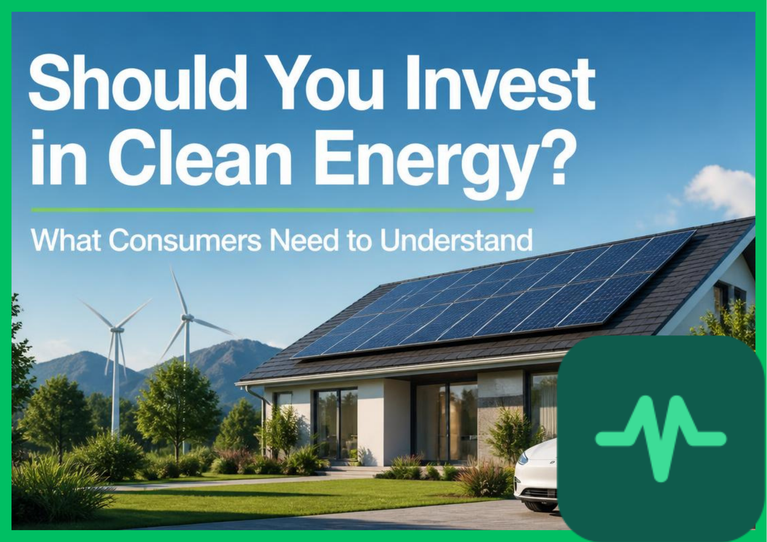
The energy system is changing fast. Solar power keeps expanding. Wind power keeps expanding too. Battery storage keeps growing. Electric vehicles are becoming common on ordinary streets.
All of this change requires real money to happen. That's exactly why clean energy investment has become such an important part of the global economy. For ordinary consumers, this creates genuine opportunities. It creates real risks too, though, and both deserve equal attention.
What Is Clean Energy Investment?
Clean energy investment simply means putting money into projects, companies, or financial products connected to cleaner energy technologies. This can include:
- Solar power
- Wind power
- Batteries
- Electric vehicles
- Charging infrastructure
- Grid technology
- Energy efficiency
The specific investment method varies quite a bit depending on what you're actually putting money into.
Why Is Investment Increasing?
The world genuinely needs new energy infrastructure, and building it isn't cheap. Solar farms need financing to get built. Wind farms need financing too. Electric grids need real upgrades to handle new demand. Battery factories require massive upfront investment.
Companies also need capital to develop entirely new technologies. Because of all this, the energy transition has created a genuinely large investment market, one that keeps growing year over year.
Growth Does Not Guarantee Profit
This point matters enormously, so let's be clear about it. A growing industry doesn't mean every single company inside that industry will actually succeed.
A technology can grow rapidly overall while individual companies still struggle badly. Competition can be genuinely intense. Costs can shift unexpectedly. Government policies can change without much warning. Supply chains can create real problems too. Research carefully before assuming growth automatically means profit.
Clean Energy Stocks
Some consumers consider buying shares in companies involved in clean energy directly. This carries real risk, just like any stock investment.
A company's share price can rise. It can also fall, sometimes sharply. Business performance shifts over time. Markets react to news and shifting expectations too. Never assume a company will succeed simply because its broader industry happens to be growing.
Renewable Energy Projects
Large renewable projects get financed through several different structures. Some investors participate indirectly through funds or other financial products, rather than owning a project outright.
The exact details vary quite a bit by country and by project. Understand the specific structure thoroughly before committing any real money to it.
Technology Risk
Technology changes fast, sometimes faster than companies can keep up with. A company may develop a genuinely innovative product today. Another company may introduce something noticeably better tomorrow, leapfrogging the first.
This risk is especially relevant in batteries, solar technology, and electric mobility, where innovation moves quickly. Consider seriously whether a company's competitive advantage is actually likely to last, or whether it might get overtaken soon.
Policy Risk
Government policy has a major influence on energy markets, more than many investors initially realize. Subsidies can change. Tax rules can change. Energy regulations can shift. Trade policies can change too, sometimes abruptly.
These developments genuinely affect companies and projects, sometimes in ways that are hard to predict in advance.
Market Risk
Energy markets can be genuinely unpredictable at times. Electricity prices shift. Fuel prices shift. Interest rates move. Demand itself changes with the seasons and the broader economy.
All of these factors can affect clean-energy businesses directly, regardless of how promising their underlying technology looks on paper.
Diversification Matters
Putting all your money into a single company is genuinely risky, no matter how promising that company looks. Diversification helps spread risk across different investments instead.
Diversification doesn't eliminate risk entirely, though, and it's worth being honest about that. Understand your own financial situation clearly, and seek qualified professional advice when the stakes feel significant.
Beware of Greenwashing
The growth of sustainable investing has created its own new problem worth watching for. Some companies make environmental claims that sound genuinely impressive but come with surprisingly little actual evidence behind them.
Look for clear, concrete information instead. What does the company actually do day to day? How much of its revenue genuinely comes from clean technology? What do its real financial results look like? What risks does it actually face? These questions matter far more than a catchy tagline.
Long-Term Thinking
Energy infrastructure often gets built to last for decades, not years. A solar project may operate for twenty or thirty years straight. Grid investments can have equally long lifetimes too.
Clean-energy investment, because of this, often calls for a genuinely long-term outlook. Short-term market swings don't necessarily tell the full story about whether an investment will pay off eventually.
EcoGreenPulse View
Clean energy investment can be a genuinely exciting area to explore. Excitement, though, should never replace careful research before committing real money.
The clean-energy transition itself is real and happening right now. Not every company involved will benefit equally from it, though, and telling the difference takes real homework.
Conclusion
Consumers interested in clean-energy investment should start with genuine education, not enthusiasm alone. Understand the underlying technology. Understand the specific company. Understand the broader market it operates in. Understand the real risks involved.
Never invest money simply because something gets described as "green" on a webpage or in an ad. A sustainable future still requires careful, clear-eyed financial decisions, just like any other kind of investing.
Sources: International Energy Agency resources on global energy investment and clean-energy finance.
Comments (0)
Login to leave a comment.
No comments yet. Be the first to share your thoughts!