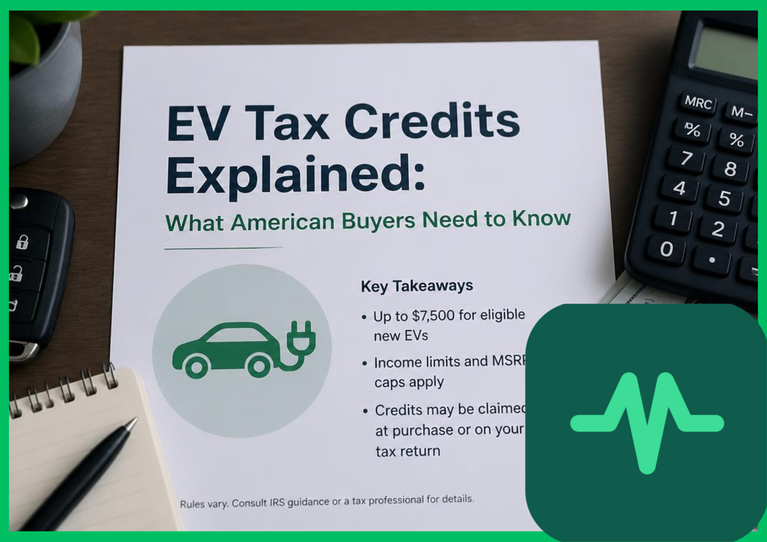
Shopping for an electric car brings up a familiar question fast. Do I actually qualify for that tax credit everyone talks about?
The honest answer is, it depends. The EV tax credit comes with real rules, and they trip up plenty of buyers. Let's walk through it clearly, without the confusing legal jargon.
What the EV Tax Credit Actually Is
The federal EV tax credit gives qualifying buyers a credit against what they owe in taxes, when they purchase an eligible electric vehicle. This isn't a discount at the dealership. It's money back when you file your taxes.
For new electric vehicles, this credit can be worth thousands of dollars. That's genuinely significant money, enough to meaningfully shift the math on an EV purchase for many families.
Not Every EV Qualifies, and That Surprises People
Here's where things get complicated, and where a lot of confusion happens. Not every electric vehicle on the market actually qualifies for this credit.
Rules exist around where the vehicle gets assembled. Rules exist around battery components and where those materials come from. Rules exist around the vehicle's price too, there are caps on how expensive a qualifying vehicle can be.
This means two very similar looking EVs might have completely different tax credit eligibility. Always verify current eligibility before assuming a specific model qualifies.
Income Limits Matter Too
The EV tax credit isn't available to every income level, and that catches some buyers off guard. There are income caps in place, meant to focus this benefit on middle-class buyers rather than wealthy ones.
If your household income exceeds a certain threshold, you may not qualify at all, regardless of which vehicle you choose. Check current limits carefully before assuming you're eligible.
Used EVs Can Qualify Too
Here's something many buyers don't realize. A separate, smaller tax credit exists for used electric vehicles too, not just new ones.
This opens the door for budget-conscious buyers who can't afford a brand-new EV. The used EV credit is smaller than the new vehicle credit, but it still represents real, meaningful savings on a more affordable purchase.
How to Actually Claim This Credit
For years, buyers had to wait until tax season to actually see this money. That's changed somewhat now. In many cases, buyers can transfer the credit directly to the dealer at the point of sale, lowering the purchase price immediately instead of waiting months.
This upfront option matters enormously for buyers who need that lower price right away, rather than waiting for a tax refund down the road.
Why This Credit Feels Like a Genuine Opportunity
For a lot of American families, an EV has felt just out of reach financially. The upfront cost, even with lower running costs down the road, can feel intimidating.
The EV tax credit exists specifically to close that gap. When it works as intended, it turns "maybe someday" into "we can actually do this now." That shift feels genuinely meaningful for families trying to make a responsible, forward-thinking choice.
State Incentives Can Stack on Top
Don't stop your research at the federal level. Many states offer their own additional EV incentives, separate from the federal credit entirely.
Some states offer direct rebates. Others offer reduced registration fees or other benefits. Combined with the federal credit, total savings can become genuinely substantial, sometimes covering a meaningful chunk of the total purchase price.
Common Mistakes Buyers Make
A lot of buyers assume every EV automatically qualifies for the full credit. That assumption causes real disappointment at tax time, or worse, at the dealership.
Always verify eligibility before signing anything. Ask your dealer directly whether the specific vehicle and trim level you're considering currently qualifies, and for how much. Don't just assume based on the model name alone.
Why These Rules Keep Changing
This might be genuinely frustrating to hear, but these rules shift periodically. Eligibility requirements, credit amounts, and income limits can all change based on new legislation.
Check current, up-to-date information before making any final purchase decision. What qualified last year might not qualify today, and vice versa.
Common Questions About the EV Tax Credit
How much is the EV tax credit worth?
It varies by vehicle, but new EVs can qualify for several thousand dollars in credit. Used EVs qualify for a smaller amount.
Do I need to wait until tax season to get this money?
Not necessarily anymore. Many dealers can now apply the credit directly at purchase, lowering your price immediately instead of waiting for a refund.
Does my income affect whether I qualify?
Yes. There are income caps in place. Households above certain thresholds may not qualify for the credit at all.
Can I combine the federal EV tax credit with state incentives?
Yes, in most cases. Many states offer their own separate incentives that stack on top of the federal credit.
Final Thoughts
The EV tax credit can be genuinely life-changing money for the right buyer, but only if you understand the rules clearly before you shop. Don't let confusion cost you thousands of dollars in missed savings.
Do your homework. Ask direct questions at the dealership. Check current eligibility carefully. When this credit works the way it's supposed to, it makes owning an electric car feel genuinely within reach, not just for wealthy early adopters, but for regular American families too.


Comments (0)
Login to leave a comment.
No comments yet. Be the first to share your thoughts!