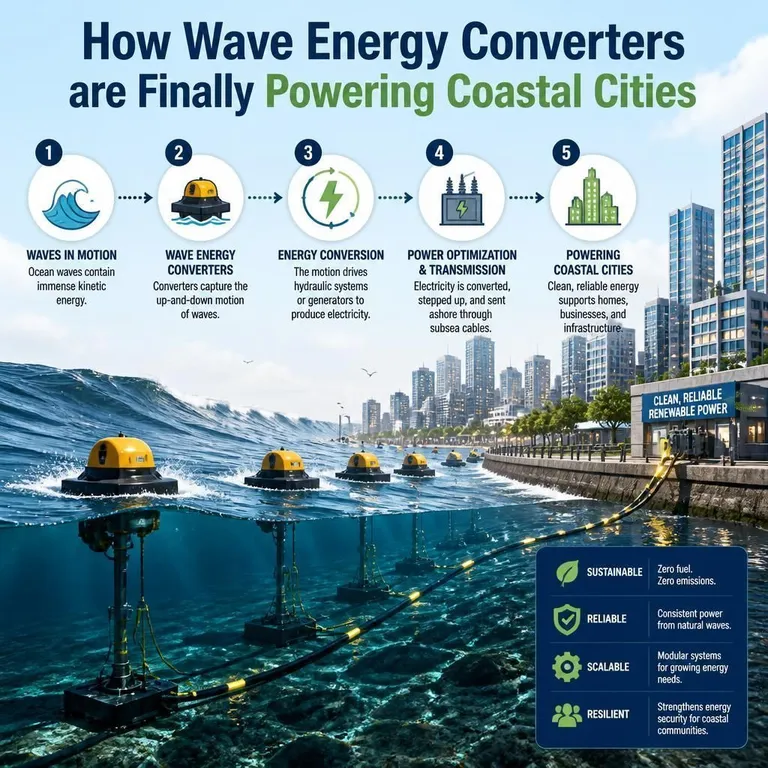
For a long time, wave energy converters were seen as a nice idea, but not a real one. People thought they were too costly. They thought the tech was not ready. That belief is now changing fast.
Today, wave energy converters are leaving the lab. They are entering real oceans. They are starting to power real coastal cities. In this article, we will look at how these systems work. We will also look at where they are being tested and why they matter so much for the future of clean power.
Why the Ocean Is a Hidden Power Source
Solar power stops at night. Wind power slows down on calm days. But the ocean never stops moving. Waves roll in day and night, all year long. This makes them incredibly steady, unlike other clean energy sources.
As more people move to coastal cities, the need for clean power grows too. Wave energy converters offer a smart answer to this problem. They can turn the ocean's constant motion into real electricity. This electricity can then flow straight into local power grids.
So why did it take so long for wave energy converters to catch on? The answer is simple: the ocean is a tough place to build machines. We will get into that challenge later. First, let's look at how these systems actually work.
How Wave Energy Converters Work
Capturing power from a moving ocean is not simple. Waves move in many directions. They change with wind, tide, and storms. So engineers had to design smart tools to handle this. Today, there are three main types of wave energy converters in use.
1. Point Absorbers
This is the most common design. A point absorber looks like a large buoy. It floats on the surface of the water. It is anchored to the seafloor below.
As waves rise and fall, the buoy moves up and down with them. This motion drives a piston inside the buoy. The piston pumps fluid through a system. That system spins a generator. The result is steady electricity, created just from the buoy bobbing in the waves.
Because point absorbers are small and modular, many can be placed together. This creates a large group, often called a wave farm. Together, they can produce a strong and steady power supply.
2. Oscillating Water Columns
This second type of wave energy converter works a bit differently. It is often built into cliffs or large offshore towers. Inside, there is a hollow chamber that connects to the sea.
As waves rush into the chamber, water rises and falls like a piston. This pushes air up and down through a turbine at the top. The clever part is the turbine design. It spins in the same direction. This happens whether air is being pushed out or pulled back in. This keeps the power flowing smoothly. It stays smooth even as the wave motion changes direction.
3. Attenuators
The third design looks very different from the other two. Attenuators are long, snake-like structures. They float on the surface and bend at their joints as waves pass beneath them.
This constant flexing drives hydraulic motors built into each joint. The motion creates pressure. That pressure gets turned into electricity. Attenuators are long. Because of this, they can capture energy across many waves at once. They are not limited to just a single point.
Each of these wave energy converters has its own strengths. Some work better in calm coastal waters. Others handle rough open ocean conditions well. Engineers often choose the design based on the local wave pattern and depth.
Where Wave Energy Converters Are Being Tested Today
It's one thing to build a wave energy converter in a lab. It's another thing to prove it works in the real ocean. Around the world, several major projects are doing just that.
Scotland's Testing Hub
Off the coast of Scotland sits the European Marine Energy Centre. It is known as EMEC. It has become a global testing ground. This site is known for having some of the roughest sea conditions on Earth. New wave energy converters are sent here to prove they can survive extreme weather. If a system can handle Scotland's waves, it can likely handle almost anywhere.
Portugal's Commercial Buoys
In Portugal, a company called CorPower Ocean has taken things a step further. They are placing point absorber buoys directly into the country's power grid. This is not just a test anymore. It is real, working power. These wave energy converters are feeding clean electricity straight into homes and businesses.
Oregon's Grid-Connected Facility
In the United States, a project called PacWave is making big progress too. Backed by the Department of Energy, this facility sits off the coast of Oregon. It allows private companies to test their wave energy converters while connected to the real power grid.
This matters a lot. It shows how wave power can support the grid. It helps most during times when solar and wind output drops. For example, picture a cloudy, windless week. Ocean waves keep rolling anyway. So wave energy converters can help fill the gap left by other renewable sources.
The Big Challenge: Surviving the Ocean
If wave energy converters are so promising, why aren't they everywhere yet? The answer comes down to one major challenge: the ocean is brutal on machines.
Saltwater Corrosion
Saltwater eats away at metal quickly. Standard materials rust and weaken fast in ocean conditions. So every wave energy converter must be built using special, corrosion-resistant materials. This adds cost to every project.
Biofouling
Ocean life does not wait around. Barnacles, algae, and other organisms grow fast on anything left in the water. This process, called biofouling, can slow down moving parts. It also adds drag. This drag reduces how much power a system can generate over time. Regular cleaning and maintenance become necessary just to keep things running well.
Surviving Storms
Perhaps the biggest challenge is survivability. A wave energy converter must be sensitive enough to catch energy from small summer waves. At the same time, it must survive massive winter storm swells that can reach 50 feet high. These storms create incredible force. That force is enough to destroy poorly built equipment in seconds.
Because of this, engineers must build systems that are both delicate and tough at the same time. This balance is not easy to achieve. It also means using expensive materials and reinforced designs. Those choices raise the overall cost of every wave energy converter that goes into the water.
Even with these challenges, progress keeps moving forward. As technology improves, costs are expected to come down. Early solar panels were once expensive too, before they scaled up. Wave energy converters are following a similar path today.
Why Coastal Cities and Islands Benefit the Most
Not every place needs a wave energy converter. But for certain regions, they make a lot of sense.
Coastal cities are one clear example. These areas already sit right next to a huge, untapped power source. Instead of importing energy from far away, they can generate clean power close to home. This can lower costs and reduce strain on long power lines.
Island nations may benefit even more. Many islands rely on expensive imported fuel to generate electricity. Shipping fuel across the ocean is costly and bad for the environment. Wave energy converters offer a local, renewable option instead. Islands are surrounded by ocean. Because of this, they have direct access to a steady power source right at their shoreline.
Remote industrial operations at sea can also benefit. Deep-sea equipment, ocean sensors, and offshore platforms often need reliable power far from land. Wave energy converters placed nearby can provide that power. They do this without relying on long cables or diesel generators.
Comparing Wave Energy to Solar and Wind
It helps to compare wave energy converters to the renewable sources people already know well.
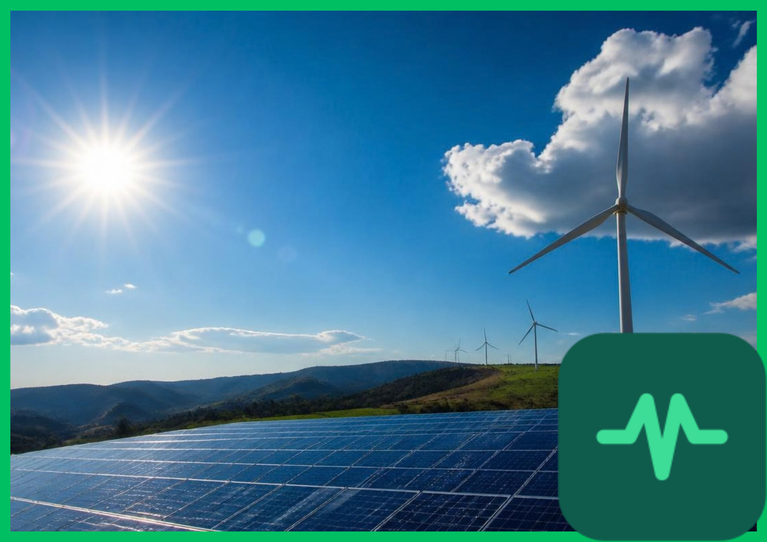
Solar panels need daylight. They stop producing power at night and slow down on cloudy days. Wind turbines need, well, wind. On calm days, they barely turn at all. Both systems depend heavily on weather and time of day.
Wave energy converters do not have this problem in the same way. Waves keep moving, day and night, in almost all weather. This makes wave power more predictable overall. It does not mean wave energy will replace solar or wind. Instead, it works alongside them. It fills in the gaps when other sources slow down.
This combination is often called a diversified energy mix. Solar, wind, and wave energy converters can work together. When they do, power grids become more stable. If one source dips, another can help pick up the slack. This reduces the risk of blackouts and keeps clean energy flowing steadily.
What the Future Looks Like for Wave Energy Converters
Looking ahead, the outlook for wave energy converters seems promising. As more pilot programs succeed, more investors and governments are paying attention. Costs are expected to drop as manufacturing scales up. This is just like what happened for solar panels and wind turbines years ago.
New materials are also being developed to fight corrosion and biofouling more effectively. As these materials improve, maintenance costs should drop too. This will make wave energy converters more affordable to run over their full lifespan.
Researchers are also working on smarter designs. Some new systems can adjust automatically based on wave size and direction. This helps them capture more energy in calm conditions. It also keeps them safe during storms. As these smart designs improve, efficiency will likely keep rising.
Governments in coastal regions are beginning to invest more in this technology too. Grants and pilot funding are helping companies test new wave energy converters in real ocean conditions. This kind of support is critical. It helps move the technology from small trials to full-scale power production.
Common Questions About Wave Energy Converters
Before we wrap up, let's answer a few quick questions people often ask about wave energy converters.
Are wave energy converters expensive to build? Yes, they can cost more upfront than solar or wind projects right now. This is mainly due to the tough materials needed to survive saltwater and storms. However, costs are expected to drop as more wave energy converters get built and tested at scale.
Do wave energy converters harm marine life? Most designs are built with environmental safety in mind. Engineers study local marine life before placing any wave energy converter in the water. Ongoing monitoring also helps track any effects on fish, birds, or other sea life nearby.
Can wave energy converters work in any ocean? Not exactly. Some designs work better in calm, sheltered bays, while others are built for rough open water. This is why testing sites like EMEC in Scotland are so valuable. They help engineers figure out which type of wave energy converter fits which location best.
How long do wave energy converters last? Most systems are designed to run for about 20 years. Of course, this depends on a few things. It depends on maintenance and local conditions. It also depends on how well the system handles storms over time. Regular upkeep helps extend the working life of each unit.
Final Thoughts
Wave energy converters are no longer just an experimental idea. They are proving themselves in real oceans, from Scotland to Portugal to Oregon. Each successful project brings this technology closer to everyday use.
While challenges remain, especially around saltwater corrosion, biofouling, and storm survival, these are engineering problems, not dead ends. Just like early solar and wind technology faced their own hurdles, wave energy converters are working through theirs.
Coastal cities, island nations, and remote ocean operations all stand to gain. For them, wave energy converters may soon become an essential part of the clean energy mix. They won't replace solar or wind entirely. But they don't need to. Instead, wave energy converters offer something unique: steady, round-the-clock power straight from the sea.
Costs will keep falling. Technology will keep improving. As this happens, we can expect to see more wave energy converters entering coastal waters around the world. The ocean has always held massive energy potential. Now, we finally have the tools to use it.
Comments (0)
Login to leave a comment.
No comments yet. Be the first to share your thoughts!